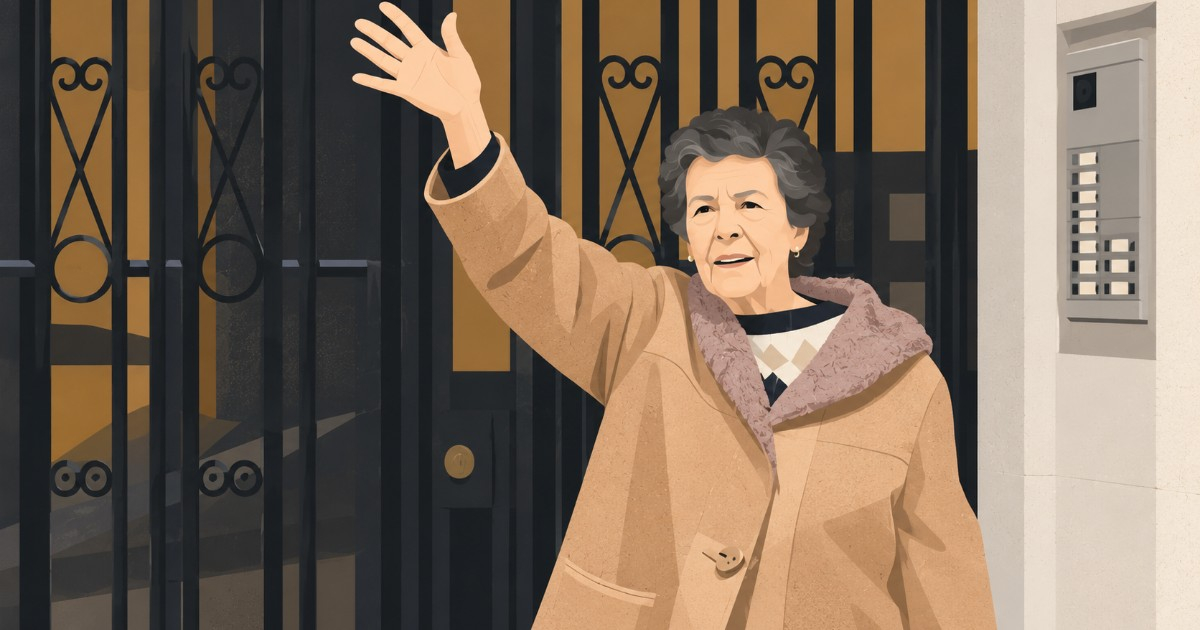
María del Carmen Abascal Martín, known as Maricarmen, passed away this Wednesday at the age of 87 in Madrid, just two weeks after being evicted from her home in the Retiro neighborhood where she had lived for about 70 years.
Maricarmen had been hospitalized at Gregorio Marañón Hospital since September 23, the same day the eviction took place. Her passing was announced by the Union of Tenants of Madrid, an organization that supported her during her struggle to remain in her home.
So far, a specific medical cause of death has not been made public, which means that a causal relationship between the eviction and her death cannot be established. What has been confirmed is that the woman was taken to a healthcare facility on the same day as her eviction and remained hospitalized since then.
Hours before her death was announced, representatives from the Tenant's Union had explained that her health was delicate and that she continued to undergo medical tests.
He died before he could return home
The death of Maricarmen occurs after her representatives, the property owners, and the Madrid City Council finally reached an agreement that would have allowed the woman to return to her former home when she was discharged from the hospital.
The agreement came, however, while Maricarmen was still hospitalized, and she was never able to return to the home where she had spent practically her entire life.
The Tenants' Union expressed regret over what happened and championed the legacy of women, whose story has become one of the main symbols of the protests for housing access in Spain in recent weeks.
"We will continue fighting for you, for all of us, just as you always wanted," expressed the organization after announcing her passing, as reported by several Spanish media outlets on Wednesday.
Seventy years in the same home
Maricarmen had been residing since 1956 in an apartment located on Alcalde Sainz de Baranda Street, in the Retiro district of Madrid. Her father had originally signed a lease under the old rent regulations, and the family had lived in the property for decades.
After a lengthy legal dispute regarding the continuation of that contract, the real estate company Urbagestión Desarrollo e Inversión achieved a favorable resolution to regain the property.
Maricarmen was paying an old rent of about 500 euros a month, while the property owner proposed a rent of around 1,650 euros, which was higher than her pension.
The conflict went through several legal instances and there were various attempts at eviction before the judicial commission finally executed the eviction on September 23.
That day, Maricarmen was taken out of the house on a stretcher and was transported by medical services in front of dozens of people who had gathered nearby to try to prevent the launch.
His eviction provoked a national mobilization
The images of the eviction provoked a strong social reaction and once again placed the housing crisis at the center of public debate in Spain.
Thousands of people took part in demonstrations and gatherings, and a few days later, a camp was set up at Puerta del Sol in Madrid to demand measures against evictions and the high cost of rent.
Maricarmen's case transcended her individual situation and became a symbol used by tenant organizations and social collectives to demand greater protections for vulnerable individuals.
New housing measures in Spain
The extensive impact of the case coincided with a swift acceleration of the political agenda on housing. The government of Pedro Sánchez promoted new decrees with measures aimed at strengthening tenant protections, regulating certain rents, and expanding safeguards against situations of vulnerability.
A first attempt to advance those measures was rejected in Congress amid the protests occurring in the country.
After the announcement of early general elections for November 29 and the dissolution of the Parliament, the Government approved two royal decree-laws regarding housing once again.
The new regulations were published this Wednesday in the Official State Gazette and must now go through the Permanent Deputation of Congress.
Among the measures are new rules for certain rental contracts, extraordinary extensions, limits on some rent increases, and increased protections for specific tenants.
Maricarmen will no longer be able to benefit from any of those measures. Her death, which occurred just when an agreement had finally been reached for her to return to her home, closes a personal story that in just a few weeks became one of the most visible cases of the housing crisis currently affecting Spain.
Related videos:
Filed under: