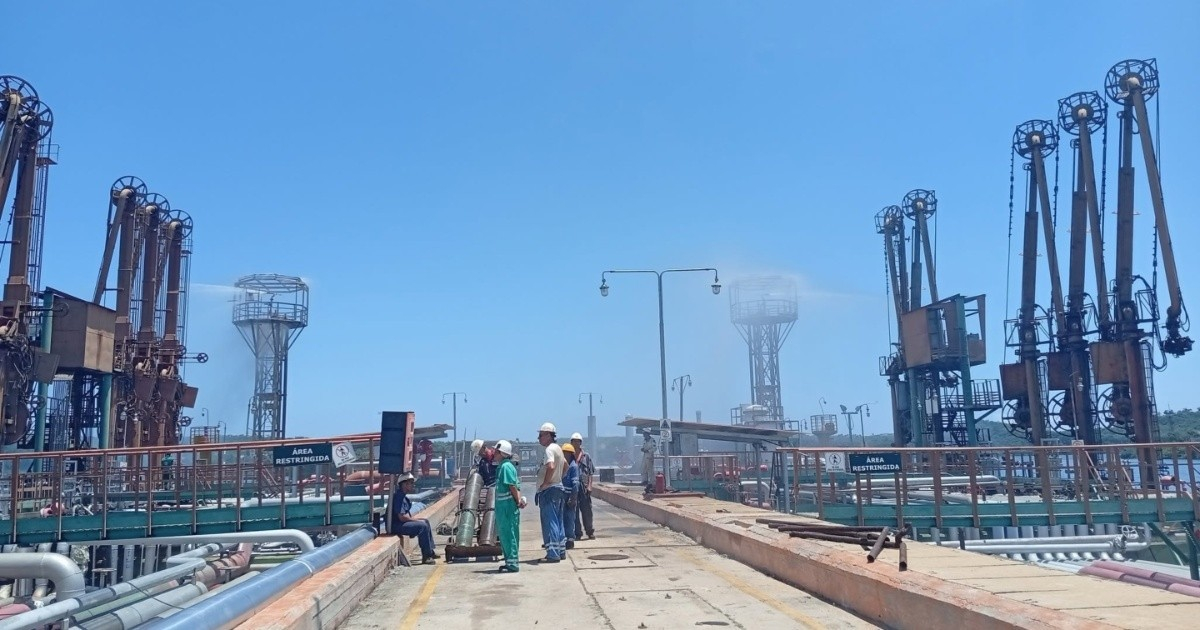
The U.S. federal authorities announced this Wednesday in Miami the interception of 90 biodiesel shipments headed to Cuba, valued at nearly 3 million dollars, while the investigation into those responsible for the scheme remains open with no formal charges or identities revealed.
According to a report by CBS News, the operation was carried out jointly by Homeland Security Investigations (HSI), Customs and Border Protection (CBP), and the Bureau of Industry and Security of the Department of Commerce.
The shipments were addressed to ENETEC S.A., a Cuban state-owned wholesale fuel company based in Havana, sanctioned by OFAC in July 2026 along with COREYDAN S.A. for operating in the Cuban energy sector.
The agencies seized more than 620,000 gallons of biodiesel in total: 71 storage tanks with approximately 500,000 gallons in Port Everglades, Florida, and 19 additional shipments with nearly 120,000 gallons at the Port of Houston, Texas.
At the beginning of September, after analyzing commercial and intelligence data, CBP detected that fuel exported from U.S. territory was reaching a sanctioned entity, allegedly in violation of the International Emergency Economic Powers Act and the regulations of the Bureau of Industry and Security.
What the agencies have not responded to is who is behind the scheme. At the time of the announcement, the authorities did not identify the involved exporters nor did they report if criminal charges had been filed, leaving the investigation open.
Jose Figueroa, special agent in charge of HSI Miami, promised to "continue identifying, interrupting, and investigating efforts to evade U.S. sanctions, protecting the integrity of export controls, and denying the Cuban government access to resources obtained in violation of the law."
The interception of these land shipments adds to previous maritime operations by the Coast Guard: on September 5, it boarded the cargo ship M/V Grace in the Caribbean between Cuba and Mexico, and at the end of June, it had intercepted the Jaira Provider near Mayagüez, Puerto Rico, with over 200,000 gallons of diesel on board.
The Cuban regime responded through the voice of Deputy Minister of Foreign Affairs Carlos Fernández de Cossío, who described Washington's actions as illegal and immoral: "It is illegal, immoral, and criminal to subject an entire population to economic suffocation as a collective punishment for political purposes."
The energy crisis facing Cuba exacerbates the impact of these measures. The island produces about 40,000 barrels daily but needs between 90,000 and 110,000, relying on imports to cover nearly 60% of its demand.
In 2026, there have been at least eight total collapses of the national electric system, with blackouts lasting up to 20 and 24 hours daily. The outages have interrupted water pumping for about 3.5 million people in Havana and caused disruptions in hospitals, transportation, and food storage.
The situation worsened following the suspension of Venezuelan oil shipments since November 2025 and the drastic reduction of Mexican supplies, leaving Cuba without its main external sources of crude oil.
The ongoing investigation will determine whether the exporters who sent biodiesel to ENETEC acted with knowledge of the existing sanctions or if they were misled about the final destination of the shipment, a distinction that could define the severity of the charges that may eventually be brought.
Related videos:
Filed under: