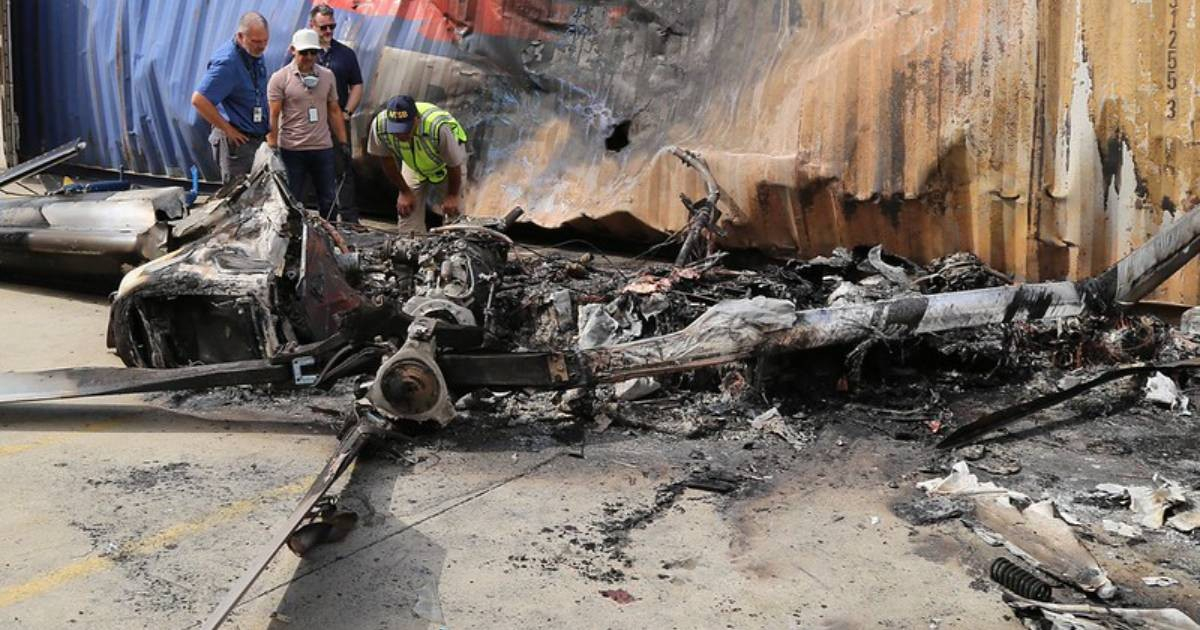
The recording made by the reporter who was on board the helicopter conducting news coverage for NBC4 and Telemundo 52 that crashed in September in Los Angeles captured several audible alerts and a change in the sound of the aircraft just seconds before the impact, as revealed by the preliminary report from the National Transportation Safety Board (NTSB).
The accident occurred on September 15 in Chatsworth, California, and left three dead: aerial reporter Eliana Moreno, pilot George Marciniw, and a person on the ground. The NTSB also reports another individual with minor injuries.
The helicopter, a Eurocopter AS 350 B2, registration N358TV and operated by Angel City Air, had taken off from Whiteman Airport to capture images of a fatal traffic accident that occurred in the area.
The analyzed ADS-B data by the investigators indicates that the aircraft was maneuvering around the accident for approximately one hour and 24 minutes. During the last minute of the flight, it was at about 800 feet above the ground and reduced its ground speed to approximately six knots.
One of the most significant elements of the investigation comes from a four-minute and 21-second video recorded by the onboard reporter.
During most of that recording, the background noise from the engine and the main rotor remained consistent with normal operation. However, in the last 29 seconds, the sound changed in frequency, and intermittent and continuous alerts began to be heard.
According to the NTSB, among the identified sounds were warnings for high and low main rotor revolutions, in addition to other alerts from the aircraft.
Shortly thereafter, tracking data shows that the helicopter began a rapid descent while turning to the right. The last point recorded by the ADS-B system was directly above the location where it ultimately crashed, with a high rate of descent and a ground speed of approximately 38 knots.
Several security cameras from nearby buildings captured the moment when the aircraft descended rapidly and collided with a metal container before bursting into flames.
The subsequent inspection found the fuselage practically reduced to ashes and metal affected by fire. The main rotor and tail rotor remained attached to their respective mounts, while the debris was transported to a secure facility for further analysis.
The report released now is preliminary and does not yet determine the cause of the accident. The NTSB warns that its conclusions may change as the investigation progresses.
Related videos:
Filed under: