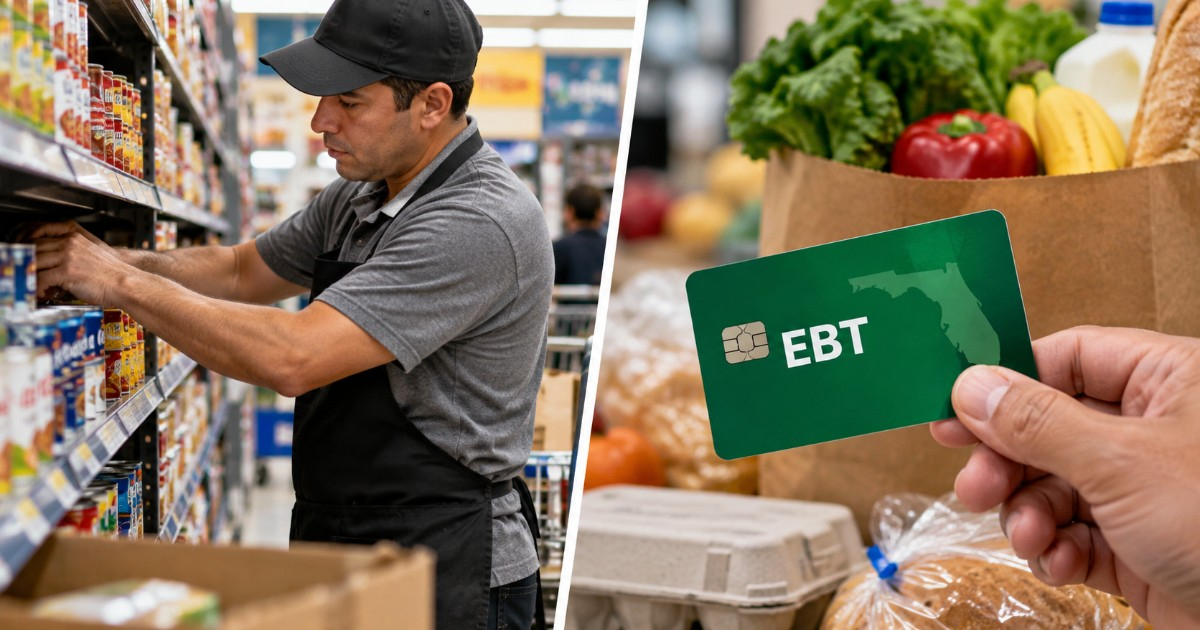
Beneficiaries of Food Stamps in Florida must pay special attention to the work requirements of the Supplemental Nutrition Assistance Program (SNAP), as certain adults are required to complete at least 80 hours of work or authorized activities per month to maintain food assistance without being subject to the time limit set by federal law.
The obligation does not affect all beneficiaries equally. Age, health status, family responsibilities, and certain personal circumstances can make the difference between having to validate those hours or being exempt.
The Florida Department of Children and Families (DCF), responsible for administering SNAP in the state, explains that the provisions of the federal law known as One Big Beautiful Bill Act, enacted in July 2025, expanded the groups subject to work requirements.
The warning is especially relevant for part-time workers, adults over 55 years old, and families with teenage children who rely on food stamps to meet some of their needs.
Who is required to complete the 80 hours per month in Florida?
The legislation distinguishes between the general work requirements of SNAP and an additional obligation applicable to certain adults deemed able to work without dependents, known by the acronym ABAWD.
According to the DCF, this last category generally includes individuals who meet the following conditions:
They are between 18 and 64 years old.
They are physically and mentally capable of working.
They are neither parents nor responsible for the care of a dependent minor of 14 years.
They do not meet any other condition that would allow them to be exempted from the obligation.
One of the most significant changes affects people aged 55 to 64 years, who were previously outside the additional work limit. Under the current provisions, turning 60 years old does not automatically guarantee exemption from demonstrating the required monthly hours.
Parents whose minor child is already 14 years old, even if he or she is still a minor, may also be affected.
On the other hand, the general rules of SNAP apply to certain beneficiaries aged 16 to 64. These may require individuals to register for work, accept suitable employment if offered, and participate in training activities when applicable. They should not be automatically confused with the specific obligation of 80 hours.
What activities count towards completing the 80 hours?
The requirement can be met through paid employment, verifiable volunteer work, participation in authorized job programs, or a combination of these activities.
Among the options recognized by federal regulations are paid jobs, certain unpaid activities, and approved employment and training programs.
For example, a person could combine part-time work hours with training activities accepted by the relevant agency.
However, not just any course or job search activity automatically counts towards the 80 hours. It is important to consult with the DCF or the assigned CareerSource center to find out which activities are valid and how they should be documented.
In Florida, the SNAP Employment and Training (E&T) program provides job counseling, training, job search preparation, and other services. It also includes certain support related to participation, such as transportation and training materials.
Who can be exempt from the labor requirements?
Exceptions depend on the type of requirement being evaluated. The federal law of 2025 maintains protections against the additional limit of 80 hours for certain groups.
Among the circumstances that may lead to an exception are being 65 years old or older, being pregnant, having a verified physical or mental incapacity to work, or being responsible for the care of a child under 14 years old.
The DCF also identifies situations that allow individuals to be exempt from general work requirements, such as receiving certain disability benefits, caring for a disabled person, participating in specific treatment programs, or meeting the conditions of certain studies and assistance programs.
A person who receives Supplemental Security Income (SSI) or Social Security Disability Insurance (SSDI), for example, may qualify for an exception.
The exemption should not be granted automatically. The beneficiary must communicate their situation to the DCF and provide the documents requested by the agency to determine which requirements apply to them.
Veterans and homeless people: these exceptions changed
The federal reform also eliminated certain automatic exemptions that previously benefited three groups: veterans, homeless individuals, and young people up to 24 years old who had exited the foster care system.
This means that belonging to one of those groups no longer guarantees, by itself, remaining outside the work requirements applicable to ABAWD.
However, these individuals may still obtain an exemption for other reasons, such as a verified medical disability, pregnancy, or caregiving responsibilities that meet legal requirements.
The change does not mean that all veterans or all homeless individuals will automatically lose their Food Stamps. Eligibility must be determined on an individual basis.
What happens if you don't complete the 80 hours per month?
For individuals subject to the ABAWD time limit, federal regulations generally state that they can receive SNAP for a maximum of three countable months within a 36-month period without meeting the work requirement or having an applicable exception.
Once those months have elapsed, the beneficiary may temporarily lose eligibility until they meet the requirements again or can demonstrate an exception.
The regulation provides mechanisms to regain eligibility, such as completing 80 hours of work or authorized activities over a period of 30 consecutive days, depending on the specifics of the case.
The consequences of failing to meet general work requirements can vary. Therefore, it is essential to read the notification received and verify exactly which obligation is considered unfulfilled.
There may also be justified reasons for not completing certain activities, such as illness, a family emergency, or transportation issues beyond the beneficiary's control. The DCF must assess the circumstances in accordance with the applicable rules.
Attention to the letters from DCF and FloridaCommerce
One of the most important aspects to avoid problems is not to ignore official communications.
The DCF sends a notice identifying the household members required to meet work requirements.
When it's time to participate in the SNAP E&T program, FloridaCommerce may send a referral letter with instructions to complete an orientation and schedule an appointment with a case manager.
There is an important detail: FloridaCommerce sends these communications via regular postal mail, even when the beneficiary has chosen to receive their DCF notifications electronically.
For this reason, those who have changed their residence must review and update their address on the official portal MyACCESS.
How to avoid losing your Food Stamps due to an issue with hours
If you receive SNAP in Florida and believe you may be subject to work requirements, it is advisable to review your records and check what obligations have been assigned to you by the DCF.
If you work, keep payment receipts, time records, and other documents that can verify the hours worked. If you participate in volunteer activities or training, check what certifications the agency accepts.
When there is a medical or family condition that may justify an exemption, communicate it and request instructions for submitting the necessary documentation.
Additionally, the DCF states that adults subject to the 80-hour requirement must report when their work activity falls below that threshold. That change must be communicated within 10 days following the end of the month in which it occurred.
The MyACCESS portal allows users to access information about their file, update data, and manage documents related to public benefits.
If you need assistance, the official customer service number for the DCF is 850-300-4323.
What to do if Florida withdraws your benefits and you believe it was a mistake?
People who receive a notification of reduction or cancellation of SNAP can request a review of the decision and, when applicable, request an administrative hearing.
The DCF Office of Appeal Hearings explains that beneficiaries have the right to challenge decisions that affect their eligibility or the amount of assistance.
For SNAP, the general deadline to request a hearing is 90 days from the notification of the decision.
The application can be submitted through the channels provided by the DCF, including its customer service center. It is important to review the notice itself, keep the communications, and not let the deadlines pass.
The new rules come as the amounts for SNAP are changing
Job demands align with the annual update of food benefits in the United States.
As CiberCuba reported, the maximum amounts for SNAP increased starting October 1, 2026, marking the beginning of the federal fiscal year 2027.
However, the increase in maximum amounts does not eliminate eligibility requirements or employment obligations.
CiberCuba has also explained which medical expenses seniors and individuals with disabilities can deduct when calculating their benefits, another important issue for families with limited income.
For Cubans residing in Florida who rely on this assistance, understanding the rules can prevent a loss of benefits due to non-compliance, which in some cases could have been avoided through proper notification or the submission of documents.
The fundamental recommendation is to verify the specific requirements of each file, respond promptly to official communications, and request an assessment of any potential exemptions before a disruption of assistance occurs.
Related videos:
Filed under: