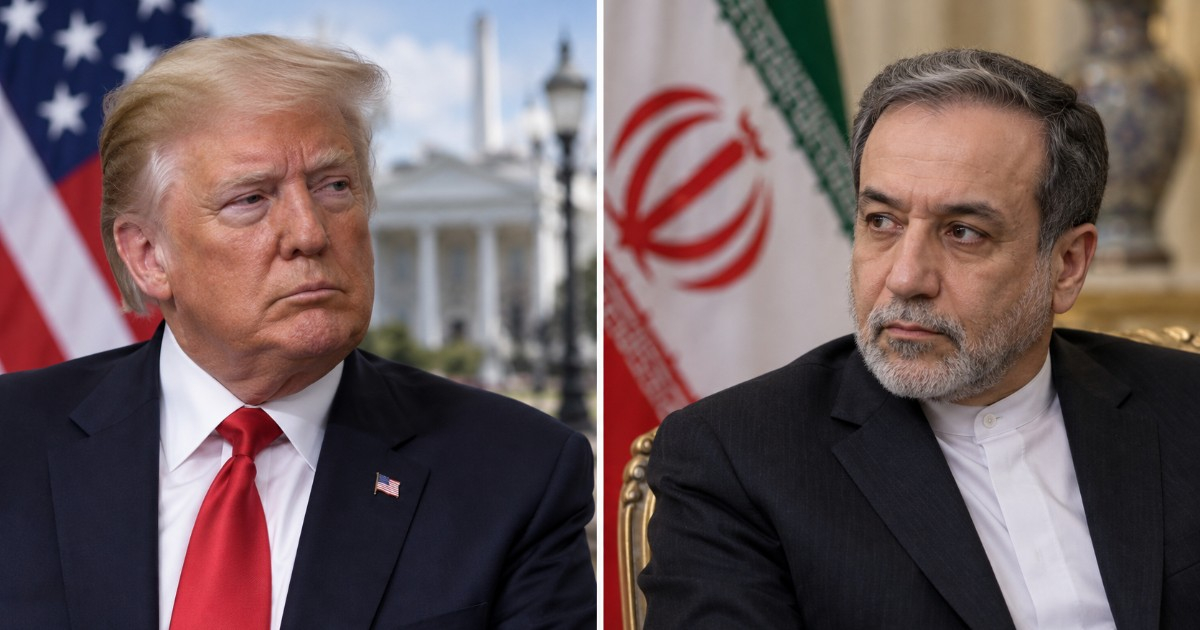
The Iranian Foreign Minister, Abbas Araghchi, stated on Thursday, October 8, that Tehran expects to respond in the coming days to the position conveyed by the United States regarding an Iranian proposal to move towards ending the war and reopening the Strait of Hormuz.
The chancellor explained that Iranian authorities are still examining the U.S. response to their so-called “seven-day plan”. “The diplomatic process is ongoing,” he stated, according to the Iranian agency Tasnim, as cited by Reuters.
Araghchi indicated that, after presenting Tehran's roadmap, Iranian authorities listened to Washington's observations and are now working on their response. The announcement does not imply that there is a peace agreement or that the United States has accepted the conditions set forth by Iran.
What does Iran propose in its seven-day plan?
The initiative was presented by Tehran at the end of September and communicated to the United States through mediators, including Qatar. According to the details disclosed at that time, it proposes a series of measures that would allow for the reopening of the Strait of Hormuz in approximately one week if Washington agrees to the conditions of the plan. The seven-day timeframe refers to the implementation of those measures, not the time Iran has to respond now.
Among Iran's demands are the lifting of the U.S. naval blockade of its ports, measures for sanctions relief, the release of frozen Iranian assets, and guarantees to cease hostilities in the region. In return, Tehran offers to normalize navigation through the Strait of Hormuz and subsequently move towards broader negotiations, including the nuclear program, according to the information published by Al Jazeera regarding the proposal.
The nuclear program remains one of the points of contention
One of the main differences lies in the order of the negotiations. Iran prioritizes the reopening of Hormuz and measures to reduce confrontation, while Washington insists that any agreement must address the Iranian nuclear program from the outset. Indirect talks have continued despite the distance between the positions of both governments.
The U.S. President, Donald Trump, had already expressed his rejection of the initial terms of the Iranian proposal. On October 4, he warned that he would make a decision regarding Iran "the easy way or the hard way", amid the tension surrounding the conflict and the demands of the United States regarding Tehran's nuclear development.
An unresolved response, not a finalized agreement
Araghchi's statement indicates that diplomatic exchanges remain open and that Tehran is preparing a new communication to Washington. However, there is no exact date for Iran's response nor has the acceptance of a definitive pact been announced.
The evolution of these contacts is particularly significant due to the role of the Strait of Hormuz in international energy trade and the risk of a new military escalation if the conversations do not progress.
Related videos:
Filed under: