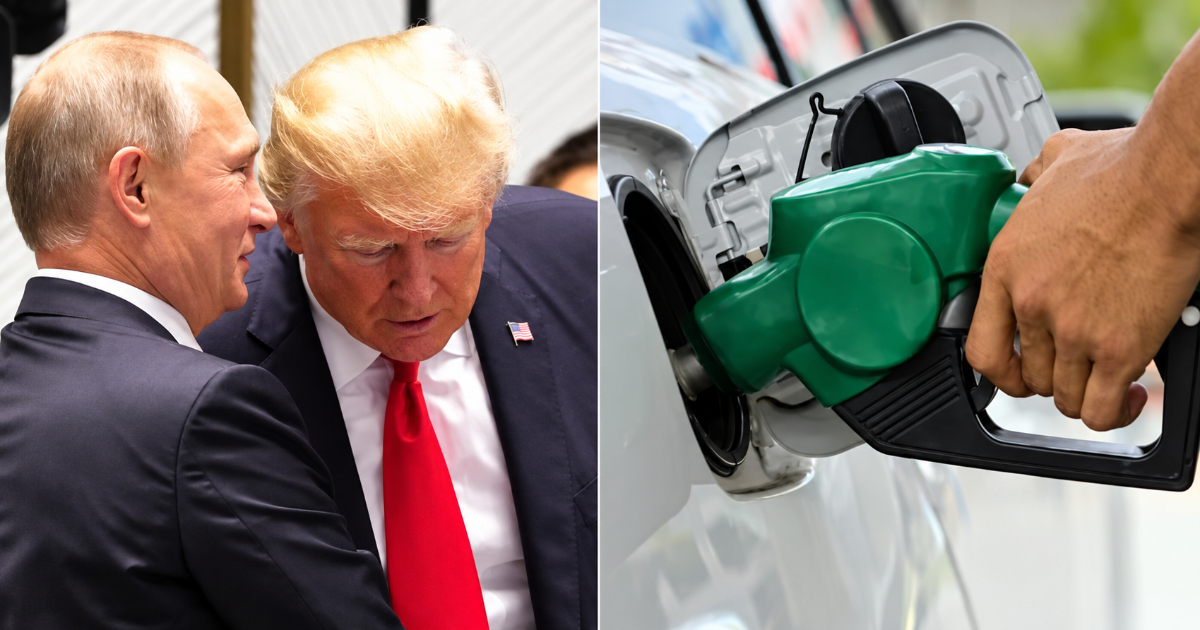
Donald Trump posted on Sunday on his social network Truth Social a message in which he dismissed the Strait of Hormuz as the main factor behind the rising gasoline prices in the United States, instead blaming Ukraine and the Democrats for the price surge affecting American consumers.
"What is driving up the price of gasoline is no longer the Strait of Hormuz, where record amounts of barrels are now being shipped almost daily, but the word 'refineries': those in Russia are being destroyed by Ukraine, and ours are being shut down in blue states, like California, by the Dumocrats," Trump wrote, using the derogatory term "Dumocrats" to refer to Democrats.
The statement contains real elements, but analysts and market data point to a much more complex picture.
The average price of regular gasoline in the United States was around $4.24 per gallon at the end of September, up from $2.98 on February 28, 2026, marking an increase of nearly 45% that directly coincides with the start of the war between the United States and Israel against Iran and the closure of the Strait of Hormuz.
At the height of the crisis, oil flows through Ormuz dropped by up to 97%, with around 2,000 ships stranded and 20,000 sailors affected. The Federal Reserve Bank of Dallas estimated that the price of WTI crude oil jumped from around $60 at the end of January to an average of $91 in March.
Trump is right that crude oil flows through Hormuz have recovered: according to Kpler data cited by Reuters, as of September 28, they reached 13.5 million barrels per day, matching levels seen before the war.
However, refined fuel shipments only reached 58% of the levels prior to the conflict, and gasoline inventories in the United States fell to a 12-year low, according to data from Yahoo Finance and CNBC.
Regarding California's refineries, the closures are real: Phillips 66 ceased crude processing at its Los Angeles plant —140,000 barrels per day— in October 2025, and Valero closed its Benicia refinery —145,000 barrels per day— in April 2026.
Both closures reduced state refining capacity by between 17% and 20%. However, independent analysts point out that those decisions were driven by low margins, high operational costs, and the regulatory environment, not by direct orders from the Democratic Party.
Respecto a Ucrania, The attacks on Russian refineries are ongoing and verifiable. El Ministerio de Defensa ucraniano afirmó haber dejado fuera de servicio el 51% of Russian refining capacity —cifra no verificada de forma independiente—, y la Agencia Internacional de Energía estimó una caída del 30% en la producción rusa de diésel.
Trump had already asked Ukrainian President Volodymyr Zelensky in September to stop those attacks, arguing that they were contributing to rising prices. On September 14, he announced an energy ceasefire agreement between Russia and Ukraine, which Zelensky denied as not being officially confirmed.
Far from stopping, on October 3, Zelensky announced that Ukraine would intensify attacks on Russian refineries in response to the new Russian doctrine of air strikes, and the following day, Russia threatened to escalate its reprisals against facilities in Kiev and other regions.
Trump's statement comes less than a month before the 2026 midterm elections, amid significant political pressure due to the rising cost of energy: diesel in the United States surpassed 6 dollars per gallon for the first time in mid-September.
Related videos:
Filed under: