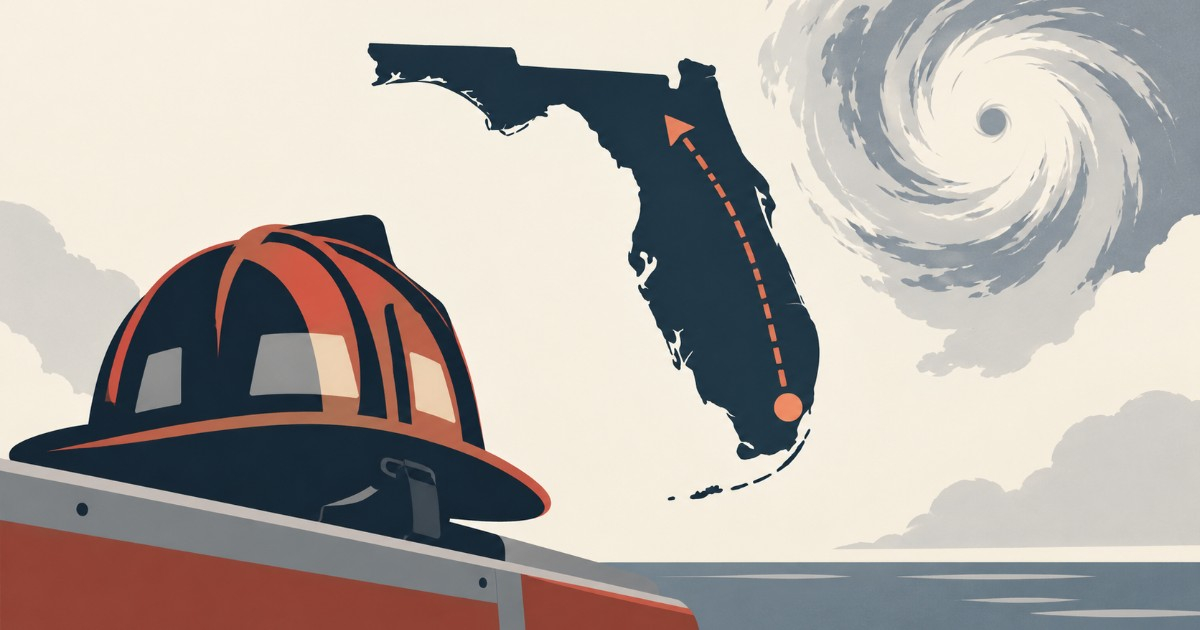
A contingent of 88 specialists from Miami-Dade Fire Rescue departed this Thursday, October 8, from Homestead to assist communities in northern Florida threatened by Hurricane Isaias. The operation includes four canine teams and personnel trained for flood rescues, medical assistance, and searching for individuals trapped in damaged structures.
The unit, known as Florida Task Force One (FL-TF1), was activated as a state urban search and rescue resource of Type I, a mode that allows for the mobilization of multidisciplinary teams and specialized equipment in the event of major emergencies. The first planned destination is Tallahassee, where the rescuers will gather while awaiting assignments from state authorities.
The activation was announced by the Miami-Dade Fire Department in its official statement dated October 8. According to the coverage by Local 10 in Homestead, the team left their facilities at approximately 6:00 a.m. on Thursday, before the cyclone reached the U.S. coast.
Four canine teams and specialists in water rescues
The mobilization is not limited to sending conventional firefighters. The 88 members form a team trained to intervene in flooded areas, damaged buildings, and communities where local authorities require reinforcement to locate and assist people in danger.
The device is equipped with four canine search teams and specialized personnel for rescue operations in swift waters and flooded areas, according to Miami-Dade Fire Rescue. It also carries resources for emergency medical care, structural assessment, communications, and logistics.
Captain German Leal, a member of Florida Task Force One, explained in statements collected directly by CBS News Miami that the team began organizing its preparations several days in advance. He detailed that the contingent includes a doctor, four health specialists, and canine units, as well as the necessary materials to operate during the emergency.
The official description of Florida Task Force One includes among its capabilities searching in collapsed buildings, rescues in flooded areas, first aid to trapped victims, damage assessment, hazardous materials handling, and stabilization of unsafe structures. It also has satellite communication equipment to coordinate missions when conventional networks are affected.
Why do they concentrate first in Tallahassee?
The movement to Tallahassee has an operational objective: to position personnel and equipment close to the threatened area before the hurricane complicates communications and road access. From that concentration point, state officials will be able to assign missions to the contingent based on the reported damages and requests for support from the communities.
Among these potential missions are locating trapped individuals, conducting searches in affected homes or buildings, assisting residents isolated by floodwaters, providing medical attention, and assessing whether certain structures can be safely used after the passage of the cyclone.
The departure from Homestead does not mean that rescuers are already conducting operations among the rubble or attending to victims. This is a preventive mobilization, carried out to reduce response time once it is known where those resources are needed.
According to information released by CBS News Miami, a search and rescue unit from Miami Fire Rescue, Florida Task Force Two (FL-TF2) was also activated. This should not be confused with Florida Task Force One, whose contingent of 88 people is part of the Miami-Dade Fire Department.
Isaiah threatens flooding and damage in northern Florida
The movement of teams from South Florida coincides with warnings from the National Hurricane Center (NHC) regarding the effects that Isaias could have on the northern Gulf Coast. Throughout Thursday, the agency was issuing alerts for hurricane-force winds and storm surges in sections of Florida, Alabama, and Mississippi, with risks of flooding and damage to infrastructure.
One of the dangers for rescuers and residents will be the water. CiberCuba reported on Thursday that NOAA warned of a moderate risk of sudden flooding in southern Alabama and the western Panhandle of Florida, with rainfall accumulations that could reach up to ten inches in certain areas.
Governor Ron DeSantis declared a state of emergency in 25 counties through Executive Order 26-202, which allows for the mobilization of personnel, equipment, and other state resources ahead of the impact. Miami-Dade, Broward, and Palm Beach are not among the counties included in this declaration.
This means that the deployment of rescuers from Miami-Dade does not respond to an evacuation order for Miami nor does it imply that the hurricane will directly affect South Florida. The county is sending resources to support other communities in the state that are facing a greater threat.
A team with experience in major disasters
Florida Task Force One has decades of experience in emergency operations both within and outside the United States. Its previous interventions include the 1995 Oklahoma City bombing, the September 11 attacks in 2001, and Hurricane Katrina in 2005, as well as international search and rescue missions.
The group also participated in the response efforts to the Surfside building collapse, which occurred in Miami-Dade in 2021. Its structure is made up of specialists in search, rescue, medical care, planning, engineering, and logistical support, who work in coordination with the agencies responsible for each emergency.
The operation related to Isaías again highlights the role of response teams from South Florida in disasters occurring outside their jurisdiction. For now, the mission of the 88 specialists is to be prepared close to the threatened areas and to act when authorities determine where their assistance is needed.
Related videos:
Filed under: