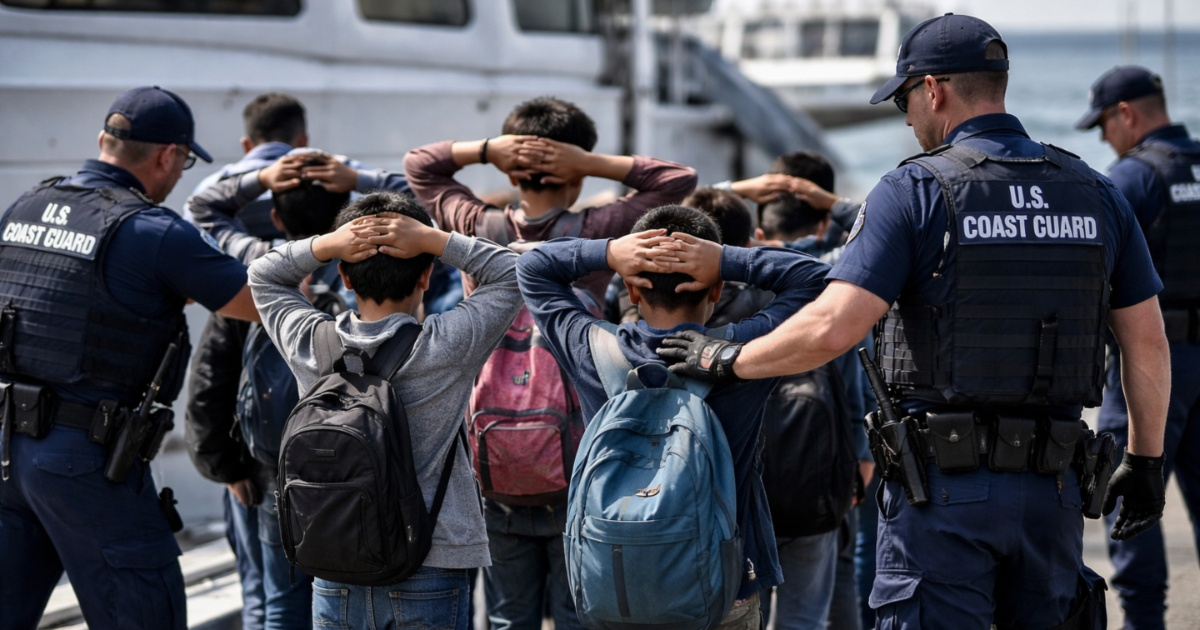
Last week, the Trump administration announced the creation of a division of federal attorneys to represent unaccompanied migrant minors in their immigration processes, a measure that advocacy organizations consider a serious risk to children, including Cubans who arrived alone or were separated from their families.
The Department of Health and Human Services (HHS) published the announcement in the Federal Register with the signature of Secretary Robert F. Kennedy Jr., without providing a start date or operational details on how the new unit, named the Division of Legal Representation for Unaccompanied Foreign Minors, will function.
The department stated in a press release that the division will operate under the guidance of its general legal counsel to "safely reunify these minors with their families and ensure they have the legal support they need," but did not answer questions about whether it will continue to hire non-governmental organizations for that purpose.
The measure comes after the breakup with the Acacia Center for Justice, an organization that managed 24,000 cases through a network of legal providers, and whose contract the government allowed to expire on July 31.
The main criticism from critics points to a structural conflict of interest: in the new scheme, the minor's lawyer, the judge—appointed by the Department of Justice—and the prosecutor seeking deportation are all federal employees.
“Placing legal representation and services for minors within the same agency that holds them under federal immigration custody is an unprecedented step that fails to meet basic standards of defense independence,” warned Shaina Aber, executive director of Acacia.
Wendy Young, president of Kids in Need of Defense (KIND), was more direct about the practical consequences: "A government attorney, employed by the government, would very likely be directed and encouraged to take the stance of pushing for the minor to accept voluntary departure and leave the United States, rather than presenting a full defense of the facts of their case."
«Denying legal assistance to the most vulnerable among us —minors who have already fled from trauma— is a fundamental breach of the equity promised by our Constitution,» summarized Sui Chung, executive director of Americans for Immigrant Justice. «Minors deserve our utmost protection.»
A decision by the Immigration Appeals Court in 2026 blocked the most common pathway to closing cases for minors who entered through CBP One without their parents or legal guardians: even those who arrived with grandparents, uncles, or cousins are categorized as "unaccompanied," and judges cannot change their status or release them even if they have an approved special immigrant visa.
The minors with form I-220A who arrived alone have different procedural pathways before turning 21, but their cases have also become significantly more complicated in recent months.
Meanwhile, many children are already appearing before the courts without any lawyer.
According to data from the Vera Institute of Justice, 63% of migrant minors did not have legal representation during 2025; in Florida, that figure reached 73% of individuals with pending immigration cases.
At the end of September, according to a report by CNN Español, 25 minors appeared in court on a single day in Harlingen, Texas, several of whom were without legal representation, including a three-year-old child.
After Acacia's departure, the government awarded a non-competitive contract of up to 244 million dollars to Our Rescue —an organization with no proven experience in immigration law— which has led to temporary arrangements and left thousands of cases in limbo.
Related videos:
Filed under: