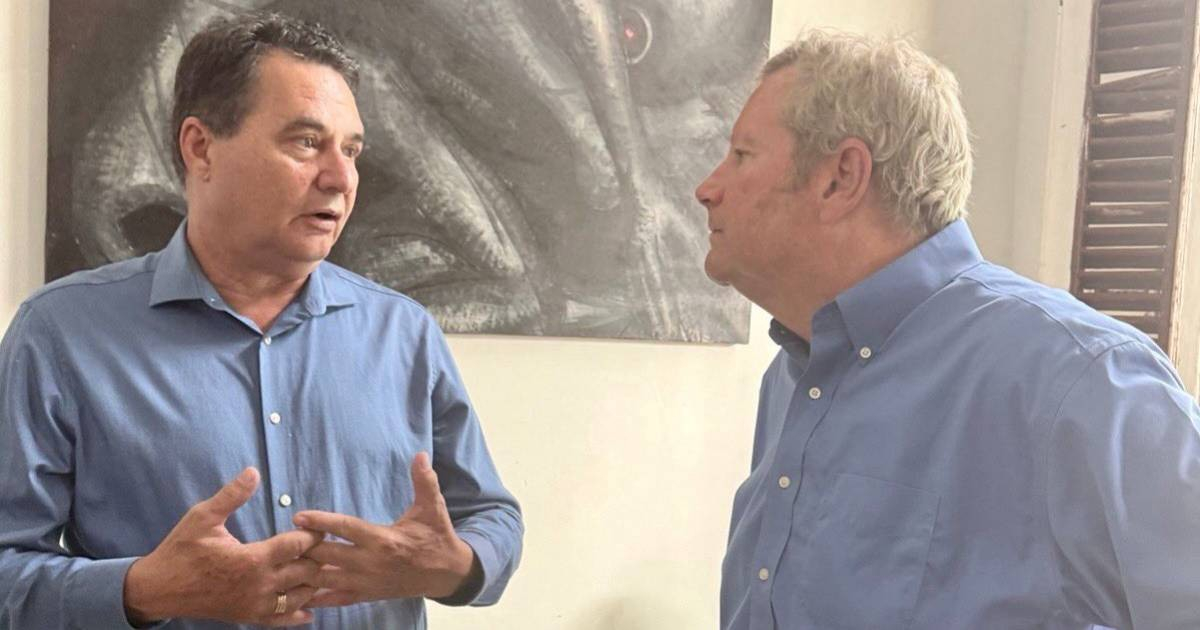
The head of the U.S. diplomatic mission in Cuba, Mike Hammer, met this Thursday with writer and former political prisoner Ángel Santiesteban-Prats, who has recently been elected Sovereign Grand Commander of the Supreme Council of the 33rd Degree for the Republic of Cuba, to explore the possibility of Masons participating in the distribution of U.S. humanitarian aid to the most needy families on the island.
The United States Embassy reported on the meeting on its official X account, highlighting the historical role of Cuban masonry and its potential to collaborate on initiatives to assist the population.
"Recognizing that Freemasonry has a long and significant history in Cuba, they discussed the possibility of Freemasons participating in the distribution of humanitarian aid from the U.S. to those in need," stated the diplomatic representation.
The Embassy also expressed its support for the independence of civil organizations: "The United States appreciates the role of Freemasons in the development of Cuba and supports a free and independent civil society."
In March 2026, Hammer visited the headquarters of the Supreme Council of the 33rd Degree in Havana and held discussions with its then leader, José Ramón Viñas Alonso, regarding potential avenues for collaboration.
A new Masonic leader under pressure from the authorities
The meeting takes place less than two weeks after Santiesteban-Prats was elected Sovereign Grand Commander of the Supreme Council of the 33rd Degree on September 26, with 19 votes in favor and one against.
The writer, with nearly four decades of Masonic experience, took on the role amid a prolonged conflict between the institution and the Cuban Ministry of Justice.
In 2025, the Ministry of Justice issued Resolution 342, whereby they disregarded the continuation of Viñas Alonso at the head of the Supreme Council. The decision was challenged by the freemasons, but the People's Supreme Court dismissed the appeal in March 2026.
Santiesteban-Prats himself has faced legal actions. In June, the authorities brought charges against him and imposed house arrest for exchanging 200 dollars donated to the National Masonic Asylum Llansó in the informal market, an accusation that the writer denied.
After his election, the Supreme Council reported that the home of its new leader was under surveillance and that the institution's bank accounts remained frozen, which made it difficult to even pay salaries to its employees.
U.S. aid for vulnerable families in Cuba
The possible support from the Masons is framed within the program of 100 million dollars in humanitarian aid announced by the United States, which aims to provide food and essential items to the Cubans most affected by the crisis.
From the total amount, 60 million dollars are channeled through Catholic Relief Services and Cáritas Cuba, while the remaining 40 million are allocated to independent non-governmental organizations. The scheme aims to distribute resources without the involvement of the Cuban government.
The distribution began in July, with the arrival of an initial shipment of 18 tons of food and hygiene products from Miami, and has progressively expanded to different provinces.
On October 6th, a new shipment from the United States arrived in Cuba, destined for vulnerable families in Ciego de Ávila, under the coordination of Cáritas.
The program aims to benefit between 100,000 and 120,000 Cuban families, prioritizing the elderly, people with disabilities, pregnant women, and households with young children.
Related videos:
Filed under: