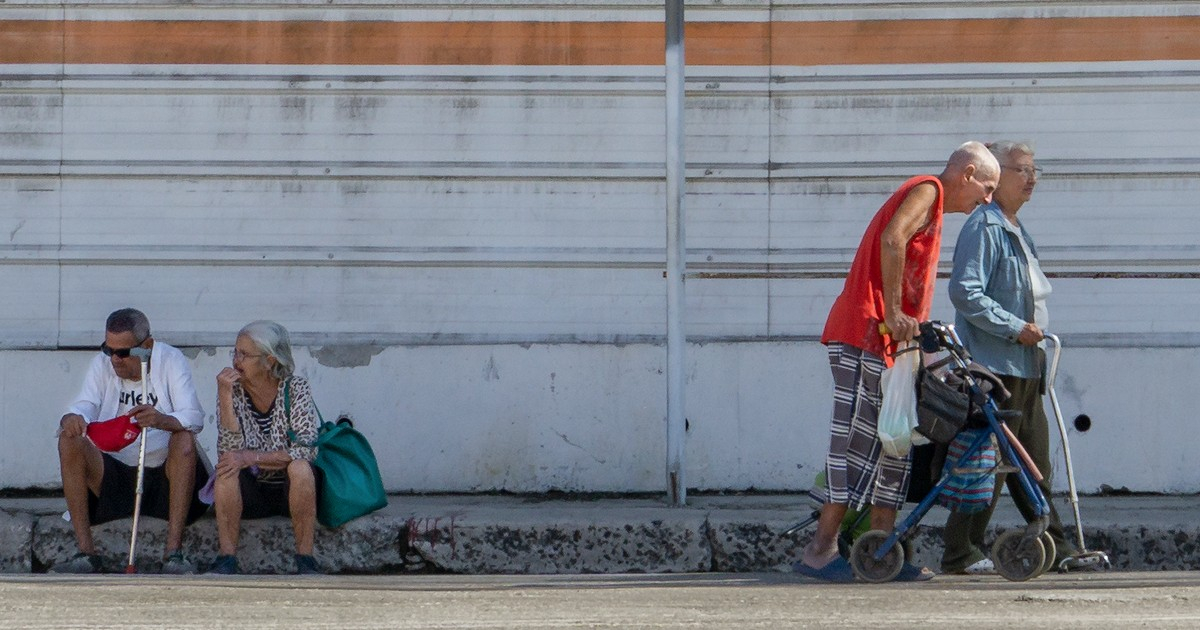
A Cuban retiree expressed his disillusionment with the promises of the 1959 Revolution and denounced the conditions in which, in his opinion, numerous seniors on the island survive, including insufficient pensions, difficulties in obtaining food, and restrictions on freedoms. In a Facebook post addressed to the elderly, he stated that his generation believed in a better future that, more than six decades later, he sees as unfulfilled.
The author of the testimony, identified by the initials C. N., explained that he belongs to the generations of Cubans who were persuaded by the promises spread starting in 1959. When comparing those expectations with the current situation, he stated that after decades of hardships, "we see that we are worse off." In his reflection, he used the expression "Year of Freedom" to refer to 1959.
Hunger, precariousness, and retirees seeking food
The retiree listed several situations he considers representative of the deterioration of daily life: he spoke of "widespread hunger" and elderly people who, he reported, are forced to beg or rummage through garbage.
He also lamented that many Cubans have difficulties purchasing clothing, eyewear, or receiving adequate dental care. In his text, he described retirees with worn-out clothing and dental issues, an image he used to highlight the loss of well-being among those who dedicated a significant part of their lives to work.
These statements are part of their testimony and personal assessment, not a statistical account of the entire population. However, the precariousness of pensions and the challenges faced by older adults have been documented in other cases.
In September, set designer Luis Lacosta reported that he was receiving 3,800 pesos a month after more than 65 years of working. Also that month, a photograph showed elderly people sleeping on the ground in front of a bank in Santiago de Cuba in an attempt to collect their pension the next day.
The crisis is not limited to the amount of pensions: the long queues, cash shortages, power outages, and rising costs of food and medicine further complicate the daily lives of many elderly individuals.
It also denounces restrictions on freedom of expression and protest
The testimony was not limited to the economic situation. The retiree also criticized the lack of freedom of expression, the restrictions on peaceful protest, and what he described as a repressive response from the Cuban regime towards dissenters.
Their observations align with issues documented by international organizations. In its World Report 2026, Human Rights Watch indicated that the Cuban government continues to punish dissent and public criticism, warning about arbitrary detentions and a lack of judicial guarantees. Amnesty International also recorded restrictions on freedom of expression and peaceful assembly during 2025.
Upon closing his publication, the retiree explained that he shared the concerns expressed by another Cuban citizen, who had also criticized the economic promises of the authorities and recounted the difficulties facing his father, who is also retired.
That testimony questioned Prime Minister Manuel Marrero Cruz after he expressed confidence that the population would begin to see the results of the economic transformations announced by the Government in 2027.
Related videos:
Filed under: