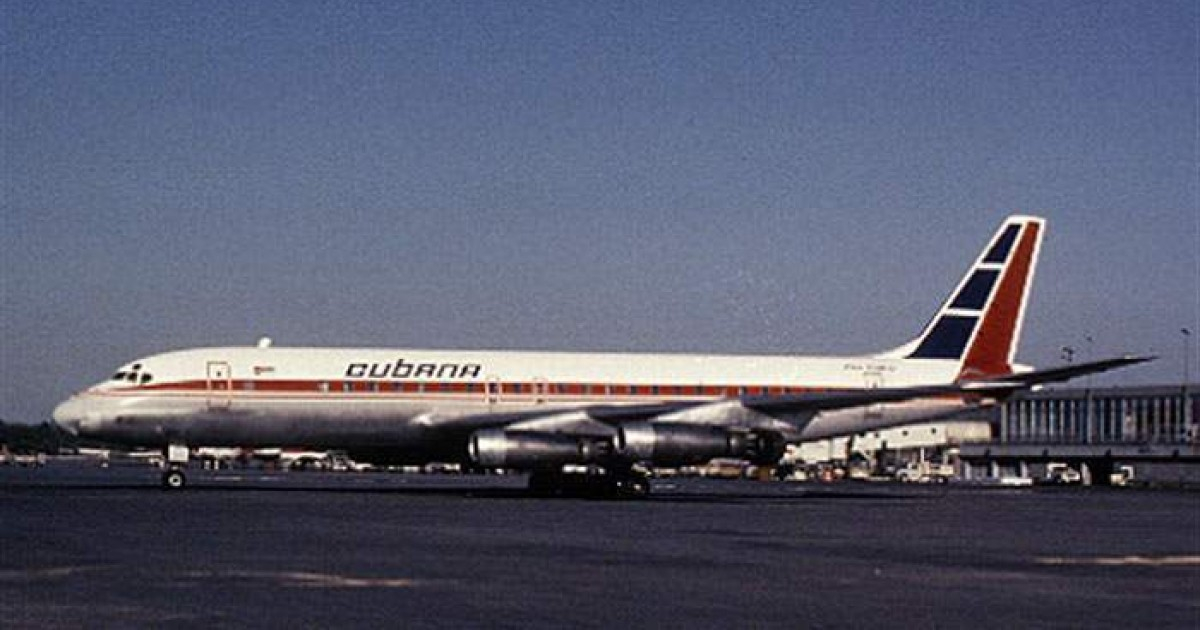
Half a century after a bomb destroyed a Cubana de Aviación plane off the coast of Barbados, the National Security Archive at George Washington University published a collection of ten declassified documents identifying those responsible for the attack.
The Briefing Book No. 932, edited by Peter Kornbluh, director of the Cuba Documentation Project, gathers cables from the FBI and CIA, reports from the State Department, records from the police of Trinidad and Tobago, and the interrogation of independent counsel Lawrence Walsh.
Flight 455 was destroyed on October 6, 1976, shortly after taking off from Bridgetown bound for Havana. All 73 people on board perished: 57 Cubans, 11 Guyanese, and five North Koreans.
Among the victims were 24 members of the Cuban fencing delegation—16 athletes, four coaches, two technicians, and two officials—who were returning from Caracas after winning all the gold medals at the IV Central American and Caribbean Championship in the discipline.
The device was a small charge of plastic explosive hidden in a Colgate toothpaste tube. The authors were the Venezuelans Hernán Ricardo Lozano and Freddy Lugo, employees of the private security agency of Luis Posada Carriles in Caracas, who disembarked from the plane in Barbados after leaving the explosive on board.
Just one day after the attack, the FBI already had evidence pointing to the Cubans Luis Posada Carriles and Orlando Bosch as the masterminds behind the operation. The cable from October 7, 1976, notes that sources in Caracas reported that both were preparing to flee Venezuela: "The source practically admitted that Posada and Bosch had organized the attack on the plane."
A CIA report from October 12 indicates that a source overheard Posada saying, "We're going to attack a Cuban plane," and that "Bosch has the details." Even more disturbing is a CIA cable from June 22, 1976—four months before the attack—that warned of plans to plant a bomb on a Cubana flight. That warning was not acted upon in time.
According to an FBI informant, after the plane went down, Ricardo called Bosch with an encoded message: "A bus with 73 dogs fell off a cliff and everyone died."
The documents also reveal that the FBI legal attaché in Caracas granted a U.S. visa to Ricardo Lozano six days before the attack, despite being aware of suspicions about him. In the 2011 trial in El Paso, the CIA also acknowledged that Posada had been a paid agent of the agency between 1965 and 1974, under the code name "AMCLEVE/15."
What followed was a long history of impunity. Posada escaped from a Venezuelan prison in 1985 with funds from Cuban-American benefactors and joined the clandestine operations of the Reagan administration in El Salvador, to supply the Nicaraguan Contra. Bosch was released in Venezuela in 1987, and in 1990, President George H.W. Bush granted him permanent residency in the U.S., ignoring the recommendation of his own Attorney General, who had labeled him a "terrorist."
In 1998, Posada confessed to The New York Times that he had organized bombings in hotels in Havana in 1997, resulting in the death of the Italian tourist Fabio di Celmo. "That Italian was in the wrong place at the wrong time, but I sleep like a baby," he stated.
Posada was arrested in the U.S. in 2005, but authorities only charged him with perjury and immigration fraud, never with terrorism. A after three hours of deliberation.
The case still divides the Cuban-American community, where some consider them freedom fighters and others, terrorists who killed innocent civilians. The questions regarding the intellectual authorship have not disappeared either: testimonies gathered over the years point to possible complicities within Venezuelan intelligence.
Bosch died in Miami in 2011 at the age of 84. Posada passed away in Florida in 2018 at the age of 90. Both lived and died as free men. Kornbluh concludes that, in the face of what he describes as "the parody of justice for the 73 victims," the declassified documents provide "the only possible verdict: the verdict of history."
Related videos:
Filed under: