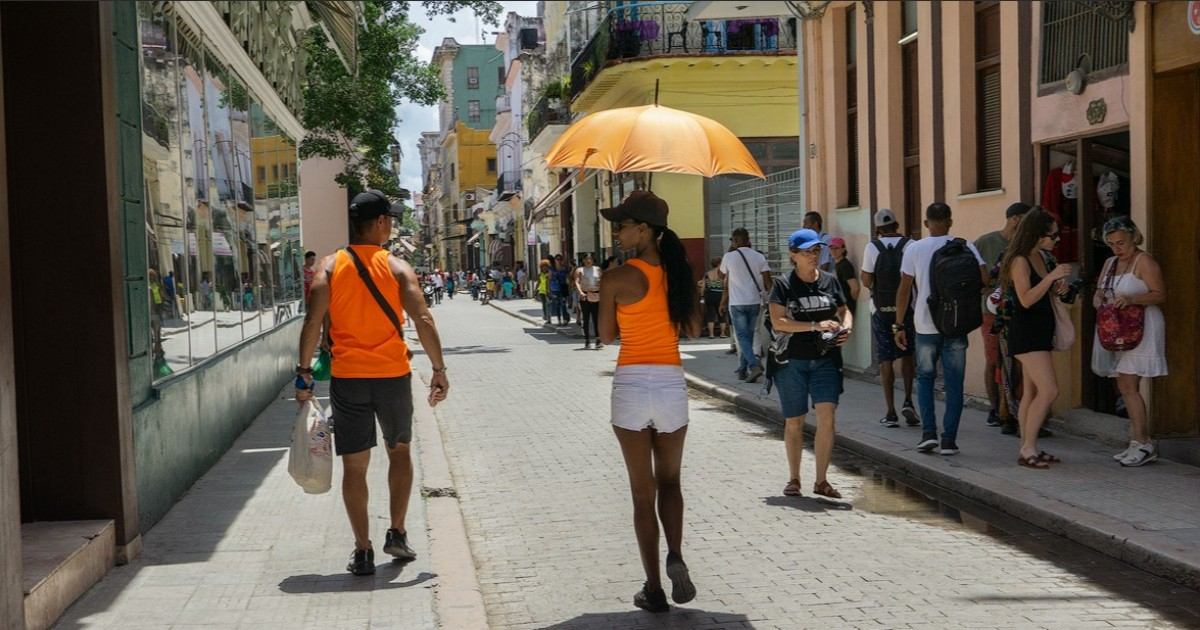
The agency AFP published a devastating report this Friday on the life of the youth in Havana amidst the crisis shaking Cuba. The article features testimonies collected at the end of September and paints a generational picture of emptiness and resignation.
One of the interviewees is Melanie Tejeda, 24 years old. She mentioned that out of her 43 classmates in dramatic arts, only five remain on the Island; the rest have emigrated to Miami, Madrid, or other destinations. Her contact with them is limited to WhatsApp or Instagram messages when the internet connection allows.
Tejeda goes to the El Bejuco bar in El Vedado and joins a game of dominoes with strangers. The game, he explains, is "a cultural element of Cuba that endures and keeps us connected."
The establishment is one of the few that remains lit at night thanks to a generator adapted to city gas and equipped with Wi-Fi. Its manager, Yadier Delgado, also 24 years old, describes it as "a refuge" for young people who don't know what to do. "Almost all entertainment venues have not found the means to stay open," he points out.
AFP describes how blackouts have turned Havana into a ghost town: theaters, cinemas, and concert halls are nearly all closed. The collapse of the electrical system—the result of decades of underinvestment and lack of maintenance in the regime's thermal power plants—has decimated the cultural life that the capital once showcased years ago.
On the second floor of the same bar, Sian Dimitri Felipe, 22 years old, works as a self-taught programmer for employers in Miami and is developing his own video game, despite power and Internet outages. At El Bejuco, he escapes from the blackouts, the mosquitoes, and "catching dengue."
Sian admits that she misses the "sense of community among young people, the gathering of an urban tribe," and sitting on the street at night chatting with friends, something that is now very dangerous. Her vision for the future is clear: "I'm going to leave. All the young people in this country have plans to go."
On weekends, many flock to Paseo del Prado to dance or skate late into the night. Seventeen-year-old Israel Quiala comes from San Miguel del Padrón and spends hours practicing choreography. He acknowledges that the crisis affects everyone, but he emphasizes that adults at least had a good youth. "Being young today is more difficult," he stresses.
Cuba is facing an unprecedented demographic crisis in its modern history: according to data from the Center for Demographic Studies (CEDEM), 50% of those who left the country by the end of 2024 were young people under 35 years old, highlighting a disproportionate drain of the most productive and reproductive group in the nation.
In July of last year, the Cuban content creator Robert Evangelista published a video in which he harshly denounced the lack of opportunities for young people in Cuba.
The influencer described the fate that awaits those who stay. "How many young Cubans are not studying right now and end up on the street? They either end up in drugs or selling soft drinks in a café. There are no opportunities here."
The report by AFP is published days after the same agency documented the agony of the ration book, with stores closed or converted into neighborhood markets.
Related videos:
Filed under: