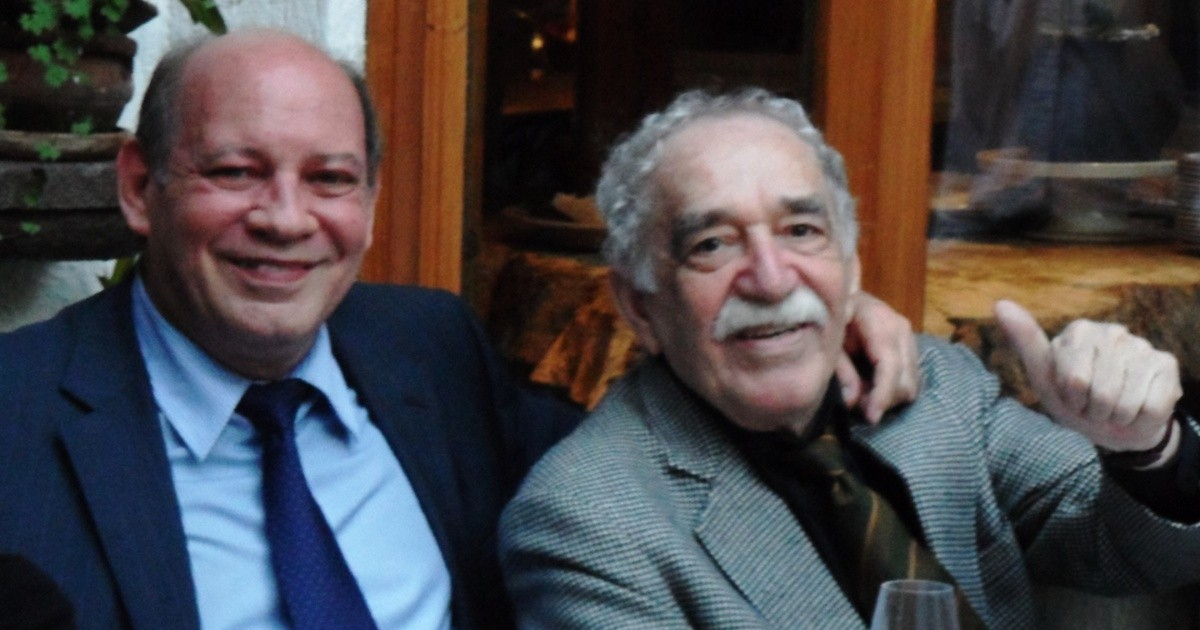
The Cuban writer Manuel Pereira Quinteiro passed away this Saturday in Mexico, as announced by the Mexican poet and essayist Tania Favela in a Facebook post that circulated widely on social media. “Goodbye to Manuel Pereira, Cuban writer, he left this world today; let us hope he is now in paradise, with his dear Lezama Lima, resuming the Délfico Course,” Favela wrote to bid farewell to the Havana-born storyteller, essayist, and journalist.
Born in Havana on October 31, 1948, Pereira created a body of work that traversed the revolutionary illusion, the regime's censorship, and exile, ultimately becoming one of the most distinctive voices in contemporary Cuban literature. His biography and complete works are compiled in the personal blog he maintained under the name "El Azogue de La Habana Vieja."
His literary career began in 1969 under the direct influence of José Lezama Lima, with whom he maintained a relationship that he himself described as "from armchair to armchair" at the poet's home. He graduated with a degree in Journalism in 1978 and, between that year and 1984, he served as the editor of the magazine Cine Cubano.
His first novel, El comandante veneno, written between 1972 and 1974, was rejected by a military jury which labeled it as having "foreign influences" and containing "pornographic passages". The award was declared void. "The novel was kept under lock and key for three years in a drawer of a lieutenant who happened to be named Raúl Castro," recalled Pereira in an interview with 14ymedio. The work was finally published in Havana in 1977.
In January 1991, at the onset of the Special Period, Pereira left Cuba for Berlin. He spent a decade in Spain, where he conducted literary workshops in Cadaqués and in a prison in Mallorca, before finally settling in Mexico City at the end of 2004, where he taught at the Universidad Iberoamericana.
In Mexico, he found the conducive environment for his most mature and critical work. He published Insolación (Diana, 2006), Mataperros —awarded the International Short Stories Prize Cortes de Cádiz 2006—, Un viejo viaje (2010), and El beso esquimal (2015). His narratives have been translated into German, English, Italian, Portuguese, Dutch, and Czech, and published in several countries across Europe and America.
Pereira defined himself as a writer of autobiographical narrative: "Almost everything I tell I have lived, but I also narrate the life of my generation," he stated. And about that generation, he added: "The one that believed in so many things and was disillusioned by so many."
Mexico, the country that welcomed him for his last two decades, was also the setting for his farewell. "Mexico is kind, it 'embraces me' as they say around here," he had said once.
Related videos:
Filed under: