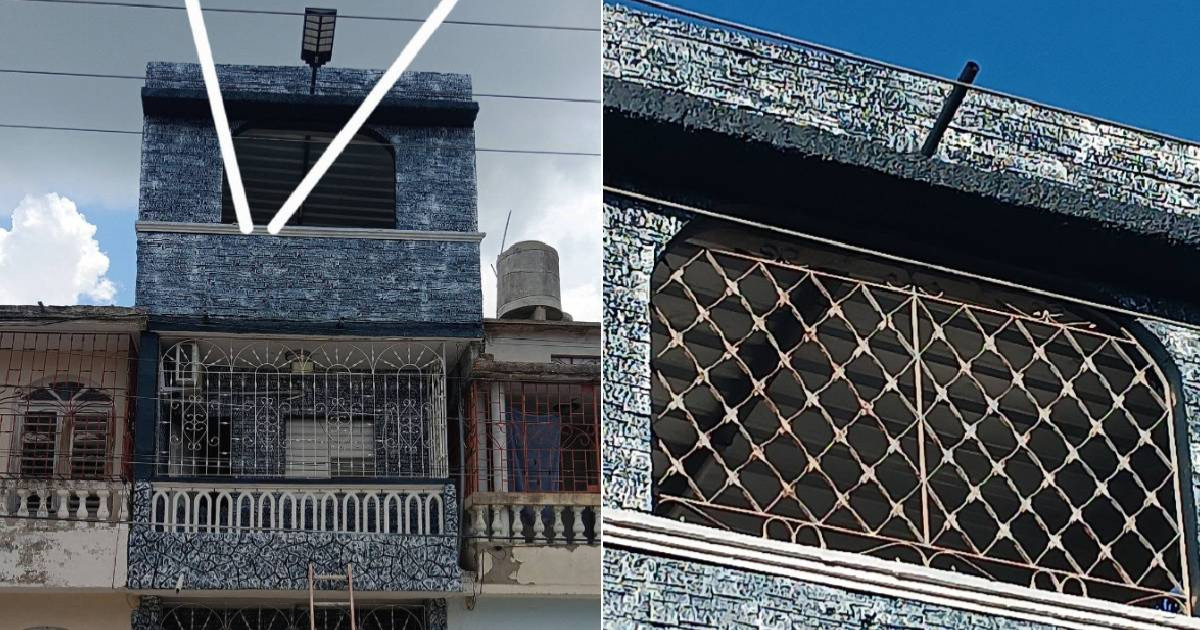
Not even the light that a family shared with their neighbors to alleviate the darkness of power outages was safe from theft in Cuba, where a solar lamp installed in front of a house on Alemán Street in the city of Santa Clara disappeared during the early hours of Thursday.
The owner, identified as Maylín García, posted on her Facebook profile a message addressed to the person responsible for the theft, explaining that the installation benefited not only her home but also a large part of the block. Her post spread among hundreds of users and prompted numerous reactions.
"Perhaps you saw a lamp and thought only of taking it with you. But we placed it there thinking of everyone, because with so many blackouts in Cuba, that light illuminated a good part of the block and helped our neighbors have a bit of brightness as well," García wrote.
The woman, who specified in the comments that she lived on Alemán Street in the city of Santa Clara, summarized the harm with a phrase that highlighted the collective nature of the loss. "You didn't just take a lamp. You took a bit of the light we shared with others," she expressed.
García closed his publication with a phrase that captured the feelings of many: "And although that light may no longer be there, the shame of what you did is yours, not ours."
The reactions revealed that the problem would not be an isolated case. One user reported that two lamps were stolen from the Casino Deportivo in Havana, and that the thief returned the following month to take the other two.
Another person reported that they had installed two lights to illuminate the street and make it easier for pedestrians to walk, but they were also stolen.
Some participants in the debate warned that the removal of these devices not only eliminates a source of lighting but also leaves the streets darker, potentially facilitating other crimes. Others called for harsher measures against those who harm the community.
The case of Santa Clara highlights the loss of a domestic solution that a family had provided to their neighbors to cope with power outages. The lamp did not replace the electrical supply, but it offered shared illumination during the outages, a support that vanished with the theft.
In August, solar lamps installed on the avenues of Santiago de Cuba were stolen just days after their installation, while the police did not respond to distress calls.
In July, the parish of the Escolapios in Havana reported the theft of lamps acquired through donations. And in June, eight young people were arrested in Guantánamo for stealing more than 20 public lighting lamps to resell them to private businesses for prices ranging from 15,000 to 20,000 Cuban pesos.
Photovoltaic equipment has become one of the most sought-after goods in the informal Cuban market, driven by an energy crisis that causes power outages exceeding 20 hours a day in several areas.
The authorities responded to the phenomenon with Opinion 475 from the People's Supreme Court, which classifies the theft of solar components as sabotage—a crime against state security—with penalties ranging from seven to 30 years in prison, life imprisonment, or the death penalty in severe cases.
Despite this, thefts continue unabated. According to the Cuban Observatory of Citizen Auditing, verified thefts in Cuba increased by 479% between 2023 and 2025, with 1,536 documented cases in just the latter year.
Related videos:
Filed under: