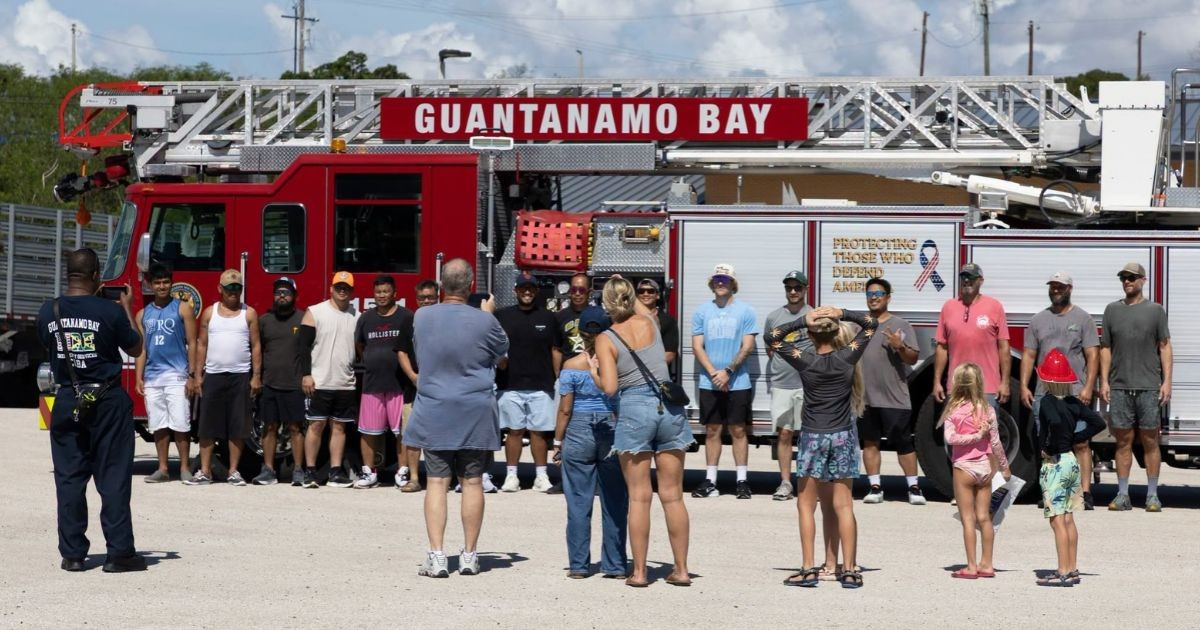
A supervisory report prepared by Democratic staff of the United States Senate questioned the high cost of the immigration operation at the Naval Base in Guantanamo, where an inspection conducted in August found 445 individuals assigned to the mission and no detained migrants.
The report, published on October 9 under the title Congressional Oversight of Immigration Detention at Naval Station Guantánamo Bay, was prepared following a visit to the facility on August 10.
During that inspection, there were no migrants in custody at the base, while 380 personnel from the Department of Defense, 13 ICE employees, 37 AIP contractors, and 15 members of the ICE Health Service Corps were assigned to the operation, for a total of 445.
According to the document, since the first transfer flight on February 4, 2025, the administration of Donald Trump has sent approximately 852 adult men from the United States to Guantánamo, costing taxpayers more than 100 million dollars.
The New York Times, which reported on the findings of the study, estimated that this expenditure amounts to approximately 118,000 dollars for each migrant who has passed through the facility, based on the nearly 850 detainees sent to Guantánamo since February 2025.
The base has primarily served as a temporary detention point before the deportation or transfer of migrants to other destinations. Senate staff were informed that the average stay of the approximately 850 men had been between 20 and 30 days, although some remained for months.
The report specifically questions this imbalance between human resources, installed capacity, and the actual number of detainees, and maintains that the operation incurs a significant cost to taxpayers and affects the availability of military personnel.
The deployment began after Trump ordered in January 2025 to prepare the Guantánamo Naval Base to accommodate up to 30,000 migrants as part of his detention and deportation strategy.
The reality has strayed far from that objective. A report from the Government Accountability Office (GAO) confirmed that the Department of Defense initially set up tent facilities with capacity for 5,000 people, but they were dismantled without having housed a single detainee after the Department of Homeland Security determined that they did not meet the required standards for this type of facility.
The cost of those stores reached approximately $2.85 million, even though they were never used. The operation was significantly reduced since February 2025 and began to operate at a much lower capacity.
The Senate inspection also identified infrastructure issues and a lack of coordination among the various agencies involved.
In Camp VI, an old prison used for detainees related to the so-called war on terrorism, bunk beds had been installed in the cells to allow a capacity of up to 350 migrants. However, during the visit, only between 270 and 280 beds were available due to maintenance work.
When there is detained population, the planned scheme includes 23 military personnel per shift, accompanied by two AIP contractors and one ICE agent.
The researchers also noted that they could not identify clear joint operational procedures between the standards used by military personnel and those implemented by ICE, despite both being involved in the custody of migrants.
The document also questioned the conditions for access to lawyers. In Camp VI, detainees did not have a specifically designated area to maintain confidential phone conversations with their legal representatives.
Guantánamo also has a facility separate from the Department of Homeland Security, historically intended for migrants intercepted at sea who seek protection. Although its nominal capacity is 100 people, Senate staff determined that it could only accommodate about 50 men due to structural or maintenance issues.
The operation has mainly served to temporarily relocate individuals who were already in the deportation process.
A quarterly report from the inspector generals regarding Operation Southern Guard indicated that, between January 21, 2025, and July 29, 2026, 839 migrants had been transferred to the base: 632 were repatriated to foreign countries and 207 were sent to destinations within the United States for reasons related to deportation, health, or legal processes.
The average accumulated duration of stays was then 14 days, although some migrants stayed for as long as 101 days in Guantánamo.
Months earlier, the low occupancy rate of the Guantánamo Naval Base facilities had already been called into question.
In May, only six migrants were detained at the facility, all of whom were Haitians, while the Department of Defense maintained 522 military personnel assigned to the operation and around 60 ICE employees.
Two months later, the Trump administration was still considering expanding the detention capacity of Guantanamo as part of a plan that included 13 other locations.
At that time, it was estimated that the military component of the operation cost around $73 million annually, despite less than 2% of the approximately 400 beds being occupied.
Guantanamo has also been used to temporarily detain Cuban citizens before their deportation. In December 2025, relatives reported that 22 Cubans who had signed their voluntary departure to the island ended up being transferred from Louisiana to the naval base.
A month later, dozens of Cubans were detained in Guantánamo after believing that the plane they were on would take them directly to Havana.
Around 50 men were temporarily trapped in a complicated transfer process between the base, the United States, and Cuba.
Finally, in February, the United States repatriated 170 Cubans on a flight to Havana, including individuals who had previously been held in ICE facilities and at the Guantanamo Naval Base.
El uso de Guantánamo como centro de detención migratoria forma parte de un debate más amplio sobre las políticas de inmigración en EE.UU. Sigue todos los detalles en nuestra sección de
Related videos:
Filed under: