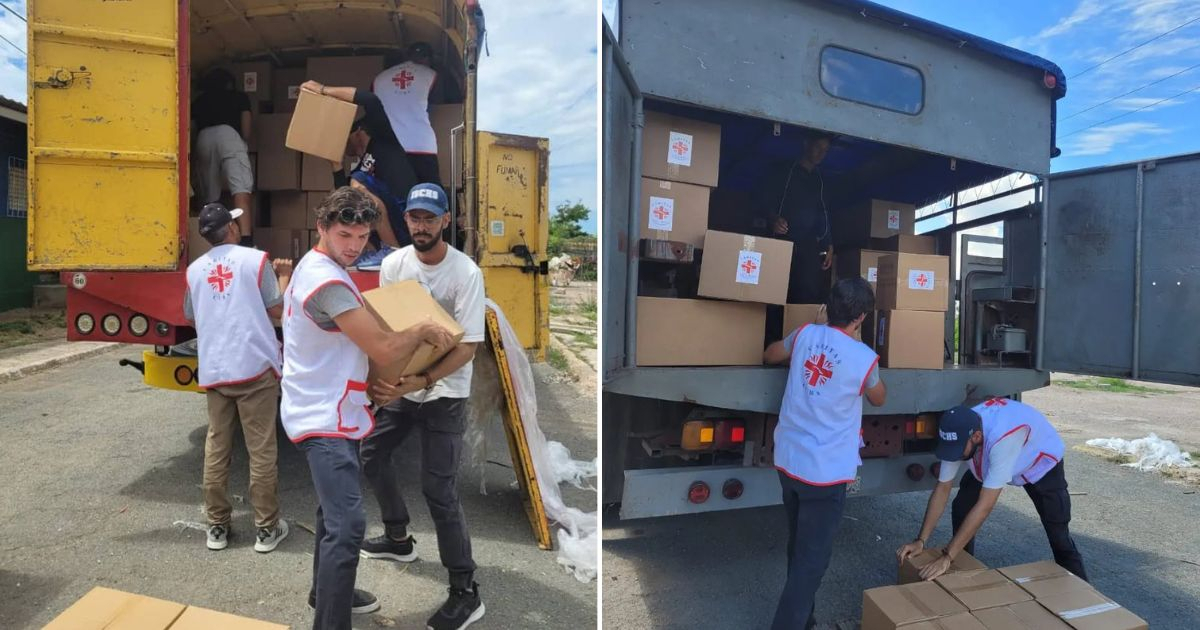
The UN listed Cuba among the twelve humanitarian crises with the least funding in the world and will announce the dispatch of four million dollars in vital assistance, according to an investigation by Diario de Cuba released this week.
The announcement is part of a global package of 160 million dollars that the United Nations Central Emergency Response Fund (CERF) released on October 2 to address those twelve emergency situations, the independent media explained.
The allocation destined for Cuba is the lowest among them, far below the 18 million that Afghanistan, Yemen, or the Occupied Palestinian Territory will receive, and also below the 16 million for Somalia and Sudan, it details.
The inclusion of the island in that list represents an institutional acknowledgment that there is a significant gap between the humanitarian needs of the country and the resources available to meet them. With this disbursement, the CERF has allocated 483 million dollars throughout 2026.
The new allocation adds to a broader humanitarian plan launched by the UN in March 2026 for $94.1 million, aimed at assisting nearly two million people in 63 municipalities across eight Cuban provinces. However, by mid-September, that plan had only received $42 million, less than half of what was needed, with a deficit exceeding $52 million.
The background of the crisis is fundamentally energy-related. The National Electroenergetic System experienced at least seven massive collapses in 2026, with blackouts lasting up to 48 consecutive hours in provinces like Santiago, Holguín, and Matanzas, and between 15 and 20 hours in Havana. In August, electricity generation covered less than a third of the national demand.
The cascading effects are devastating. The Office for the Coordination of Humanitarian Affairs (OCHA) estimated that the water shortage affects about 3.5 million people, while UNICEF warned that power outages jeopardize the vaccination of around 70,000 children.
The UN Resident Coordinator in Cuba, Francisco Pichón, described the situation as a "systemic energy shock" and "the main multiplier of humanitarian risks." In April, Pichón warned that "the energy crisis has a systemic and increasingly severe impact on health, water and sanitation, food systems, education, transportation, and telecommunications."
The Cuban regime itself acknowledged that in April 2026, only one fuel ship arrived out of the eight needed each month, a statistic that highlights the magnitude of the shortages. This situation was compounded by the structural damages caused by Hurricane Melissa, which struck the island as a Category Three storm in October 2025 and affected more than two million people.
Pichón arrived to request that a humanitarian exception for oil and aid destined for Cuba be negotiated with the United States, a request that highlights the extent to which the fuel shortage is at the heart of the emergency.
From October 2025 to mid-September 2026, approximately 1.6 million people had received some form of assistance under the UN humanitarian plan, a figure that contrasts with the more than 52 million dollars still needed to fully fund that effort.
Related videos:
Filed under: