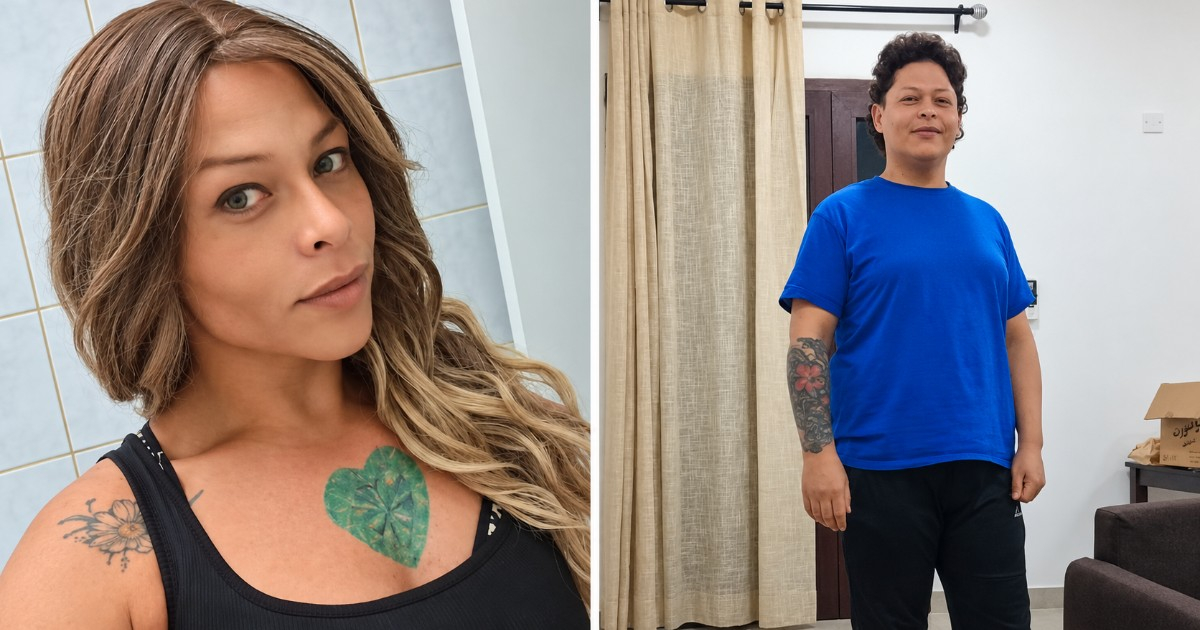
Daniela Fuentes, a 32-year-old transgender Cuban who lived in Miami, remains in Bangui, the capital of the Central African Republic, where she hides her gender identity for fear of discrimination and cannot work due to a lack of documents. Although the Cuban embassy has authorized her return to the island, she wants to seek asylum in another country, possibly Canada, according to a report by Associated Press published by Univision on October 11.
Fuentes lives in an apartment complex in Bangui where Central African authorities house individuals deported from the United States. He shares a room with four Cuban men who, he said, are aware of his gender identity and take care of him.
To go unnoticed, she wears men's clothing, tries to speak in a low voice, and only uses her wig in the privacy of the bathroom. "They took away my whole life, everything that I am," she lamented while describing how her life has changed since she was sent to the African country.
Fuentes explained that they can leave the complex, but officials have advised the deportees to avoid doing so. They do not have passports or other identification documents, a situation that could cause them problems with the police and prevents them from working. The International Organization for Migration has provided them with food, while the group has collected donations to purchase groceries.
Cuba accepts her return, but she wants to apply for asylum
A document from the Cuban embassy cited in the report shows that Fuentes is authorized to return to Cuba. However, she hopes to seek protection in another country, possibly Canada. There have been no reports of an accepted asylum application or a date for her departure from the Central African Republic.
The woman grew up in La Lisa, Havana, and stated that she left Cuba in 2023 due to the harassment she faced and the economic difficulties. After seven months in Mexico, she entered the United States through a CBP One appointment and settled in Miami, where she worked in a beauty salon and was able to live openly as a woman.
Her situation in Africa contrasts with that period. In September, when she was staying at the Maison Confort hotel, Fuentes had already shared with CiberCuba the fear she felt when going out on the street. She now resides in the government complex, still lacks documentation, and does not know when she will be able to leave the country.
From a migration hearing in Texas to a flight to Africa
According to her testimony, Fuentes requested to transfer an ongoing immigration case to Florida from a court in Texas, but did not receive a response. She missed a hearing in that state and was later detained by immigration agents when they found her outside a motel. Public records consulted by the outlet confirm that a judge ordered her removal from the United States, although they do not detail the circumstances of the decision.
During her detention, she reported that she was placed with men, that her wig was removed, and that she was given a male uniform. She went through two detention centers in Florida and then to Texas. She claimed that she only learned her destination was Africa after about five hours of flying. She also stated that she does not have a lawyer. The Immigration and Customs Enforcement (ICE) did not respond to questions sent by journalists.
The limbo of deportations to third countries
The U.S. administration defends the legality of deportations to countries other than the country of origin and claims to obtain guarantees from receiving governments that expelled individuals will not be persecuted or tortured. Human rights organizations have questioned the conditions of some transfers and the effective protection of the deported.
A report by Human Rights Watch published on October 8 documented that 536 individuals of various nationalities were deported from the United States to African countries that were not their own between January 2025 and August 2026. Among them were at least 12 LGBT individuals sent to countries that criminalize same-sex relationships or certain public displays of affection. Other Cubans transferred to Africa reported imprisonments and a lack of information about their destination.
Yasmany Moreno, another Cuban deported to Bangui, explained that the group arrived without visas or documents validating their legal status in the Central African Republic. According to his account, the authorities initially spoke of providing them with assistance for 90 days, but the deportees are unsure of what will happen next. Fuentes continues to await documents that will allow him to leave the country.
Related videos:
Filed under: