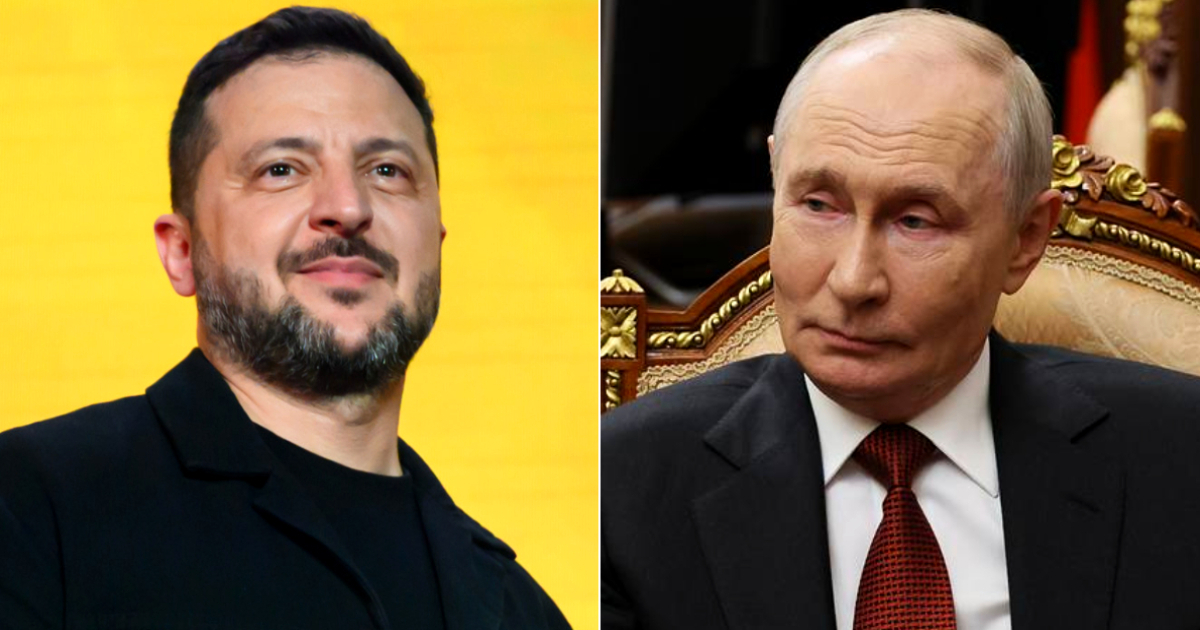
The Ukrainian president Volodymyr Zelensky put forward a proposal on Sunday that shifts the diplomatic pressure onto Moscow: if Russia agrees to a complete ceasefire for 60 days, Ukraine will hold presidential elections.
The statement, made during an interview with , was a direct response to the demands of U.S. President Donald Trump, who had called for a change in leadership in Kiev just days earlier.
Zelenski's maneuver shifts the responsibility to Vladimir Putin: if the Kremlin rejects the truce, it is exposed as the true obstacle for Ukrainians to vote. If it accepts, Ukraine gains two months of peace.
"Tell Putin to give us two months, 60 days of total ceasefire, and we will organize elections. Of course, we will be ready for any elections of our people, exactly of the Ukrainian people," stated the president.
The immediate context is a week of high tension. On October 10, Trump declared that “it is time for Ukraine to have a new president” and accused Zelenski of prolonging the conflict by authorizing Ukrainian attacks on Russian refineries.
One day earlier, Trump announced an agreement with Putin to release over 300,000 metric tons of Russian diesel into the global market, with a license from the Treasury Department that suspends sanctions for six months, until April 2027. Zelenski described that agreement as a "birthday gift for Putin," warning that this revenue directly finances the war.
Trump also announced an "energy ceasefire" between both countries, but Russia did not officially confirm it, and that same night continued attacking Ukrainian energy infrastructure. Zelenski denounced the new attacks as a blatant violation of the truce proclaimed by Washington.
In the ABC interview, Zelenski was explicit about the legal difficulties of holding elections during wartime: "Holding elections now is truly difficult. Not only because there is no security, but because it goes against our law and our Constitution."
The martial law in effect since the Russian invasion in February 2022 explicitly prohibits the holding of national elections. Nevertheless, the Ukrainian president offered the condition and emphasized that the decision regarding the country's leadership does not belong to foreign governments: "With all due respect to President Trump, it is up to our society, our people, to choose one leader or another".
Zelensky also revealed that he had previously shared the 60-day proposal with Trump's team, noting that both Putin and the American president have expressed interest in a political change in Kiev. “I know that Putin really wanted to change the president of Ukraine. I understand that,” he said before making his public condition.
The pattern of Trump pressuring Ukraine—the victim of aggression—rather than Russia—the aggressor—has sparked extensive international debate. This is not the first time: in February 2025, Trump referred to Zelenski as a “dictator without elections” on social media, and that same month he had a tense meeting at the White House with the Ukrainian leader.
The Kremlin formally rejected the proposal this Monday. The spokesperson Dmitri Peskov dismissed the 60 days, arguing that Russia is not seeking a temporary pause but rather "a long-term peace," and only offered not to attack Ukraine on the specific day of the elections.
The chancellor Serguéi Lavrov was more emphatic: «Zelenski does not deserve any respite. Moscow will not trust guarantees and promises again».
Related videos:
Filed under: