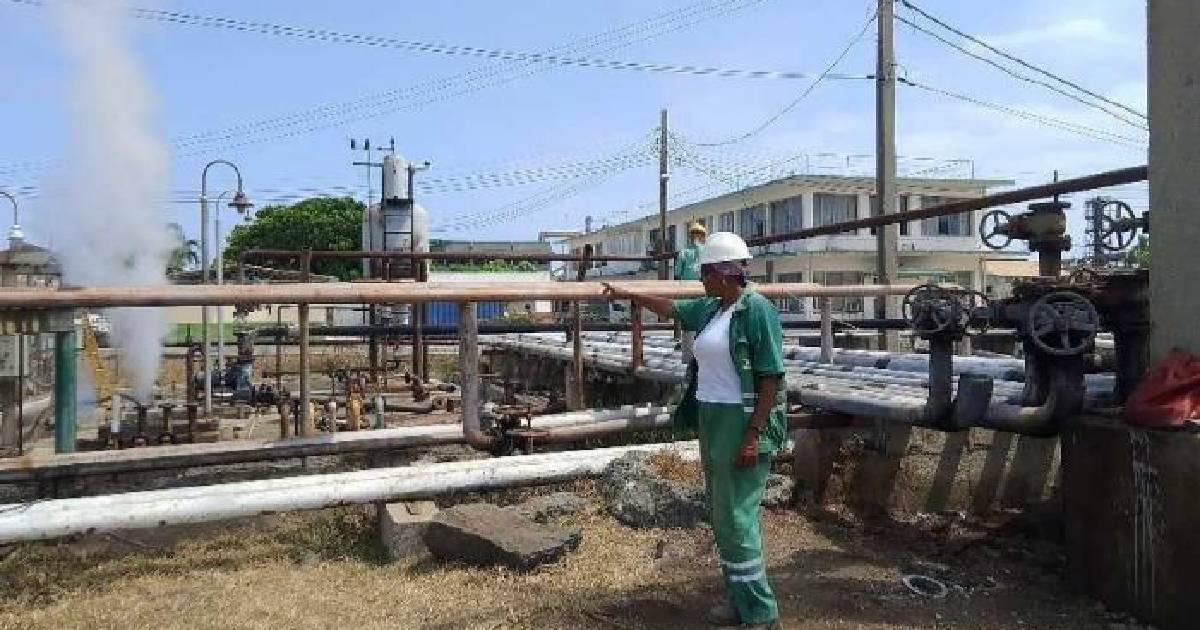
The Cuban regime approved new hydrocarbon legislation this week that specialists interpret not as a genuine economic reform, but rather as a political signal directed at Washington. According to an analysis by Martí Noticias, the Decree-Law 135/2026 "On Oil and Gas" and its regulations (Decree 184/2026), published on Monday in the Official Gazette, will come into effect on October 19.
The regulation repeals the 1938 Fuel Minerals Law and Law 635 of 1959, updating for the first time in nearly nine decades the legal framework for hydrocarbons on the island. It formally opens the door for foreign investors and national private actors—such as small and medium enterprises and cooperatives—to participate in the exploration and exploitation of oil and gas, although the deposits continue to be declared as "socialist property of all the people," with no transfer of ownership.
The planned modalities include shared production contracts with a validity of up to 40 years, extendable for an additional 10 years, and oil concessions lasting up to 30 years. The cost recovery limits are set at 65% of gross production on land and in shallow waters, and up to 75% in deep waters. Concessions will be awarded preferably through open public tenders.
Pedro Abigantus León, director of Investments and Business for Oil and Gas at the Ministry of Energy and Mines, stated that the new regulation aims to "confirm and broaden the openness to foreign investment with legal certainty."
However, the experts consulted by Martí Noticias provide a more political interpretation. Emilio Morales, an economist and president of The Havana Consulting Group, pointed out: "The regime feels suffocated: its main partners have withdrawn and it no longer receives credit from political allies. In this context, the new decree seems more like a conciliatory gesture towards the Trump administration than a genuine attempt to attract other investors."
Morales points to a context of unprecedented isolation. After the capture of Nicolás Maduro at the beginning of the year, Venezuelan crude oil shipments—which surpassed 96,000 barrels per day in 2011 and had decreased to about 26,500 in 2025—were completely interrupted since mid-December of last year. Pemex also suspended its shipments due to the tariff risk imposed by Washington. The national production of CUPET, at only 40,000 barrels per day, covers one third of the domestic demand, estimated between 90,000 and 110,000 barrels per day.
At this energetic pressure is added the financial pressure: the State Department sanctioned CUPET in June 2026 under Executive Order 14404 by Trump, blocking its assets in the United States and prohibiting any transactions with U.S. persons. CUPET and CIMEX, both under the military-business conglomerate GAESA, control virtually the entire oil value chain and are barred from Western capital.
Jorge Piñón, senior researcher at the Energy Institute of the University of Texas, has warned that attracting real investment requires more than just a new legal text. According to his analysis published in Diario de Cuba, "for Cuba to have an open, independent, and efficient fuel distribution and marketing segment, it needs to restructure its current monopolistic model of the oil value chain."
The reform is part of a package of 176 economic measures announced by Prime Minister Manuel Marrero Cruz in June, and it complements the removal of the limit of 100 workers for private companies approved in September, which expands the range of entities that can apply for concessions.
For Morales, the underlying intention is clear: "Havana is alone and understands that its survival depends on reaching an agreement with Washington. Opening up the oil reserves would be a lure to avoid an intervention, which today seems like the only real option on the table."
Related videos:
Filed under: