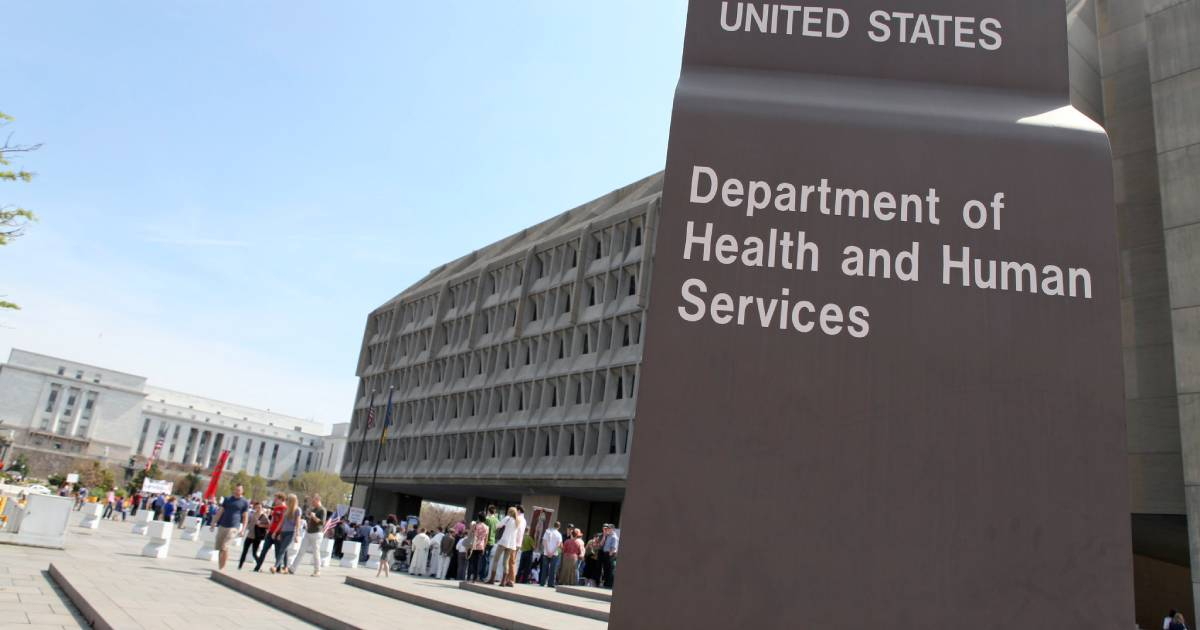
The U.S. Department of Health and Human Services (HHS) declared a public health emergency in Florida and Alabama due to the consequences of Hurricane Isaias, a measure that will temporarily relax certain Medicare, Medicaid, and Children's Health Insurance Program (CHIP) requirements to facilitate healthcare in the affected areas.
The decision was made on Tuesday, October 13, by Health Secretary Robert F. Kennedy Jr., and officially announced this Wednesday, as part of the federal response to the damages caused by the cyclone.
The measure complements the emergency declarations approved by President Donald Trump on October 9 for both states, which allowed for the mobilization of resources from the Federal Emergency Management Agency (FEMA).
However, the health declaration has a different purpose: to enable hospitals, doctors, and other providers to continue attending to patients, even when the consequences of the hurricane make it difficult to meet certain administrative requirements.
"We are helping to maintain essential services, respond quickly as needs change, and ensure the availability of medical care during the response and recovery," stated Kennedy.
What flexibilities are authorized for Medicare and Medicaid?
The declaration allows the Centers for Medicare and Medicaid Services (CMS) to apply temporary waivers and modifications to certain regulations in the areas covered by the emergency.
Among the authorized flexibilities are:
- Facilitate, under certain conditions, the provision of services by healthcare professionals with licenses issued in other states.
- Relax the payment limitations for services provided to Medicare Advantage beneficiaries by physicians or centers outside their plan's usual network.
- Temporarily modify certain certification, participation, and prior authorization requirements for medical service providers.
These measures aim to prevent disruptions in the care of individuals who rely on federal health programs.
The statement does not represent the provision of direct financial aid to families nor does it mean that all health requirements are suspended. The flexibilities are applied under the conditions established by federal authorities.
For Cubans living in Florida who receive Medicare or Medicaid, these provisions can facilitate the continuity of treatments and consultations while health services recover from the effects of the hurricane.
According to the official authorization from HHS, the waivers will take effect on October 16, although they will be retroactive to October 6 in Florida and October 7 in Alabama.
Special attention to patients who rely on electrical equipment
Before the arrival of the hurricane, the Administration for Strategic Preparedness and Response (ASPR) deployed personnel to at-risk areas and mobilized specialized teams to assess the impact on medical facilities and support local authorities.
As part of the response, the agency shared information about the HHS emPOWER program, which provides data on a geographic basis regarding how many Medicare beneficiaries rely on electric medical equipment or require specific essential health services.
The tool also provides data on patients who require dialysis or specific home healthcare services.
This information is particularly important following the prolonged blackouts caused by Isaías.
The hurricane made landfall near Destin, Florida on October 9, as a Category 2 storm, with sustained winds of 105 miles per hour, and caused significant property damage and power outages in various parts of Florida and Alabama.
Psychological help available 24/7
The HHS reminded that individuals emotionally affected by the disaster can contact the Disaster Distress Helpline, managed by the Substance Abuse and Mental Health Services Administration (SAMHSA).
The service is available 24 hours a day, every day, and allows assistance in more than 100 languages through telephone interpretation.
Those affected can call or send a text message to 1-800-985-5990.
Related videos:
Filed under: