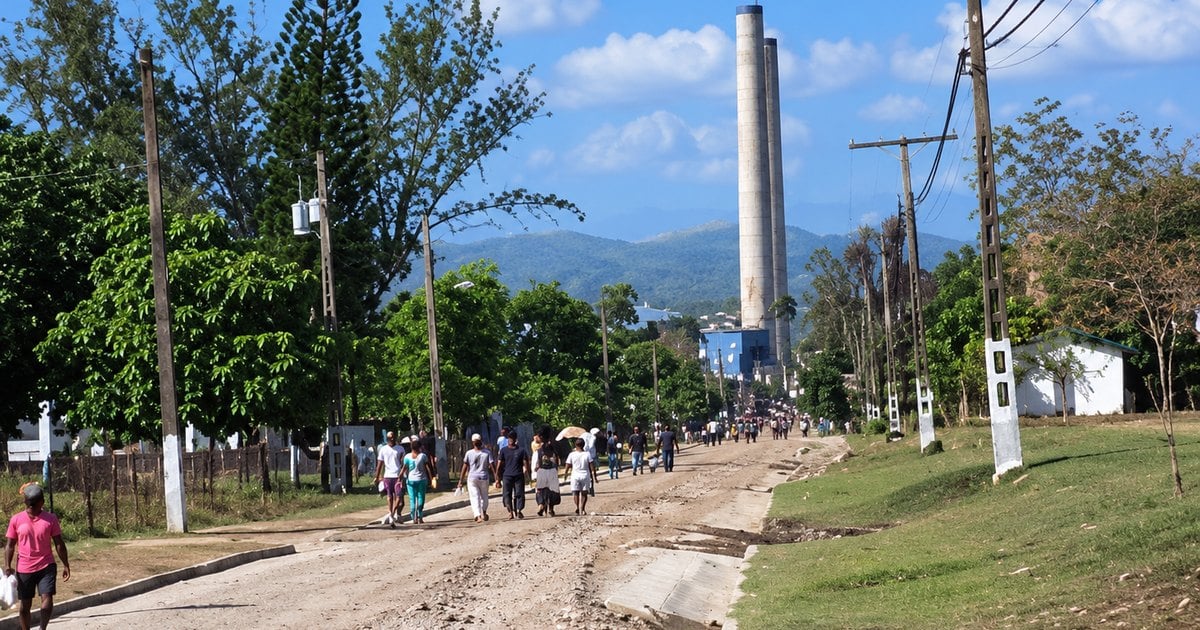
Discussing the sugar industry in Santiago de Cuba, and particularly in the municipality of Songo-La Maya, brings back memories of a time when the sound of the sirens dictated the rhythm of economic and social life.
Songo-La Maya, a region with a strong agricultural vocation, was a source of pride for its inhabitants thanks to two giants that supported its flourishing: the Central Los Reynaldos (founded in the 19th century as San Manuel and linked to Creole bankers and Spanish-Cuban sugar companies) and the Central Salvador Rosales (established in the early 20th century as Baltonley, under the structure of the Baltonley Sugar Company and the Compañía Azucarera Maya S.A., expropriated in 1960 without compensation for its owners).
For over a century, both sugar mills drove the progress of the region. However, the 2002 sugar "restructuring" paralyzed and dismantled both plants, reducing Songo-La Maya to a mere area supplying sugar cane and
A provincial analysis reveals the consequences of that dismantlement. The current productive capacity of the former sugar mills operating in Santiago de Cuba has collapsed to historic lows. In the 2024-2025 season, the Dos Ríos mill (in Palma Soriano) remained the only active sugar mill in the entire province. Its performance underscores the severity of the collapse: from a planned projection of 20,811 tons of sugar, the giant barely managed to process around 2,700 tons, a meager 13% of the target, according to a report by the EFE agency at the time. The little sugarcane currently harvested in the impoverished fields of Songo-La Maya must be transported over long and costly distances to the mills in Mella or Palma Soriano.
This provincial decline is part of a national macroeconomic catastrophe. In the 2024-2025 harvest, Cuba produced less than 150,000 tons of sugar, the lowest figure recorded in over a century. The seriousness of the deterioration has forced the country to import sugar in an attempt to meet the minimum quota of the rationing basket.
The origin of this paralysis is structural. The main bottleneck is not only the technological obsolescence of the remaining facilities but also the drastic decline in agricultural performance. The lack of fertilizers, herbicides, and machinery, combined with the massive migration of the rural workforce.
In bateyes like Los Reynaldos and Salvador Rosales, the disappearance of the sugar mills severed the local economic fabric, accelerating rural depopulation and stripping residents of the work pride that defined several generations.
The promoted shift towards various crops and the production chains have not achieved the stability that the harvest once provided.
The situation of the sugar agro-industry in Songo-La Maya and throughout Santiago de Cuba is a clear reflection of an exhausted model. As long as the sugar mills remain empty and the chimneys are silent, the impact on the municipality's wealth and the quality of life for its citizens will continue to be critical.
Reversing this collapse would require a comprehensive restructuring of the industry that combines deep investments, technological modernization, the systematic rehabilitation of the sugarcane crop, genuine autonomy for producers, and an urgent reconversion that restores dignity to those who rely on the land, along with the hope that the whistle of Los Reynaldos and Salvador Rosales will sound again.
Related videos:
Filed under:
Opinion article: Las declaraciones y opiniones expresadas en este artículo son de exclusiva responsabilidad de su autor y no representan necesariamente el punto de vista de CiberCuba.