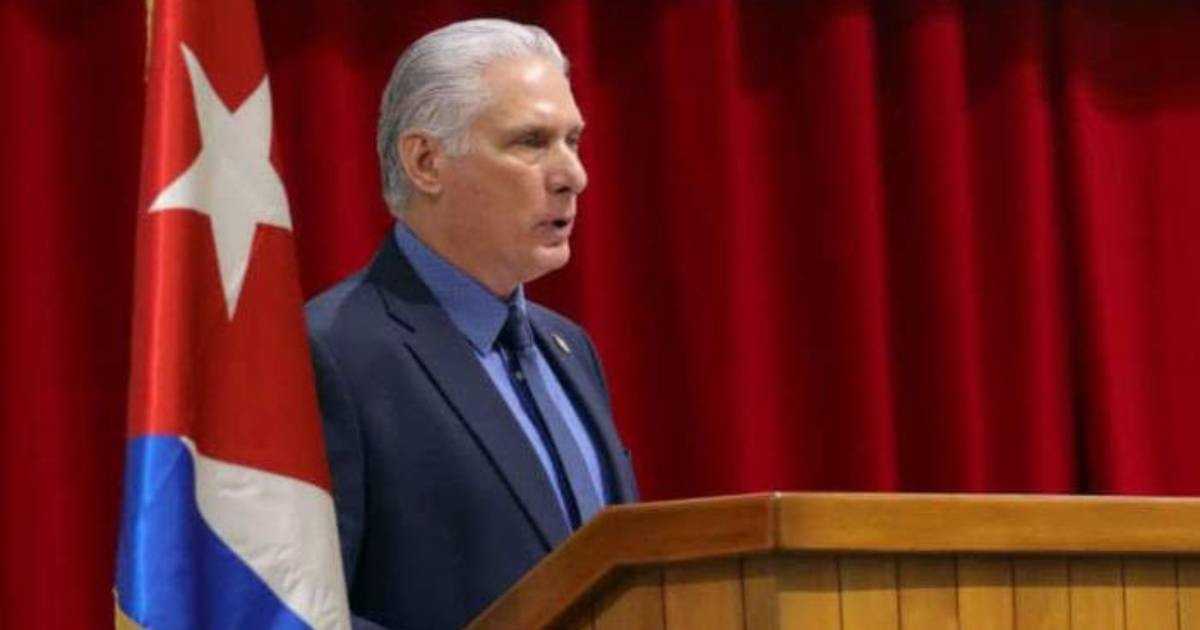
Miguel Díaz-Canel turned to social media this Thursday to criticize the United States just days before the annual voting in the UN General Assembly on the embargo against Cuba, scheduled for October 28, repeating almost word for word the same script that the regime used exactly one year ago.
In a Facebook post, the Cuban leader accused Washington of "desperately pressuring sovereign nations to support its genocidal actions" and stated that this "frantic effort to reach out to international leaders and officials is the best evidence of how alone and isolated they are in the world regarding their policy against Cuba."
The chancellor Bruno Rodríguez Parrilla joined the accusations on Wednesday via X, directly targeting Secretary of State Marco Rubio: «nervous and anxious in face of another defeat at the United Nations, he is pressuring and blackmailing Heads of State and Government from various countries to change their votes,» wrote the Cuban chancellor.
What the regime presents as a new denunciation is, in fact, a well-known script. In October 2025, Rodríguez Parrilla called an extraordinary press conference to denounce exactly the same thing: a “false, slanderous, and disrespectful campaign against the sovereignty of the member States” of Washington before that year's vote.
The American diplomatic efforts that the regime denounces as "blackmail" have at least one documented case: the State Department confirmed that Rubio called Salvadoran President Nayib Bukele on Monday to ask him to align with Washington at the UN, including the Cuban issue.
Rubio argued that "the Cuban regime will not implement the reforms needed by the Cuban people as long as it believes it has the support of the international community," according to sources cited by Infobae.
The rhetoric of the regime contrasts with a reality that discomforts it: international support for Cuba at the UN has been steadily declining. The resolution received 187 votes in favor in 2024, fell to 165 in October 2025 — the lowest level in over a decade — and barely reached 136 in the extraordinary session of July 2026.
In 2025, Argentina voted against for the first time under the government of Javier Milei, joined by Hungary, Israel, North Macedonia, Paraguay, Ukraine, and the United States. It is expected that several of these countries will maintain their position on October 28.
From the Cuban opposition side, more than 554 activists and organizations —including José Daniel Ferrer, Orlando Gutiérrez Boronat, and Jorge Luis García Pérez "Antúnez"— published a letter addressed to democratic governments on Tuesday, urging them to vote against or abstain, arguing that supporting the resolution benefits the regime rather than the Cuban people.
The initiative, driven by the Assembly of the Cuban Resistance and UNPACU, surpassed 1,000 total endorsements.
The context of 2026 is more challenging for Havana than the previous year: the Trump administration has imposed more than two dozen sanctions since January, including an executive order that restricted all fuel imports to the island.
On September 22, Trump called Cuba an "absolutely failed state" before the General Assembly and revealed that Rubio "is leading a negotiation and is deeply involved in the talks with Cuba."
The annual resolution on the embargo has been presented at the UN since 1992 and is non-binding: its approval does not legally obligate the United States to change its policy, which makes the vote a diplomatic positioning exercise, the real value of which for the Cuban people remains, for the opposition, null.
Related videos:
Filed under: