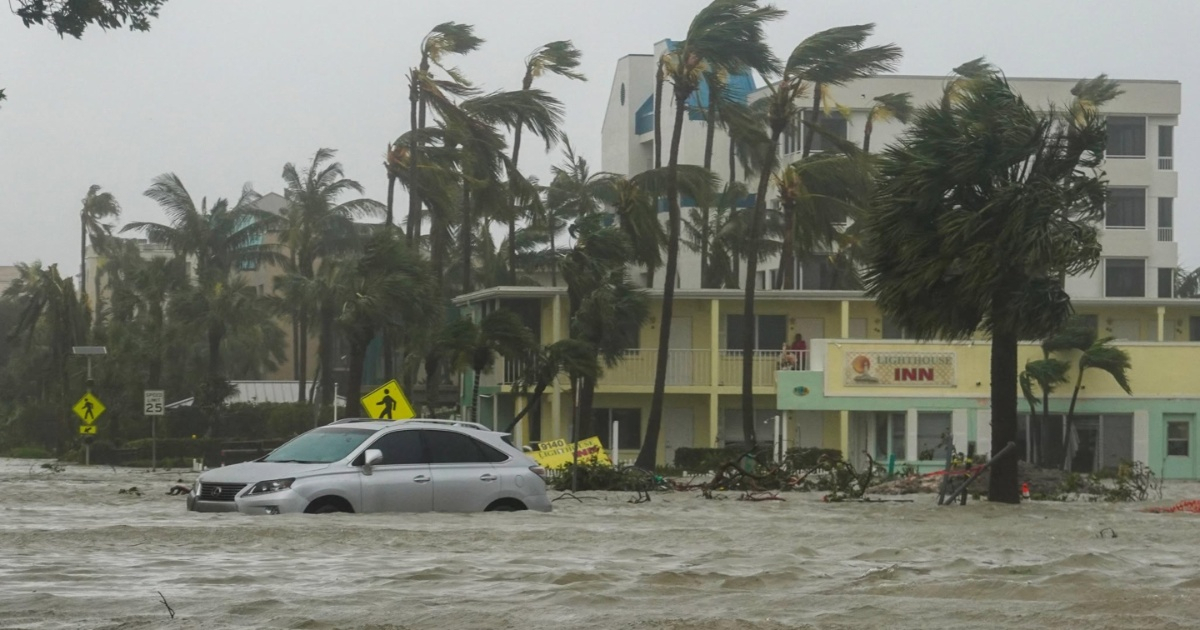
The Governor of Florida, Ron DeSantis, requested a major disaster declaration from President Donald Trump this Friday following the passage of Hurricane Isaias, with the aim of obtaining resources for the recovery of 15 counties in the northwest of the state, including eight where direct financial assistance is also being sought for affected families.
The request was submitted by the Florida Division of Emergency Management (FDEM), according to a report from the governor's office on October 16.
The request includes funds to repair public infrastructure, remove debris, and cover emergency expenses, as well as potential assistance for temporary housing and repairs to private homes.
The major disaster declaration has not yet been approved by the federal government. Therefore, residents of the counties included in the request cannot yet take for granted that they will receive the individual assistance requested.
"As recovery efforts continue, Florida has submitted a request for a major disaster declaration to the federal government. We are seeking public and individual assistance to support residents of the Panhandle, local governments, and infrastructure affected by the storm," stated DeSantis.
The governor also announced a collaboration with the organization Emergency RV to provide temporary housing for families who lost their homes or cannot return to them due to the damage caused by Isaias.
The 15 counties for which Florida is requesting federal aid
The application for FEMA Public Assistance includes the following 15 counties:
- Bay
- Calhoun
- Escambia
- Franklin
- Gadsden
- Gulf
- Holmes
- Jackson
- Jefferson
- Liberty
- Okaloosa
- Santa Rosa
- Wakulla
- Walton
- Washington
If Washington authorizes the declaration, eligible state and local governments, as well as certain nonprofit organizations, could access federal funds to offset expenses related to disaster response and recovery.
Among the actions that could receive funding are debris removal, emergency protective measures, and the repair or replacement of roads, bridges, public buildings, service networks, and other essential infrastructure.
The governor's office emphasized that these resources are particularly important for smaller counties with limited budgets, where recovery costs can pose a significant burden on local administrations.
Eight counties could receive direct assistance for their residents
In addition to the funds allocated for public administrations, Florida requested FEMA Individual Assistance for residents of eight counties who suffered damage to their homes or personal belongings.
The counties included in this part of the petition are Bay, Escambia, Gulf, Holmes, Okaloosa, Santa Rosa, Walton, and Washington.
If the application is approved, households that meet the requirements could access resources for:
- Temporary accommodation when the regular residence is uninhabitable.
- Basic repairs of damaged homes.
- Replacement of certain essential personal goods.
- Other necessary expenses directly related to the disaster, according to the authorized programs.
These aids are designed to address needs that are not covered or only partially covered by the victims' insurance.
However, the inclusion of a county in the state application does not guarantee that all its residents will receive money. Federal approval must specify the available programs, and each applicant will have to meet the corresponding requirements.
How to apply for FEMA assistance?
The Florida Government explained that once the federal declaration is approved and the enrollment period is opened, eligible residents will be able to submit their applications through DisasterAssistance.gov or by contacting FEMA at 800-621-3362.
For now, that procedure depends on the federal government authorizing the individual assistance requested for the relevant counties.
Affected families should keep photographs of the damages, documentation related to the housing, and records of expenses incurred due to the hurricane, as these may be useful for dealings with insurance companies and recovery programs.
Florida announces temporary housing for displaced families
While awaiting the federal response, the state government announced a collaboration with Emergency RV to provide temporary housing for residents who cannot remain in their homes after the hurricane.
The program will prioritize eligible families whose homes have suffered more severe damage, intending for them to remain close to their communities while repairs are underway.
"We are going to do everything we can to help these families rebuild their homes, and in the meantime, we want them to continue living in their communities with the least disruption possible to their daily lives," stated DeSantis.
Affected individuals interested can check the requirements and the application procedure at EmergencyRV.org.
This temporary housing initiative is independent of the approval of the Individual Assistance funds that Florida has requested from FEMA.
Damage assessments following the passage of Isaías
To support the request for a major disaster, state authorities collaborated with county emergency officials, the Federal Emergency Management Agency (FEMA), and the U.S. Small Business Administration (SBA).
The teams conducted assessments of damage to homes, businesses, and critical infrastructure, with the aim of documenting the economic impact and the needs that cannot be met solely with local and state resources.
The executive director of FDEM, Jared Perdue, stated that the teams had been working diligently to gather the necessary information.
"Our teams have worked tirelessly to document the impacts of Hurricane Isaias and identify the needs of the affected communities," he noted.
Perdue added that the authorities are maintaining coordination with their federal partners to obtain the additional assistance that residents need during the recovery.
In the case of Public Assistance, FEMA evaluates eligible damages using economic indicators established at the state and county levels. This information helps to determine whether the magnitude of the disaster justifies the requested federal intervention.
A hurricane that caused damage, blackouts, and fatalities
Isaías made landfall near Destin, in the northwest of Florida, on the night of Friday, October 9, as a Category 2 hurricane, with sustained winds of approximately 165 kilometers per hour.
The storm caused damage to homes, roads, and electrical networks, as well as coastal flooding and fallen trees in various locations in the Panhandle.
Authorities confirmed at least two fatalities in Florida following the hurricane's passage, while emergency services continued to assess the damages.
The blackouts also seriously affected the region. In the early hours following the impact, several counties reported widespread power outages, with damage to poles, wires, and other facilities.
The threat did not disappear immediately after Isaías lost intensity. The authorities warned about new flooding and risks associated with the recovery, including cleanup and repair efforts.
What other assistance is available for the victims?
In addition to the pending federal programs awaiting approval, affected residents can turn to community services and organizations that are already providing assistance in northwest Florida.
Among the available resources is 211, which allows you to locate organizations that provide food, temporary shelter, medical care, and other essential services, depending on availability in each area.
The affected individuals can also consult this resource guide for obtaining food, shelter, and legal assistance after Hurricane Isaias, which contains information about phone numbers and support services.
The Florida Division of Emergency Management maintains information on recovery and available resources at FloridaDisaster.org/updates.
Related videos:
Filed under: