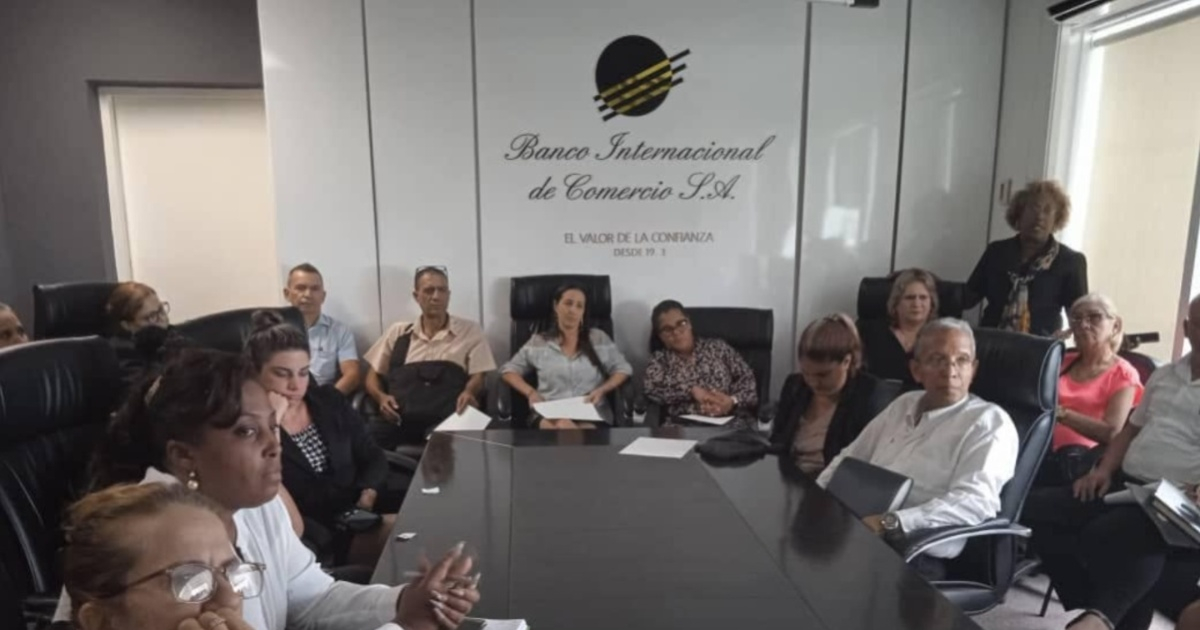
The Office of Foreign Assets Control of the U.S. Department of the Treasury (OFAC) published a regulatory clarification on Thursday, establishing a deadline until November 14, 2026 for foreign individuals and international financial institutions to orderly sever their ties with the International Commerce Bank, S.A. (BICSA), the Cuban state bank sanctioned that same day by the Department of State.
The instrument, identified as FAQ 1276 on the OFAC site, does not constitute a lifting of sanctions or a license to continue ordinary business operations with BICSA.
This is a temporary and limited position of non-application of sanctions, exclusively for operations that are "ordinarily incidental and necessary" for the divestment or the closure of transactions with the bank or with any entity in which BICSA holds directly or indirectly 50% or more of the ownership.
The clarification is relevant for correspondent banks, businesses, and foreign financial counterparts that maintain active relationships with BICSA and need time to arrange their exit before the sanctions take full effect.
OFAC explicitly warns that the stance has clear limits: returning assets to the sanctioned entity or transferring them to another jurisdiction for potential use by the target "could expose non-U.S. persons to a significant risk of sanctions," according to the text of the action published on October 15.
Those who cannot complete the closure process before November 14 will be referred by OFAC to their compliance line.
A critical point of FAQ 1276 is the distinction between foreign persons and individuals subject to U.S. jurisdiction.
For these last groups—U.S. citizens and companies, as well as entities controlled by them—the temporary stance does not change anything at all: they remain prohibited from operating with BICSA, even in the context of closing operations of a foreign entity, unless they have specific authorization from OFAC.
The only exceptions provided are humanitarian and diplomatic transactions outlined in the Cuban Assets Control Regulations (CACR, 31 CFR part 515) and General Licenses 1 and 4A issued under Executive Order 14404.
This clarification does not affect remittances or the individual accounts of Cubans residing in the United States, whose operations with Cuban entities are governed by a different and long-standing regulatory framework.
FAQ 1276 follows a pattern that OFAC has consistently applied throughout 2026 each time it designates a Cuban state bank of systemic importance: simultaneously issuing a clarification that grants approximately 30 days for foreign counterparts to arrange their exit.
The International Financial Bank (BFI), the financial arm of GAESA, was sanctioned on June 23; the Bank of Cuba was designated on September 3; and with BICSA, three of Cuba's major state banks have accumulated U.S. sanctions in less than four months.
The designation of BICSA was made as part of the "Economic Outcast Operation," the Treasury Department's campaign against Iranian financial networks.
According to the State Department, the Cuban bank provided financial services to the Iranian Karafarin Bank —already sanctioned since 2020— since at least 2022, which led to its inclusion on the list of Specially Designated Nationals and Blocked Persons (SDN) under Executive Order 14404, signed by President Trump on May 1, 2026.
Foreign financial institutions exposed to BICSA have less than 30 days to assess their situation and, if necessary, initiate the closure process before the deadline set by OFAC expires.
Related videos:
Filed under: