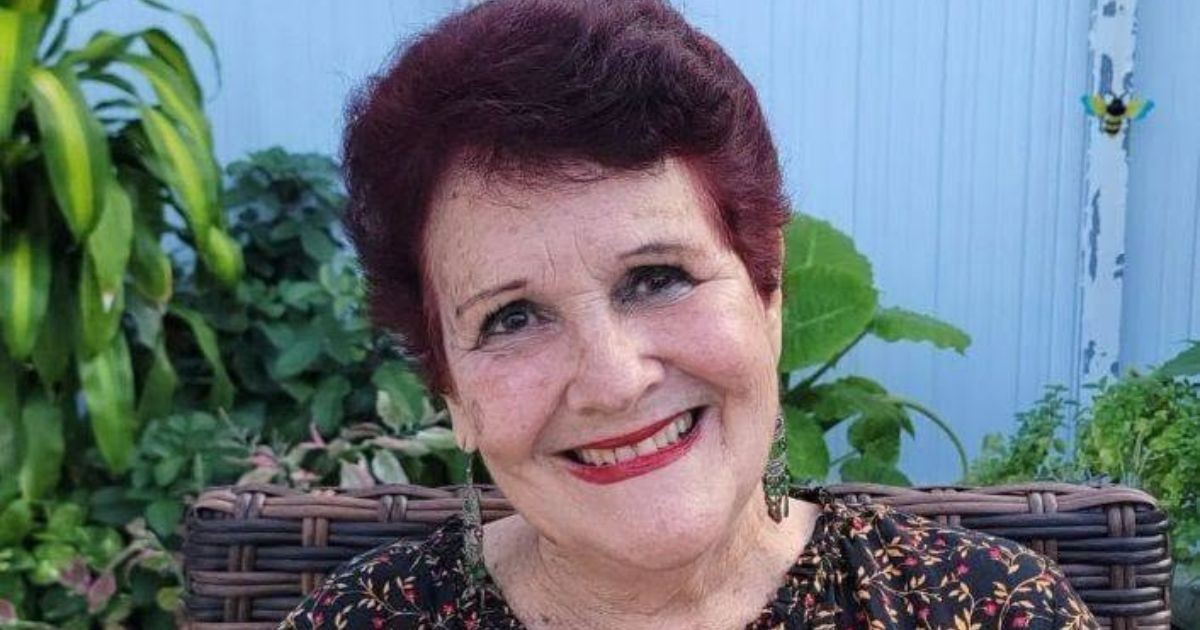
Dr. Carolina Luz de la Torre Molina, one of the most influential psychologists in Cuba, passed away this Friday morning at the age of 79. The Cuban Society of Psychology announced her passing in a statement on social media, describing her life and work as having left a “deep mark on psychological science, culture, and Cuban society.”
Born in Matanzas in 1947, a member of a family with deep intellectual roots, De la Torre graduated from the Faculty of Psychology at the University of Havana in 1971 and earned her PhD in Psychological Sciences from Lomonosov Moscow State University in 1982.
Since 1983, she served as a Full Professor at that Havana faculty, where she taught subjects such as History of Psychology, Clinical Psychology, Social Psychology, and Political Psychology for more than four decades. She also participated in teaching committees and supervised dozens of undergraduate and graduate theses.
She was the president of the Cuban Society of Psychology and at the time of her death, she held the title of Honorary Member of that institution, which defined her as "a high-level teacher and researcher, an intellectual committed to her time, and a woman of critical thought, whose work always championed the social sense of Psychology."
Among his most recognized books are Latin American Psychology: Between Dependency and Identity —Awarded by the Academy of Sciences of Cuba, reissued in Puerto Rico and Argentina— and Identities: A Psychological Perspective, which received the National Critics' Prize and the Catauro Cubano Award from the Fernando Ortiz Foundation.
The Society emphasized that "its legacy transcends recognition: it resides in the ideas that invited us to question, in the questions it taught us to formulate, and in the generations of students and professionals it inspired."
De la Torre was also a critical voice during times of political tension. In 2020, she questioned the repudiation rallies against activists linked to the San Isidro Movement, and in 2021 denounced the lack of freedoms in Cuba. In March 2026, she supported her son Abel Tablada, an architect and professor at CUJAE, after the non-renewal of his teaching contract due to critical publications about the government.
Months later, her reflections on the Cuban reality sparked what could be interpreted as a public response from her daughter Johana Tablada, a diplomat at the Ministry of Foreign Affairs, highlighting a probable tension that reflects the contradictions or fractures that the country's crisis, after decades of dictatorship, has created, even among families.
The news sparked a wave of condolences on social media. Psychologist Annia Almeyda Vázquez remembered her as "a brave woman, free-thinking, with precise and sharp words when necessary. A woman who was not afraid to think for herself or to say what she thought." Former student Juliette Isabel Fernández Estrada wrote that De la Torre was "the almost miraculous proof of how one could be a brilliant academic woman, have earned a doctorate in another country, write books, raise four children, and be a divorced mother. Of how one could be intelligent, honest, brave, energetic, funny, and magnetic."
His children reacted to the institutional announcement with words filled with sorrow. Abel Tablada wrote: "Thank you very much for this beautiful acknowledgment; there is so much pain and pride from his children as well." Johana Tablada responded with few but heartfelt words: "Thank you so much, oh my dear mother."
In November 2025, De la Torre had granted an extensive interview to OnCuba from Miami, in which she stated: "Nothing has given or gives more meaning to my existence than my family; both my primary family, where I grew up, and, in a more mature and conscious way, the family I formed."
"You only leave behind intelligence, courage, and love in your great journey through this world. Strength for your children and for all those who loved and respected you," wrote the Cuban academic and psychologist María Margarita Alonso Alonso in one of the hundreds of messages that flooded social media in tribute to someone who was, for generations of students, much more than a teacher.
Related videos:
Filed under: