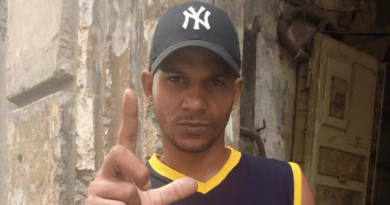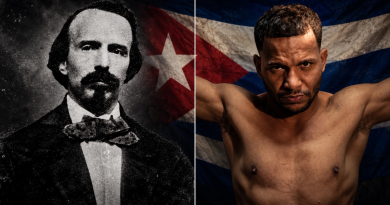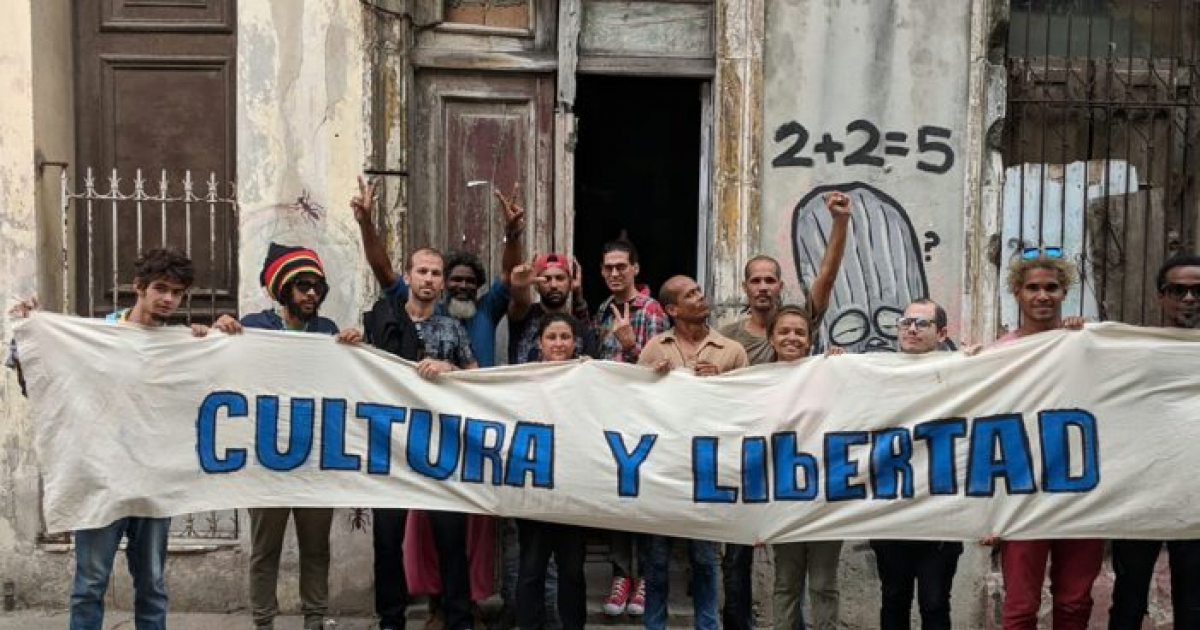
The San Isidro Movement was born in September 2018 as a direct response to the government’s Decree 349, which threatened to penalize artistic creation and freedom of expression in Cuba. Following the publication of the Decree, a group of artists and activists came together to undertake a series of actions aimed at “promoting, protecting, and defending the full freedom of expression, association, creation, and dissemination of art and culture in Cuba, empowering society towards a future with democratic values.” This commitment led to the establishment of the San Isidro Movement, named after the marginalized and impoverished neighborhood in Havana where it is based.
The Movement has since been committed to the fight for the legalization of autonomous spaces for art and for freedom of expression in all its forms; this is despite the constant criminalization of the group and the frequent arrests and abuses suffered by its members, among whom Luis Manuel Otero Alcántara and Maykel “Osorbo” Castillo stand out in particular.
With just over two years of existence, the San Isidro Movement has challenged the Cuban government on several occasions, which has systematically exercised repression to thwart its initiatives, including a protest performance in front of the Capitolio de La Habana, the seat of the legislative power, which became the group's first major public act. Following pressures at different levels, the Cuban government, through the Ministry of Culture, publicly announced that it would pause the implementation of Decree 349. This was largely seen as a victory for the group's members.
Since then, the members of the San Isidro Movement -a group with an open and flexible structure- have been active agents in the fight for change in Cuban society, supporting artists who suffer the direct consequences of the regime's repression, as well as other sectors representing independent civil society in Cuba. Their most recent action has been a hunger strike to demand the release of Denis Solís, a rapper who has been sentenced to 8 months in prison for alleged contempt of authorities.