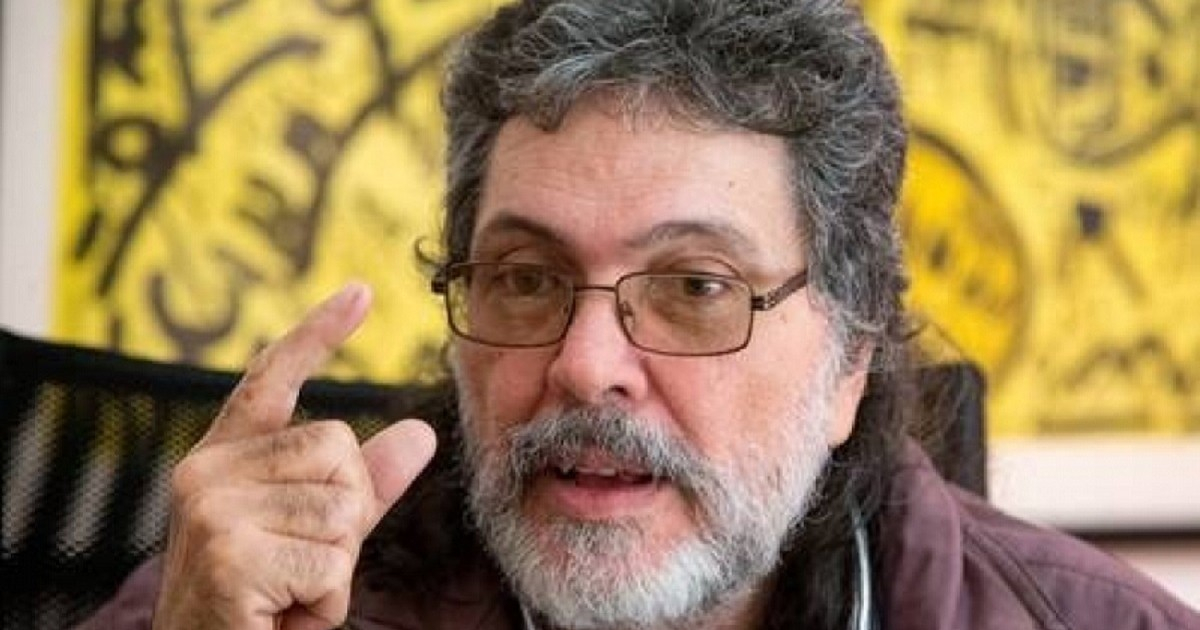
Abel Prieto, president of Casa de las Américas and one of the main ideologists of the Cuban regime, acknowledged on Friday that Cuba is experiencing "the most difficult moment of the Cuban revolution" and that "the survival of the Cuban people today is truly very challenging," as reported by the Mexican newspaper La Jornada.
The statements were made before students and scholars of the National Autonomous University of Mexico (UNAM) during the presentation of the reissue of the essay Calibán (1971) by the late Roberto Fernández Retamar.
Far from addressing the internal responsibilities of the dictatorship, Prieto attributed the collapse to the U.S. embargo and what he called an "energy strangulation project," concluding with a direct insult to Washington: "that group of disreputable pedophiles who want to destroy the Cuban revolution at all costs."
In his speech, the former Minister of Culture presented figures he described as alarming: infant mortality in Cuba doubled, increasing from 4.4 to 9.9 per thousand live births, and the survival rate for children with cancer fell from 85% to 65%.
"They are statistics, but they are figures that have the faces of people, families, children, and the sick," she emphasized.
It also revealed that 7,000 containers of medical supplies remain scattered across the Caribbean because shipping companies fear U.S. reprisals, that 34 international banks have ceased transactions with Cuba, that tourism is "in ruins," and that public transportation "practically does not exist."
This is not the first time he has used the term "pedophiles" to refer to the government of the United States. In February, following the executive order from the Trump administration regarding oil, Prieto referred to the U.S. leadership as "corrupt and pedophilic" in statements to teleSUR.
His confessions align with data that the regime has just released: more than 70 people die daily from cancer in Cuba and 300 out of the 395 medications manufactured by the national pharmaceutical industry are unavailable, as acknowledged by state media.
What the intellectual omitted in his account is that the Cuban crisis is the direct result of 67 years of communist dictatorship: a planned economy that destroyed production, a structural dependence on Venezuelan subsidies, and a management that has led the country to the greatest economic contraction in its history.
The recent history of the ideologue does not inspire confidence in him as an impartial witness to the suffering of Cubans. In July, on the fifth anniversary of 11J, he referred to the protests as a "farce of insurrection" staged by "people paid from the North." In May, he called Cubans demanding U.S. intervention "rabid annexationists" and "unworthy of the name Cuban."
His tour in Mexico —where he will also participate this Saturday in the International Book Fair of the Zócalo— is part of the regime's diplomatic campaign ahead of the annual United Nations General Assembly vote on the embargo against Cuba, scheduled for this month. In 2025, Cuba secured 165 votes in favor of the resolution condemning the sanctions, with only seven votes against and twelve abstentions.
Related videos:
Filed under: