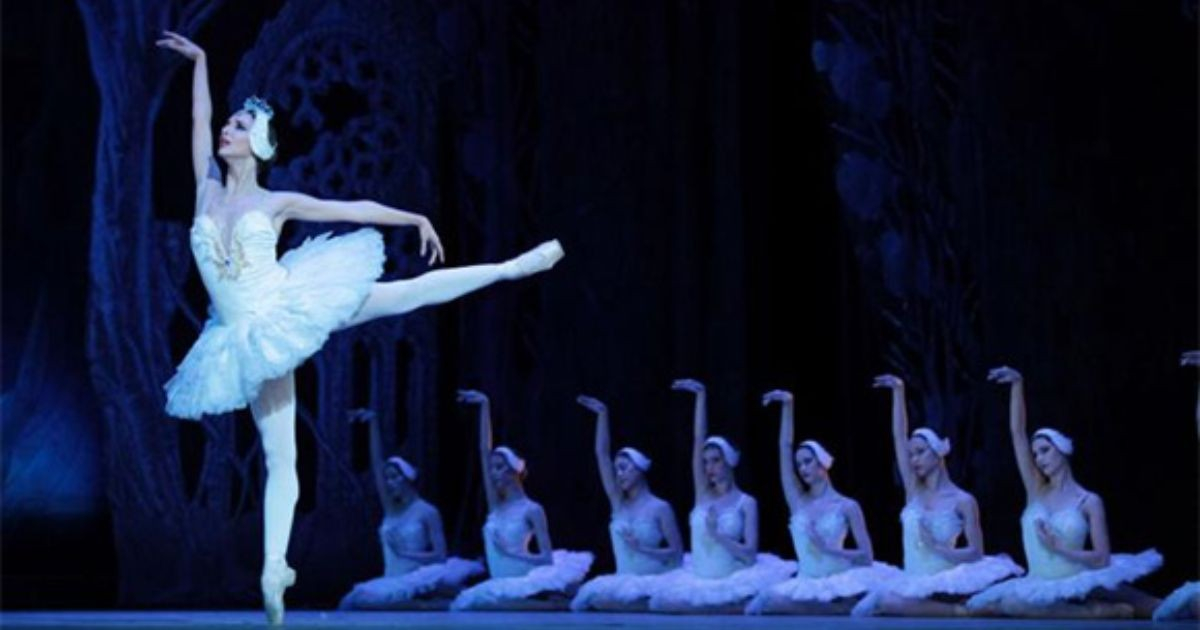
The Ballet Nacional de Cuba (BNC) admitted this Sunday that the International Ballet Festival of Havana Alicia Alonso will not be held in 2026 due to "the difficulties the country is facing," according to a statement sent to the EFE agency.
Instead, the company is organizing a series of galas at the National Theater of Havana between Tuesday, October 20, and October 28.
The festival, established in 1960 at the initiative of Alicia Alonso, is one of the oldest and most prestigious in the world of its kind, being non-competitive and held biennially. The cancellation of 2026 marks the second interruption of the cycle since its founding — the first was due to the COVID-19 pandemic in 2020 — but this is the first directly attributed to the economic and energy crisis of the regime.
The company acknowledges that it aims to "compensate" for the absence of the festival with these functions, which amounts to an implicit recognition of the collapse that the island is experiencing.
The substitution program kicks off this Tuesday with a gala dedicated to the 50th anniversary of the Ministry of Culture, which will include excerpts from Don Quixote, the work Katharsis Morphé by the Contemporary Dance of Cuba, and excerpts from the Yoruba Cycle of the National Folkloric Ensemble.
On October 24 and 25, in celebration of the 81st anniversary of the UN, the BNC will present Giselle in a production by the legendary Alicia Alonso (1920-2019). The closing performance on October 28 coincides with the 78th anniversary of the first show presented by the then Alicia Alonso Ballet in 1948: it will feature The Magic of Dance and the epilogue of Gottschalk's Symphony.
The cancellation of the festival is not an isolated incident, but rather the latest link in a chain of cultural collapses in 2026. In May, the Grand Prix de Ballet de La Habana was suspended due to the electrical crisis and damage to its venue, with the next edition postponed to July 2027. The organizing committee acknowledged at that time that the electrical situation made it impossible to "ensure the technical and comfort conditions required for the optimal development of an event of this category and international prestige."
The backdrop is an unprecedented energy crisis: eight total disconnections of the National Electro-Energetic System so far in 2026. On October 16, just two days before the BNC announcement, a fire at the Ernesto Guevara de la Serna thermoelectric power plant in Mayabeque raised the impact to 75.5% of national demand during peak hours, the highest level since Cuba began publishing comparable statistics in 2022. This Monday, the Electric Union forecasted a deficit of 1,990 MW.
The paradox is hard to ignore: the BNC successfully toured Russia between late September and early October, presenting Giselle at the Mariinsky Theatre in St. Petersburg, the New Stage of the Bolshoi Theatre in Moscow, and two other theaters, as part of a bilateral cultural cooperation protocol signed with Moscow. The company can perform on the major Russian stages, yet it cannot ensure the minimum conditions for its own festival in Havana.
This paradox is compounded by the internal decline of the institution. The BNC went from more than 100 dancers to about 55 in September 2025 as a result of the ongoing exodus of artists. The dancer and choreographer Carlos Acosta bluntly described it in July 2024: “There is a tremendous exodus of Cuban artists.”
Related videos:
Filed under: