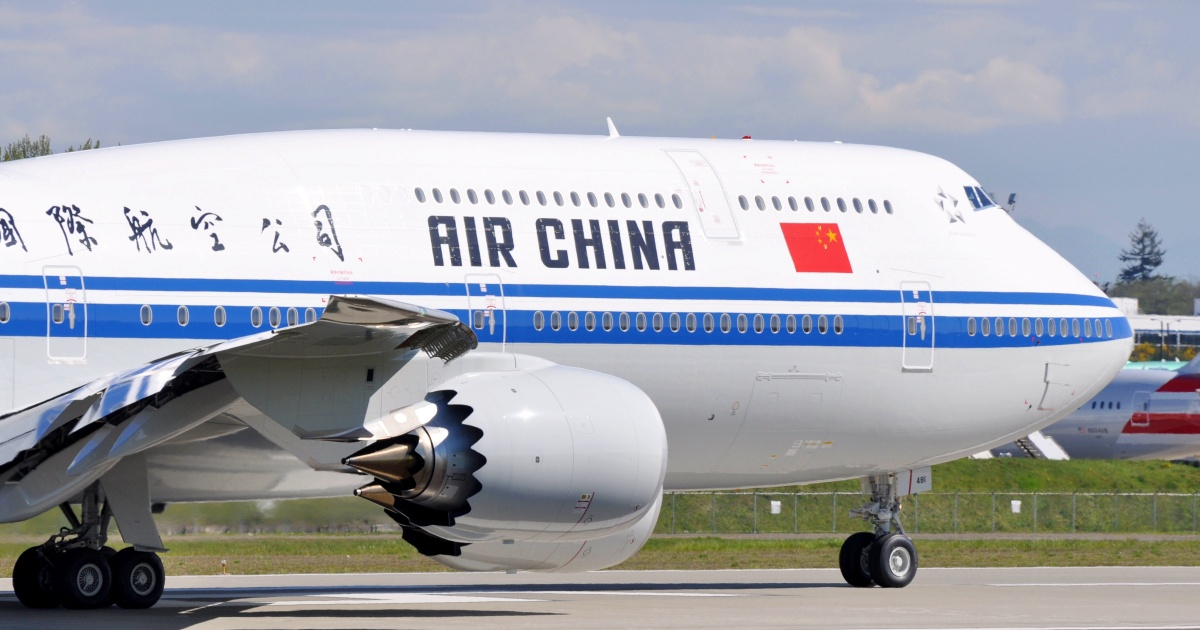
Air China has arranged a special flight from Havana to transport passengers who were stranded in Cuba following the repeated cancellations of its route to Madrid and Beijing.
The operation took place amid the aviation fuel crisis affecting Cuban airports, which has forced several airlines to suspend or modify their services.
The additional flight, identified as CA590, departed from José Martí International Airport on the night of this Monday, after the Embassy of China in Cuba announced its schedule for 10:30 PM local time.
According to records from FlightAware cited by Reuters, the plane took off from Havana and landed in Nassau, Bahamas, from where it was scheduled to continue to Madrid and then to Beijing.
The extraordinary operation was in response to the frequent schedule changes and cancellations of the regular flight CA866, which connects Havana with the Chinese capital via Madrid.
The diplomatic representation attributed the interruptions to "technical reasons," without specifying whether they were related to the lack of fuel in Cuba.
An emergency flight for affected passengers
The Chinese Embassy reported that flight CA590 was intended for passengers whose flights CA866 had been canceled prior to October 10 and who had been unable to travel.
The affected individuals could present themselves at the Air China counter at Havana's airport starting at 5:00 PM on Monday, the 19th, to manage their boarding at no additional cost.
The diplomatic representation warned that the available slots were limited and recommended that travelers check for any possible schedule changes and arrive well in advance to complete the necessary procedures.
The company had been experiencing several disruptions since the beginning of October.
The last completed operation of flight CA865, from Beijing to Havana, before the series of cancellations, was on October 9.
The services scheduled for the 10th and 14th have been canceled, while the one on October 21 has undergone a change in schedule: its departure from Madrid has been moved from 14:45 to 22:45.
The extraordinary flight provided an alternative for some of the affected travelers, although it did not restore the regular schedule nor guarantee an immediate solution for all passengers waiting to return.
The fuel shortage complicates aerial operations in Cuba
Although Air China and the Chinese Embassy have not confirmed that the specific cancellations from the airline are due to supply issues, Reuters linked the operational difficulties to the shortage of Jet A-1 aviation fuel that has been affecting Cuba since February.
The Cuban Air Navigation Company (ECNA) issued successive advisories to pilots regarding the unavailability of this fuel at 10 Cuban international airports: Havana, Varadero, Cienfuegos, Santa Clara, Camagüey, Cayo Coco, Holguín, Santiago de Cuba, Manzanillo, and Cayo Largo del Sur.
The announced restriction remains in effect until November 1, which forces airlines to reorganize their operations, seek refueling alternatives, or suspend certain services.
Companies such as Iberia, Turkish Airlines, World2Fly, Air Canada, and Air Transat have suspended operations to Cuba during 2026 amid supply challenges.
Air Europa, which maintains its connections between Madrid and Havana, has had to introduce a technical stop for refueling in Punta Cana, Dominican Republic, on its return flights to Spain. This measure is confirmed at least until November 30th.
Stranded passengers, additional expenses, and jobs at risk
The cancellations by Air China have caused economic losses and personal complications for numerous Cuban travelers who need to return to Spain, where some have work commitments that they can no longer postpone.
Among those affected are passengers who have had to purchase new tickets with other companies, incur unexpected costs for accommodation and transport, or remain for days without a definitive departure date.
The Cuban Rosy López, known on social media as Roselynn Lu, reported that over 200 people were waiting at the airport without receiving satisfactory answers from the airline.
He also questioned the difficulties in formalizing complaints: "They don't want to sign the complaint form, they don't want to stamp anything."
Another passenger reported that her mother had paid 1,200 euros for a ticket for October 14, but later received an email notifying her of the cancellation. According to her account, the alternative offered was to wait up to 15 days to be able to travel.
For those residing and working in Spain, the uncertainty about return dates can result in prolonged absences from work and a risk of losing employment. Some affected individuals have chosen to purchase more expensive tickets with other airlines to avoid further complications.
Interruptions have also impacted the transportation of goods and packages. The Madrid agency D'Nodarse acknowledged that it had pending shipments without a specific delivery date, according to a report on the cancellations between Madrid and Havana.
"Behind every shipment, I know there is a great need, a family waiting," explained a representative of the agency.
Fewer options for traveling between Cuba and Spain
The situation with Air China exacerbates the difficulties in air connectivity between Cuba and Spain, following the reduction or suspension of operations by several airlines throughout the year.
Air China typically maintains two weekly flights on its Beijing-Madrid-Havana route, while Air Europa continues to operate flights between the Spanish and Cuban capitals, although with adjustments due to supply issues.
The uncertainty also impacts the crews. The Air Europa unions have requested that flights to Cuba be voluntary and described the operational uncertainty surrounding these services as "extreme."
For its part, Air China has not publicly provided a definitive timeline for the normalization of its operations. Reuters stated that neither the airline nor the Chinese aviation regulator responded to its requests for comments, while the Chinese foreign ministry referred inquiries to other departments.
Passengers still awaiting a new departure date continue to rely on the company's rescheduling and the availability of seats on a route with increasingly limited alternatives.
Related videos:
Filed under: