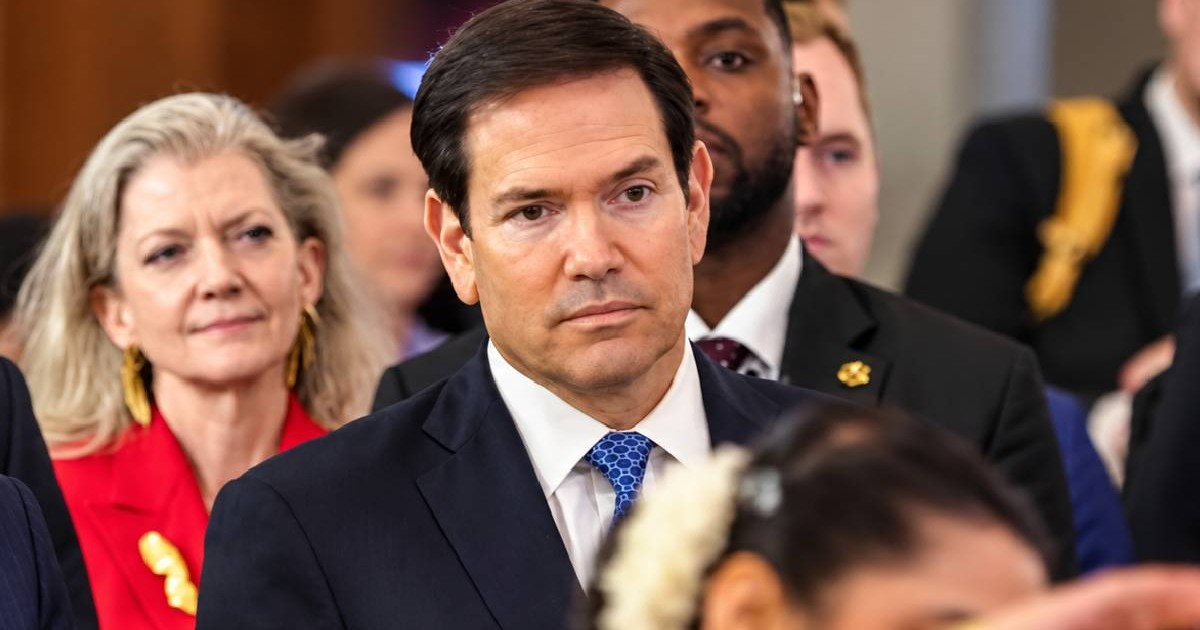
The U.S. Secretary of State, Marco Rubio, declared this Wednesday from Mumbai that decisions regarding Ukraine's access to the Starlink satellite network rest solely with SpaceX and Elon Musk, and not with the White House, as reported by Reuters.
Rubio stated that the service is regulated by a private commercial contract that determines how the technology can be used and what speeds SpaceX allows, and he categorically denied that President Trump or any other government official had ordered modifications to Ukrainian access.
He added that, to his understanding, the service had already been restored, although he acknowledged not knowing if the administration was aware of the decision to slow it down beforehand.
The controversy erupted on Tuesday when the Wall Street Journal revealed that Musk personally ordered to limit the speed of Starshield —the military variant of SpaceX— used by Ukraine, according to U.S. officials and individuals familiar with the matter.
The restriction, applied around October 13 and 14, would have rendered some Ukrainian attack drones and interceptors nearly unusable. The imposed speed threshold, of approximately 161 km/h, prevents interceptor drones from operating effectively against Russian Shahed devices that travel at about 370 km/h.
The political context exacerbates the situation: both Trump and Musk had expressed their anger over the Ukrainian attacks on Russian diesel refineries, which Trump directly linked to the rise in energy prices in the United States.
The accounts regarding responsibility are contradictory. Musk stated that the speed limits of Starshield are determined by the U.S. military and, ultimately, the president himself. Trump, for his part, denied having ordered the measure and claimed he did not know if Musk was involved.
The Secretary of Defense, Pete Hegseth, attributed the issue to the service's usage conditions and ruled out that the U.S. had withdrawn access.
The Ukrainian president, Volodymyr Zelensky, confirmed on October 17 that the limitation was still in effect. This Wednesday, he noted that Rubio informed him during a call that he would work to "unlock" the slowdown.
That conversation, lasting 45 minutes and held on Tuesday, also addressed the shortage of missile interceptors and intelligence sharing, two matters that are equally contentious in the bilateral relationship.
Rubio was emphatic in denying that Washington was withholding information whose absence could cost Ukrainian lives, calling those accusations "scandalous."
Starshield, unlike commercial Starlink, uses enhanced encryption and specialized terminals designed for national security missions under contracts with the U.S. government, which complicates the distinction between a corporate decision by SpaceX and state policy.
The dual role of Musk—private entrepreneur and close advisor to Trump—is precisely the core of the debate. In Rubio's own words to the press, according to the State Department: "Nothing is being deliberately denied to Ukraine. It’s simply a balance between our obligations to other partners and, frankly, our own standards and requirements for our own facilities."
Ukraine faces a growing shortage of interceptors this winter due to Russian aerial pressure, which in April 2026 set a historical record with over 6,700 drones and missiles launched in a single month.
Related videos:
Filed under: