The Cuban regime assured on Monday that the survivors of the armed confrontation that occurred in February near Cayo Falcones, in Villa Clara, confessed to their involvement in the events and cooperated with the investigations, while facing the possibility of receiving sentences for terrorism that, according to Cuban legislation, may include the death penalty.
The statements were made by Colonel Francisco Estrada Portales, an official of the State Security of the Ministry of the Interior (MININT), in remarks to AP.
Estrada stated that the detainees admitted their involvement in the alleged armed operation and provided information that allowed progress in the investigation.
He also stated that the forensic analyses conducted on the seized weapons and explosives demonstrated that they were in working condition.
However, AP warned that it could not independently verify the content of the recordings presented by the Cuban authorities nor the circumstances under which the alleged confessions were obtained.
The warning is particularly significant due to previous complaints from family members and activists regarding threats, alleged mistreatment, and difficulties in accessing the detainees.
According to the colonel, the detainees could face charges for terrorism-related offenses involving lethal devices and explosives.
The , includes the death penalty for certain severe forms of terrorism, including some behaviors outlined in its article 170.
However, Estrada specified that the prosecutors had not yet requested specific sentences, according to AP.
Cuba maintains the death penalty in its legislation, although there have been no known executions since April 11, 2003, when three men were executed for hijacking a vessel in an attempt to reach the United States.
The executions were condemned by the Inter-American Commission on Human Rights (CIDH), which questioned the judicial guarantees of the process.
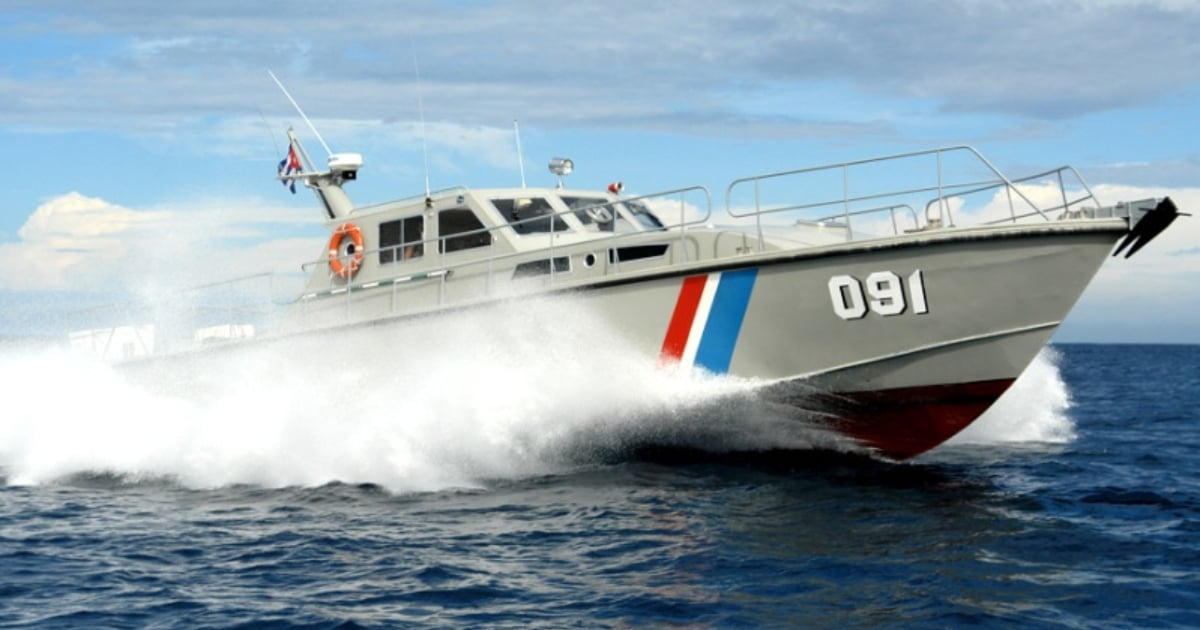
The new official statement refers to the incident that took place on February 25, 2026, when a fast boat coming from the United States, with ten men of Cuban origin on board, was intercepted by the Border Guard Troops near Cayo Falcones, off the northern coast of Villa Clara.
According to the regime's version, the occupants of the vessel were attempting to forcibly enter Cuban territory and fired upon a patrol boat that approached to intercept them.
The authorities stated that the captain of the official vessel was injured and that the border guards responded with gunfire.
The boat was located approximately 1.6 kilometers northeast of Cayo Falcones, according to information gathered by AP.
The initial report released by the Cuban authorities stated that there were four fatalities and six injuries among the ten occupants of the boat coming from Florida.
Subsequently, the Ministry of the Interior confirmed the death of Roberto Álvarez Ávila, one of the injured, who passed away on March 4 due to injuries sustained during the confrontation. His death raised the number of fatalities to five.
Consequently, subsequent reports raised the number of deceased to five and left the number of survivors at five.
In addition to the arrests made following the maritime incident, Cuban authorities reported the arrest of a person on land, whom they attributed alleged functions of support to the group.
Estrada stated that the statements made by those captured allowed for the identification of Amijail Sánchez González, who has been living in the United States since 2016, as the individual who allegedly fired the first shots during the confrontation. His situation had already attracted attention following the incident in February, when it emerged that Havana had identified him as a suspect in terrorist activities prior to his arrest.
Another of the detainees mentioned by the colonel is Leordan Enrique Cruz Gómez, who is also on the Cuban list of individuals accused of terrorism.
The authorities showed AP recordings of statements from the suspects. In one of them, attributed to Cruz, the detained individual stated that the group intended to secure an area and encourage Cubans to overthrow the government.
The lack of verifiable guarantees regarding the statements is one of the most sensitive aspects of the case, especially given the severity of the penalties that could be imposed.
The reports about the detention conditions of the survivors began months before the announcement made this Monday.
In June, family members and opposition organizations reported that the survivors remained under threats and psychological pressure in the Combinado del Este prison in Havana.
Maritza Lugo, representative of the 30th of November Democratic Party Movement "Frank País," stated that the detainees were under constant surveillance and faced extremely difficult conditions of confinement.
"They have been threatened with death, are under constant surveillance, and are subjected to constant psychological pressure," reported the activist.
Lugo also stated that Sánchez González had suffered blows during interrogations carried out at Villa Marista, with injuries that may have affected his hearing.
The activist also questioned the conditions under which the survivors might have been interviewed during the visit of agents from the Federal Bureau of Investigation (FBI) to Cuba on April 1, to participate in the investigation regarding the confrontation.
According to Maritza Lugo's report in June, the detainees were unable to speak privately with the American investigators because State Security agents were present during the interrogations.
Doubts about her situation also reached the United Nations.
In March, the UN Committee on Enforced Disappearances requested that the Cuban authorities provide information regarding the whereabouts, legal status, and legal grounds for the detention of the survivors, following urgent actions promoted by Cubalex.
The organization had reported difficulties faced by family members and legal representatives in obtaining information about those arrested in the days following the incident.
The committee requested clarifications regarding the location of the detainees, the charges against them, and the documentation related to their deprivation of liberty.
In early March, the Attorney General's Office had already announced the charges of terrorism against the six detainees and the decision to impose provisional detention as a precautionary measure.
On the other hand, Colonel Francisco Estrada Portales also mentioned the weaponry and equipment allegedly seized during the operation.
The MININT had previously displayed rifles, pistols, explosives, uniforms, boots, helmets, medical supplies, food, an electric generator, satellite communication equipment, and thousands of rounds of ammunition.
Finally, Estrada assured that Havana shared its findings with the United States, but that as of this Monday, there had been no response.
Related videos:
Filed under: