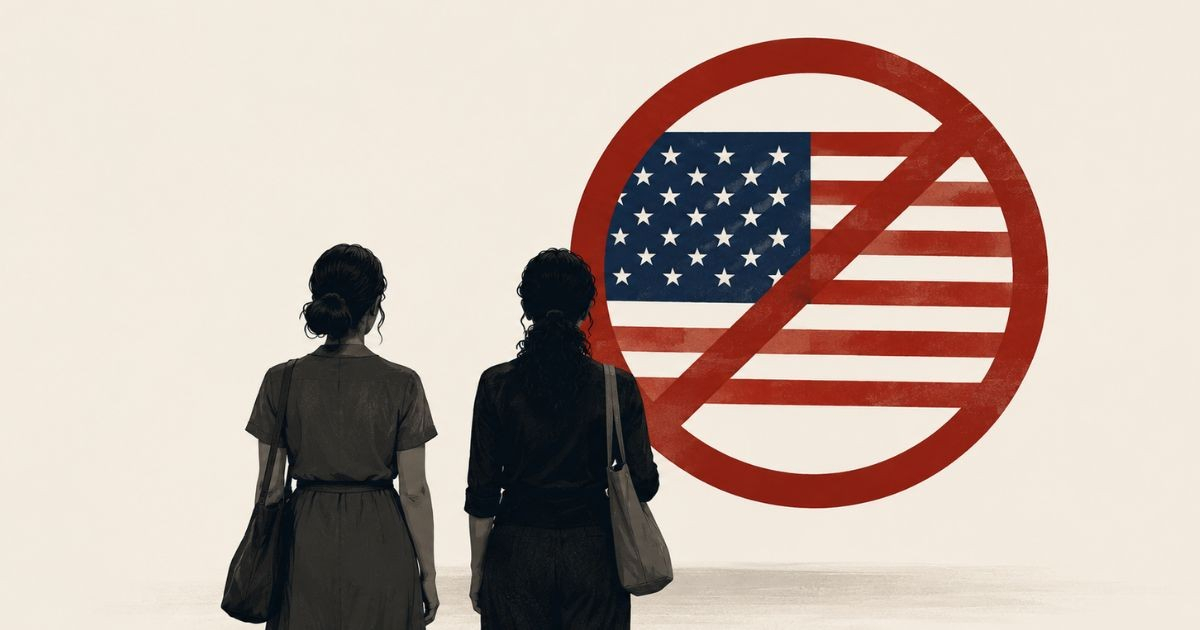
A Cuban who obtained U.S. citizenship in 2015 lost her naturalization after a federal court in Florida determined that she had concealed her involvement in a money laundering conspiracy when she applied to become a U.S. citizen.
It concerns Milagros Marileisis Acosta Torres, 40 years old, whose citizenship was revoked on October 14 by the Federal Court for the Southern District of Florida, according to a statement from the United States Department of Justice (DOJ) released on Wednesday.
The Federal Prosecutor's Office for the Southern District of Florida shared its case on X this Thursday and explained that the woman had lied during her naturalization interview by denying that she had committed crimes for which she had not been arrested.
Federal authorities indicated that, before becoming a U.S. citizen, Acosta was involved in a conspiracy to defraud a tribal casino in Florida through an operation that allowed for the theft of millions of dollars.
According to the Department of Justice, her husband and several accomplices stole money from the establishment by creating fraudulent credit vouchers.
Acosta later participated in various financial transactions aimed at concealing the fraudulent origin of the money and evading the reporting requirements set by federal and state laws.
The problem regarding his citizenship arose from the answers he provided during the 2015 naturalization process.
In her application and during the interview with immigration authorities, the Cuban asserted that she had never committed a crime or offense for which she had not been arrested.
However, that response was false, according to the Department of Justice, because by then, he had already been involved in a conspiracy to commit money laundering.
Authorities stated that concealing that criminal behavior prevented a proper assessment of their eligibility to receive U.S. citizenship.
The events also resulted in a criminal proceeding. In 2020, Acosta was sentenced by a federal court in southern Florida to six months in prison and ordered to pay nearly 150,000 dollars in restitution.
Years after that conviction, the federal government took steps to revoke the citizenship he had obtained before his criminal case was resolved.
The Department of Justice filed the denaturalization lawsuit on June 8, 2026.
On October 13, the parties jointly filed a request for the court to issue a consent judgment revoking the naturalization. The following day, the judge issued the ruling that annulled his U.S. citizenship.
In this way, the process transitioned from a government demand to an effective judicial decision. This is not merely a request to strip citizenship, but rather a revocation already ordered by the court.
The Department of Justice did not report in its statement that Acosta had been detained again or deported to Cuba after the sentencing.
The loss of U.S. citizenship and potential deportation are distinct processes. The revocation of naturalization can lead to new immigration actions, but it does not automatically mean that the individual has been expelled from the country.
The case was announced along with that of Vivian Chike Obichere, a woman originally from Nigeria whose citizenship was also revoked for concealing information during her naturalization process.
Both decisions were presented by the Trump administration as part of its policy to intensify legal actions against individuals who obtained U.S. citizenship through false statements or concealment of criminal activities.
"Achieving denaturalization is the final step to revoke citizenship from those who conceal crimes or defraud the American people," stated Brett A. Shumate, Deputy General Counsel of the Civil Division of the Department of Justice.
The official stated that the administration will continue its campaign against naturalization in order to protect, as he expressed, the value of American citizenship.
Federal legislation allows for the revocation of naturalization when a court determines that it was obtained illegally, through the concealment of pertinent information or deliberate false statements.
However, committing a crime after naturalization does not, by itself, automatically result in the loss of citizenship.
In these procedures, it is essential to determine whether the person was eligible at the time of obtaining naturalization and whether they concealed information that could have affected that decision.
The case of Acosta had already been publicly identified months earlier. On June 8, the Department of Justice announced actions to revoke the citizenship of 17 naturalized individuals, including two women of Cuban origin.
One of them was Acosta. The other, Leidys Delmas García, had been convicted for her involvement in a healthcare fraud scheme in Florida that involved dozens of physical therapy clinics and fraudulent claims amounting to millions of dollars.
In March of this year, another federal court in Florida revoked the citizenship of Mirelys Cabrera Díaz, a Cuban resident in Hialeah who was convicted of a million-dollar fraud against the Medicare program.
Cabrera had obtained citizenship in 2017, although he had previously engaged in criminal activities that, according to the court ruling, prevented him from meeting the requirements for naturalization.
Most recently, on October 5, the Department of Justice announced that it had filed lawsuits to revoke the citizenship of another 40 naturalized individuals, including two Cubans.
The legal actions were filed between August 21 and October 2 and included Javier Marrero Pando and Lázaro Eduardo Trujillo Vitón, whose cases were related to offenses that, according to the authorities, had not been adequately disclosed during their immigration processes.
Related videos:
Filed under: