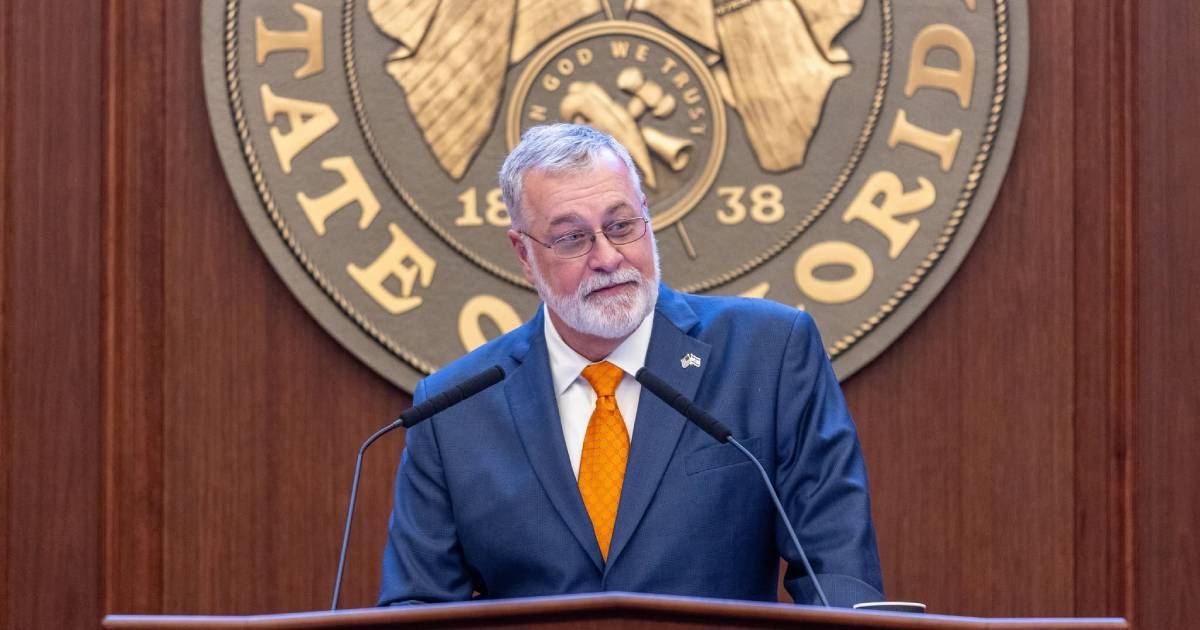
The proposal to reduce the property tax in Florida faces a new divide within the Republican Party. Ben Albritton, president of the state Senate, announced that he will vote against Amendment 3 in the elections on November 3, despite having supported bringing the measure to the polls himself.
The Republican legislator, who voted in favor of the initiative when the Senate approved it by a vote of 30 to nine in June, has now justified his opposition due to the impact it would have on public services, especially in rural communities, as reported by Florida Phoenix on October 20.
"The Amendment 3 would cut up to 30% of resources from Florida's rural counties, destroying essential support for law enforcement, emergency services, and critical infrastructure," Albritton warned in a statement released on Tuesday by the Florida Sheriffs Association.
Her stance contrasts with the support she had expressed months earlier for a greater tax exemption for homeowners.
Albritton is not the only Republican who changed their position. Former Senate President Kathleen Passidomo also announced that she will vote against it, despite having previously supported the initiative.
They are joined by state organizations of sheriffs, police, and firefighters, who warn about possible cuts to public services.
DeSantis defends the reduction and Miami-Dade is divided
Governor Ron DeSantis defended Amendment 3 on Wednesday during a meeting with local officials held at the Miami-Dade Sheriff's Office headquarters.
During the meeting, DeSantis questioned the warnings from local governments about potential cuts to public services and argued that administrations can reduce spending without compromising essential services.
"This is from the bottom up, not from the top down. If it depended on politicians, they would never have put this on the ballot," he stated, downplaying the criticism from Republican leaders.
The proposal would increase the property tax exemption for primary residences (homestead) to the first $150,000 of their assessed value in 2027 and to $250,000 in 2028. The expansion would only apply to taxes not allocated for schools, so the portion dedicated to school funding would remain unchanged. Additionally, the proposal would reduce the annual cap on increases in the assessed value of properties that do not qualify as primary residences, including those intended for rental, from 10% to 5%.
In Miami-Dade, Cuban-American Sheriff Rosie Cordero-Stutz, property appraiser Tomás Regalado, and tax collector Dariel Fernández are among the Republican officials supporting the measure.
However, the Democratic mayor Daniella Levine Cava warns about the consequences for public services. According to the official county estimates, Miami-Dade could stop collecting approximately $385.8 million in the first year and $696.7 million annually starting in the second year, at the current tax rates.
The mayor has indicated that this loss of revenue could jeopardize essential services, including fire departments and libraries.
What would happen to the owners and the tenants?
For many homeowners, including thousands of Cubans living in Florida, Amendment 3 could represent a significant reduction in their primary residence tax. An analysis estimated that eligible homeowners in Miami-Dade could save an average of nearly $1,500 annually once the expansion of the tax exemption is fully implemented in 2028, provided that the proposal is approved by voters.
But the tenants would not receive that benefit directly and could face different economic consequences.
A study on the impact of Amendment 3 projected that taxes on single-family homes designated for rent could increase by an average of about $1,081 annually in Florida by 2028, if local governments raise their rates to offset lost revenue. Part of that cost could be passed on to tenants.
The proposal also states that those who become residents of Florida after December 31, 2026, would have to wait until their fifth year of eligibility to access the expanded exemption.
Amendment 3 requires at least 60% of the votes to be added to the state constitution. A poll from the University of North Florida, released on Wednesday, recorded 50% support, 35% opposition, and 14% undecided voters.
The final decision will rest in the hands of the voters on November 3rd.
Related videos:
Filed under: