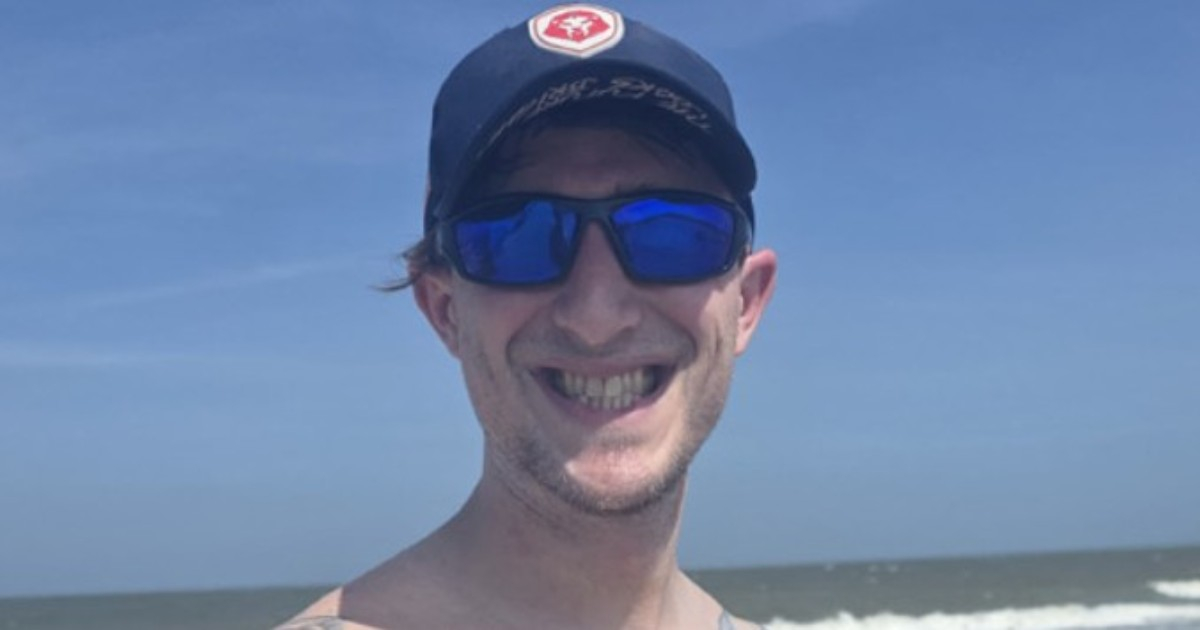
Luis Peñate, a 35-year-old Cuban resident in Miami who trained for marathons, was close to death in less than two months after being diagnosed with a devastating form of heart inflammation, and he only survived thanks to a heart transplant at the Cleveland Clinic Weston Hospital in Broward.
It all began in August 2025 when Peñate contracted hand-foot-and-mouth disease and subsequently, COVID-19. What seemed like an ordinary recovery turned into an emergency: he was evaluated at a hospital in Miami and diagnosed with myocarditis, an inflammation of the heart muscle. His condition did not improve.
“She was a very healthy person,” Peñate recalled, according to the account published by Cleveland Clinic. “She ran marathons, ate well, slept well, worked a lot. Then everything changed.”
His father, a doctor, consulted with cardiologist colleagues for guidance. The response was unanimous: transfer him to the Cleveland Clinic Weston Hospital.
When he arrived at the center, his cardiac function had dropped to 10-15% and continued to deteriorate until it reached barely 5%. The medical team immediately connected him to ECMO —extracorporeal membrane oxygenation— a temporary life support system that takes over the function of the heart and lungs while the next step is determined.
The additional evaluations revealed the definitive diagnosis: giant cell myocarditis, an extremely rare and aggressive variant with a median survival of barely three months without treatment from the onset of symptoms.
During his hospitalization, Peñate was resuscitated three times. On one of those occasions, he experienced what is called an out-of-body experience, as he told Telemundo 51. “I literally saw my body from above, I went to another place and saw what I believe is God,” he stated.
With his heart unable to recover, the doctors placed him in a priority position on the heart transplant waiting list. The uncertainty of that wait was, in his own words, the most difficult part of the entire process.
"You don't know if it will be today, if it will be tomorrow, if your body will withstand such a long time," he said. "That was the hardest part: the unknown."
He finally received the transplant. "The operation was extremely successful," said Peñate, who continues to express gratitude to the staff at Cleveland Clinic Weston, where "everyone was incredible with me."
Today, this businessman, married and father of three, has regained approximately 90% of his usual level of activity: he has returned to running, plays basketball, and spends time with his family. However, the experience has transformed his outlook on life.
"I used to go 100 miles an hour all the time," he reflected. "Now I think things through a bit more. Time is very, very valuable to me."
Aware that he has a second chance thanks to a family that —possibly on the worst day of their lives— agreed to donate the heart of a deceased young man, the first thing Peñate did after leaving the hospital was to register his status as a donor on his driver's license.
His case adds to that of other Cubans in Miami who have needed organ transplants in Florida in recent years. In December 2025, Alejandro Cuevas, a 36-year-old Cuban, received a multivisceral transplant of five organs at Jackson Memorial Hospital.
Residents of Florida can register as organ donors at DonateLifeFlorida.org or when processing their driver's license, a gesture that, as demonstrated by Peñate's story, can make the difference between life and death for another person.
Related videos:
Filed under: