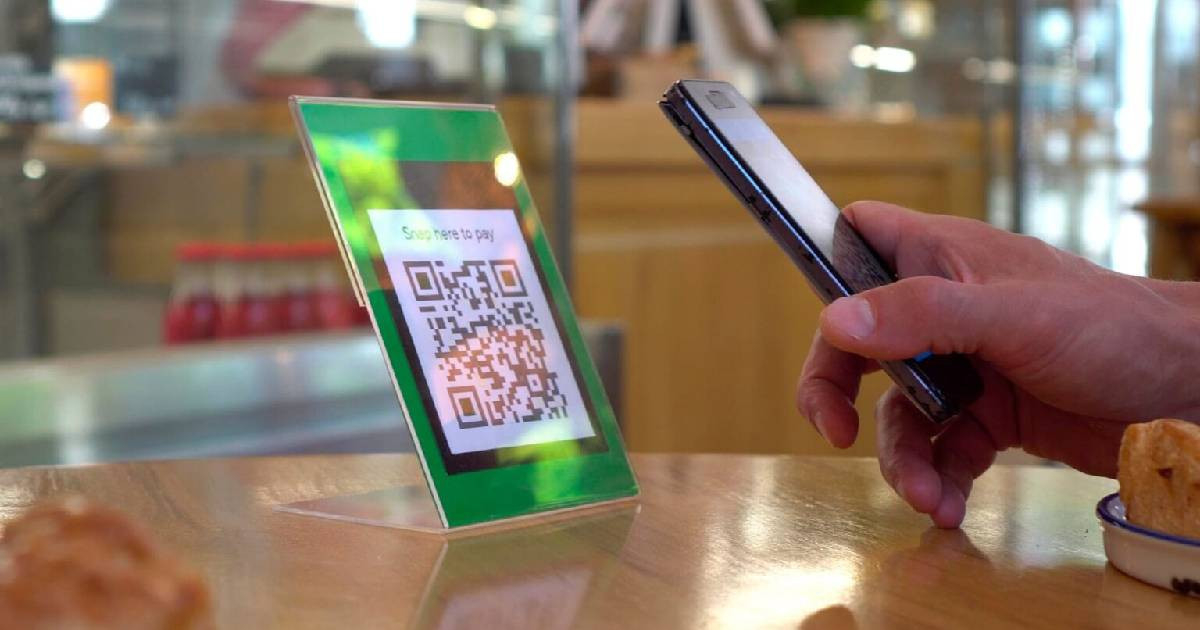
The authorities in Santiago de Cuba announced fines ranging from 16,000 to 100,000 Cuban pesos for businesses that refuse to accept bank transfers and other electronic payment methods, as part of a new control operation that will begin in three commercial areas of the city.
The Administration Council reported that the command posts responsible for overseeing compliance with these regulations in state and private establishments are now established, as published this Friday, October 23rd, by the official newspaper Sierra Maestra.
The initiative includes inspections, review of cost and price sheets, as well as the establishment of phone lines and digital platforms to receive complaints from consumers who are denied electronic payment.
Georbelis Iznaga Tomás, vice mayor of the Administration Council, explained that the actions are based on legal provisions approved since 2023, including regulations from the Ministry of Domestic Trade and the Central Bank of Cuba related to banking.
Therefore, the sanctions do not represent fines specifically created this Friday, but rather the authorities announced a monitoring mechanism to enforce compliance with obligations they already consider established.
The controls will begin at Avenida de Sueño, the street located behind the 18-story buildings of Garzón and Avenida Trocha, three areas of commercial activity in Santiago de Cuba.
"As a form of pilot control, we will initially organize it in those three locations, and then we will review how to implement this same measure in the rest of the areas," explained Iznaga Tomás.
The official clarified that the obligation to accept electronic payments applies to both self-employed workers and other non-state economic actors, as well as state-owned companies and establishments.
"There are no benefits for one or the other. The measure is for everyone," he stated.
According to the explanations gathered by the official outlet, merchants must accept the different payment gateways and electronic payment modes outlined in the regulations, including Transfermóvil, EnZona, Mi Monedero, and online payments.
Tomás Iznaga warned that a business cannot consider the requirement fulfilled simply because it accepts one of those platforms and rejects the others.
"The regulation does not mention partial compliance. It states to use the payment gateways, and it is in the plural," he asserted.
According to their interpretation, it is the customer's responsibility to choose the electronic payment channel, while the establishment must ensure compliance with the applicable regulations.
The deputy mayor also questioned the practice of charging an additional percentage for those making transfers or establishing two prices for the same product, one for cash and another for electronic payment.
The official deemed those behaviors illegal and even described them as a crime.
In relation to incentives for promoting banking services, Iznaga Tomás assured that updated resolutions establish a 4% discount for buyers using electronic channels and a 2% benefit for sellers.
"Those are the things that are legally established," he said.
One of the common arguments used by merchants to reject transfers is the difficulty of later withdrawing the money from their bank accounts and using it to restock merchandise.
However, the deputy mayor dismissed that explanation: "That's not true; it's an excuse that economic actors simply use to avoid conducting those operations," he stated.
It was explained that during meetings with merchants and representatives from bank branches, it was clarified that businesses can coordinate with their banks the amounts and timelines in which they need to access cash.
He also assured that since the end of July, funding has been available in the area to support those operations.
In Santiago de Cuba, however, the authorities believe that the refusal to accept transfers may also be related to tax evasion.
"When operations are carried out through electronic channels, this is recorded, and ONAT could determine how much money you owe as an economic actor to pay your taxes," explained Iznaga Tomás.
According to the official, some merchants avoid electronic means precisely because transactions leave a record of their income.
The deputy mayor also announced that the controls will include a review of the mechanisms used to set product prices.
According to their statements, although there is no general policy to cap all prices, merchants must adhere to the current pricing regulations and present invoices that justify their costs.
Iznaga Tomás stated that the permitted margin can reach up to 30% over the cost, according to the regulation he referred to.
However, the official article does not specify the particular provision nor does it establish whether that percentage applies to all economic activities, so it should not be interpreted as a universally proven limit for any business.
"We will review the cost sheets, not with the intention of closing anything, but with the aim of energizing a process where everyone benefits," the deputy mayor stated.
These statements contrast with the liquidity difficulties reported by merchants and consumers in various provinces, where having money in a bank account does not always guarantee access to cash when needed.
In July, a report from the state press documented 23 consecutive refusals to accept transfers in establishments in Alamar, in Havana.
The research revealed that numerous merchants claimed difficulties in paying their suppliers through electronic channels, as part of the merchandise had to be purchased with cash or foreign currency.
The report also described other obstacles, such as arbitrary limits on digital payments, banking issues, and difficulties in using electronic services during power outages.
The newly announced inspections come after reports in August of sanctions against small merchants for violations related to electronic payments.
On August 17, self-employed workers at the Aguilera Cultural Plaza, popularly known as "the Subway", were fined 16,000 pesos for not having enabled payment by transfer, according to a report shared by independent journalist Yosmany Mayeta Labrada.
Those merchants questioned the contradiction of receiving income through transfers while numerous suppliers demanded cash to acquire the necessary goods to maintain their businesses.
The controversy also extends to the Cuban government's own statements regarding the limits of banking.
On October 7, Miguel Díaz-Canel acknowledged that banking services cannot be imposed on the entire population because many people lack the necessary technological means to use digital platforms.
The ruling official also acknowledged that power outages impact banking services and announced a project to install photovoltaic systems in branches across the country.
Related videos:
Filed under: