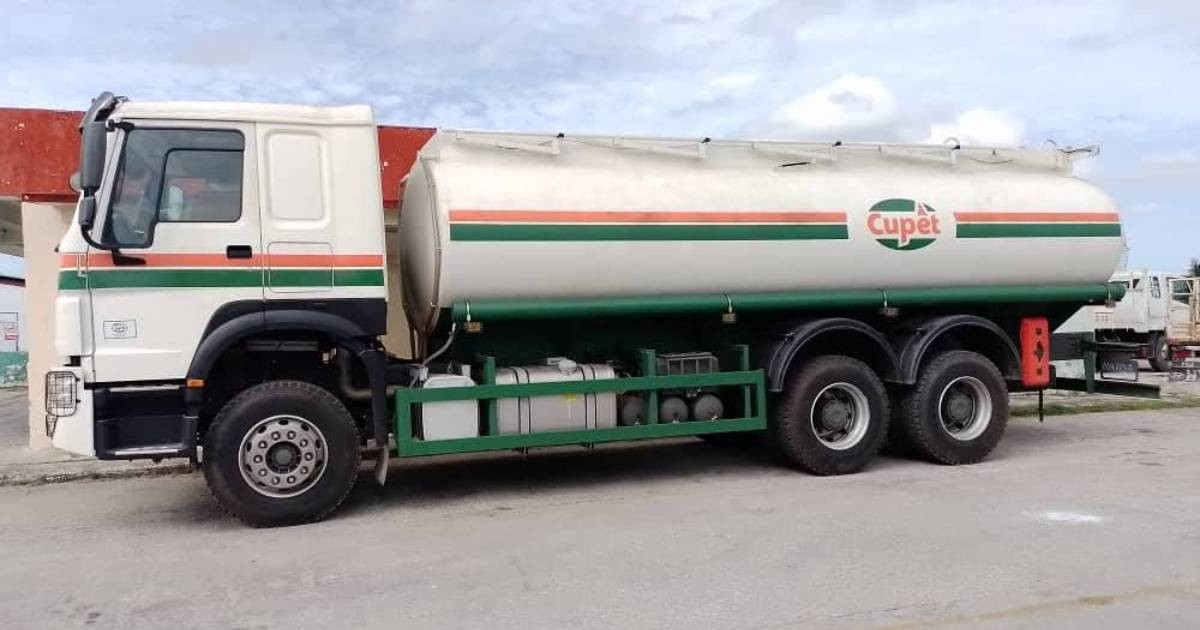
The Department of State of the United States publicly acknowledged that it cannot guarantee that fuel legally exported to the private sector in Cuba remains out of the regime's reach, according to a statement reported by journalist David Adams in The New York Times in the context of the seizures announced on October 7.
The agency's spokesperson stated verbatim: "We cannot rule out a certain diversion towards figures or entities linked to the regime, but we will continue to suppress their efforts to evade sanctions, targeting any company that knowingly supplies the regime."
The statement was made days after federal authorities in Florida and Texas seized more than 620,000 gallons of biodiesel valued at nearly 2.8 million dollars, intended for ENETEC S.A., a Cuban state-owned company sanctioned by the Office of Foreign Assets Control in July.
Of the 90 intercepted shipments, 71—amounting to about 496,000 gallons—were held at Port Everglades in Fort Lauderdale, and another 19—containing nearly 119,000 gallons—were at the Port of Houston.
The special agent in charge of National Security Investigations in Miami, José R. Figueroa, described the shipments as "a deliberate and coordinated effort to supply" the sanctioned company, although he refused to identify the exporters and did not announce any criminal charges, leaving the investigation ongoing.
At the same time it acknowledged the risk of diversion, the State Department defended its policy with an argument that contrasts with the documented reality on the island: it claimed that Washington has "broken the Cuban regime's monopoly on fuel" and that the Trump administration has driven "the largest privatization in the history of the Cuban economy," according to The New York Times.
However, journalistic investigations by ADN Cuba confirmed that Cimex —a corporation of the military conglomerate GAESA, which is sanctioned by the Office of Foreign Assets Control— purchases fuel from at least 16 small and medium enterprises and resells it through its service station network, as well as supplying the Ministry of the Armed Forces.
An invoice dated September 21 from Cimex-Mariel to a servicentro Oro Negro for over 23,000 liters of gasoline was one of the documents that evidenced that connection.
The diversion reached the very repressive apparatus itself: according to an investigation by 14ymedio, a gas station just a block away from Villa Marista —headquarters of State Security— supplied in September to "black beret" brigades of the Ministry of the Interior, Suzuki motorcycles from State Security, and vehicles from the state-owned company Sepsa.
The relative abundance of the product on the island was reflected in the prices: the Cuban economist Omar Everleny Pérez noted in September that the price of fuel had dropped from five to 2.50 dollars, a decrease that contrasts with the scarcity faced by the population.
From January to August 2026, imports of petroleum products from the United States to Cuba amounted to 231.74 million dollars, an unprecedented figure in the entire commercial history between the two countries.
Michael Bustamante, an expert on Cuba from the University of Miami, warned that this massive flow of private imports undermines the pressure Washington seeks to exert on the regime: "Creativity and ingenuity are the currency of the Cuban kingdom," he said, pointing to the regime's ability to navigate around the restrictions.
The investigations into who is behind the illegal shipments are ongoing, and maritime interdiction operations remain active: the Coast Guard intercepted a vessel during the summer carrying approximately 220,000 gallons of diesel destined for Cuba, and at the beginning of October, another boat with fuel hidden in ballast tanks was detained.
Related videos:
Filed under: