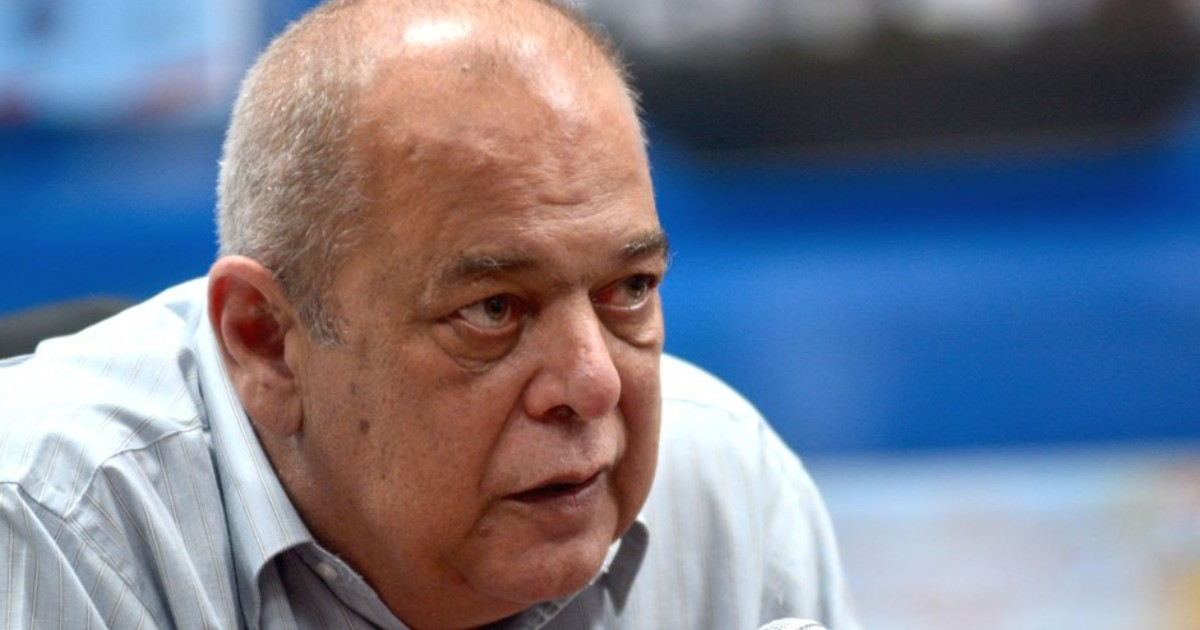
The Minister of Energy and Mines, Vicente de la O Levy, warned that Cuba does not have, nor will it have, fuels in the short term, and that this reality cannot be used as an excuse to halt the search for solutions.
The statement was reported by the Cuban News Agency, following the minister's working visit to Holguín, where he met with workers, engineers, and executives from the provincial energy sector, alongside the first secretary of the Party in the region, Joel Queipo Ruiz, and the governor Manuel Hernández Aguilera.
De la O Levy urged to address local issues through collaboration with state and private companies, aiming to create repair workshops that strengthen the sustainability of the electric service in the area.
The minister also suggested that Holguín can take advantage of renewable sources beyond solar—hydropower, wind turbines, and biomass—to fully exploit its productive potential.
During the meeting, Iskander Concepción Martínez, head of the Holguín Base Business Unit of the Generator Groups and Electrical Services Company, referred to a proposal to concentrate the available equipment in fewer facilities in order to facilitate fuel supply and improve the efficiency of distributed generation.
Concepción Martínez revealed that some power plants have not been producing electricity for two or three years, primarily due to difficulties in fuel supply, although they remain under conservation measures.
Ruber Reynaldo González, the general director of the provincial Electric Company, stated that the main actions aim to reduce the periods of service disruption in the area, without providing specific timelines.
The ministerial warning comes at a critical moment. On October 17, just days before the visit, the Electric Company of Holguín suspended the rotation of circuits due to the "complex situation" of the national system, with the exception of circuits 1, 2, 19, 20, and 21, which supply the Lenin Hospital Express.
In July, the province had only 70 MW available compared to an estimated maximum demand of 240 MW, less than 30% of what was needed.
The visit also included a tour of Moa, where Dania Agudín, director of Oil and Gas at the ministry, emphasized the importance of national crude oil production in light of the significant decline in fuel imports, which she attributed to the U.S. energy blockade.
In that municipality, De la O Levy urged the initiation of gold mining with less complicated yet effective methods to reduce illegal extraction in the area. The minister also called for action against theft in solar parks and other crimes against the electrical system.
The fuel shortage does not only impact electricity generation. The Minister of Transport, Eduardo Rodríguez Dávila, acknowledged in an interview with Reuters that interprovincial bus trips from Havana plummeted from 419 daily in 2025 to just 11 in 2026, a collapse that illustrates the national extent of the crisis.
In May, De la O Levy himself had acknowledged that Cuba had no reserves of diesel or fuel oil for electricity generation, a situation that worsened after the interruption of Venezuelan shipments at the end of 2025 and the near-total cessation of Mexican supplies at the beginning of 2026.
Related videos:
Filed under: