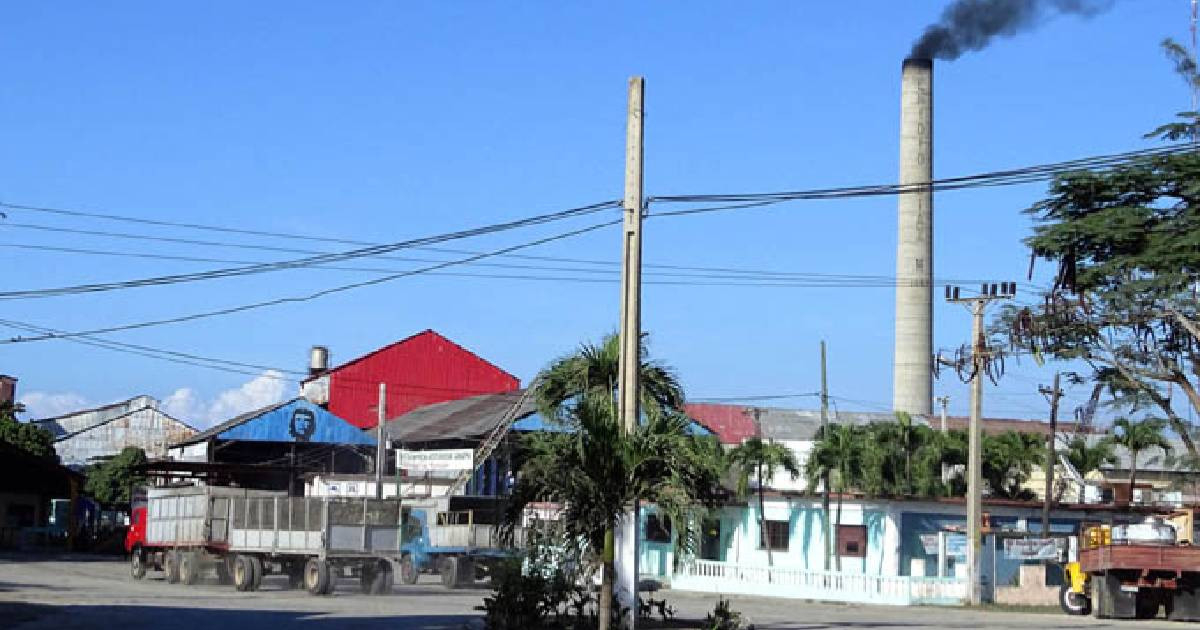
The Enidio Díaz Machado sugar mill, located in the Granma municipality of Campechuela, produced 5,000 tons of sugar in partnership with a private small and medium-sized enterprise (SME), a collaborative model that authorities aim to extend to other mills in the province.
The result was announced by Leonel Estrada, Secretary General of the Communist Party in the region, during a meeting of the Provincial Committee of the organization in Bayamo dedicated to the economic and social transformations driven by the Cuban government.
According to Estrada, the collaboration not only allowed for that production volume to be achieved, but it also improved the workers' nutrition and the work environment. "The people in the community are happy" with these changes, said the leader, quoted this Saturday by the official newspaper La Demajagua.
The mill is currently working on the production of muscovado sugar at the start of the new sugar campaign. The agreement with stakeholders from the non-state sector includes contributions of financial resources, fuel, and supplies to ensure the supply of cane.
The experience contrasts with the results of the sugar industry in the province. During the 2024-2025 harvest, Granma produced only 5,277 tons of sugar compared to the planned 19,871, achieving only 27% of its target.
In that same campaign, national sugar production fell below 150,000 metric tons, its lowest level in over a century, far from the eight million tons reached in 1989.
The participation of private companies in state-owned enterprises is supported by Decree-Law 114, published in March in the Official Gazette. The regulation outlines four types of partnership between state and non-state entities without the need to establish a new legal entity.
These formulas are part of the package of 176 economic and social transformations presented by Prime Minister Manuel Marrero in June before the National Assembly, which includes the reactivation of the sugar agro-industry through partnerships with non-state actors.
In other provinces, agreements of this type have also been tested. The Argeo Martínez mill, in Guantánamo, negotiated with Cuba Ron S.A. the supply of oil in exchange for cane alcohol.
During the meeting in Granma, the First Secretary of the Party in the province, Yudelkis Ortiz Barceló, acknowledged that the lack of sugarcane is the main obstacle for the Bartolomé Masó mill and expressed the intention to reactivate all the sugar mills in the region.
"The idea is that we can get all the power plants up and running," said Ortiz, who described the process as challenging due to the amount of resources and control it requires. He also stated that the role of the Party is not to better explain the crisis, but to take action to overcome it.
On her part, Governor Yanetsy Terry Gutiérrez questioned companies that only focus on leasing spaces to pay salaries and called for results that contribute to economic development. The official insisted that the reforms must lead to greater stability.
Related videos:
Filed under: