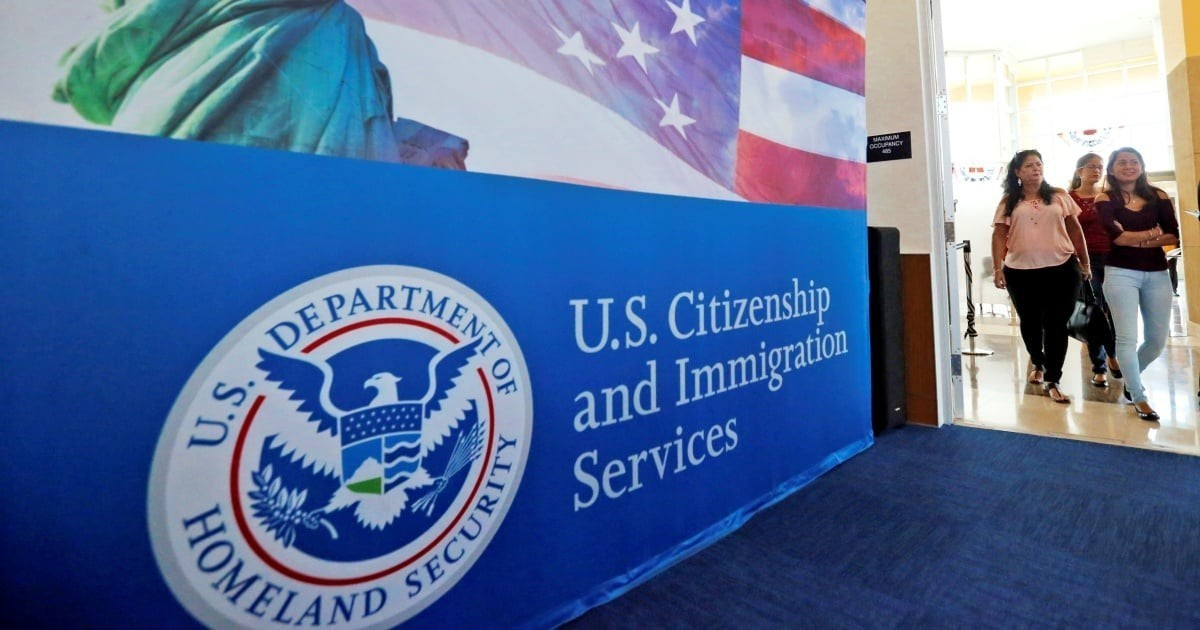
U.S. citizenship approvals have plummeted to unprecedented levels, and South Florida—home to the largest Cuban exile community—has recorded some of the steepest declines in the country, according to official data from U.S. Citizenship and Immigration Services (USCIS) analyzed by Newsweek and VisaVerge.
The USCIS office in Miami approved only 68% of naturalization applications (Form N-400) between April and June 2026, compared to the 87% approval rate in the same quarter of the previous year. In Oakland Park (Broward), the rate dropped from 84% to 65%, with 6,260 cases pending and an 84% reduction in the total number of decisions made.
At the national level, the situation is equally alarming. According to the analysis by VisaVerge on the quarterly data from USCIS, N-400 approvals fell by 76% between April and June 2026: from 241,326 in the same period of 2025 to just 57,697. The national approval rate dropped from 91.2% to 81.8%, while pending applications increased by 40% to surpass 742,138.
El desplome en las aprobaciones de naturalización es solo una parte de los cambios que afectan a los inmigrantes en Estados Unidos. Sigue de cerca todas las novedades sobre visas, USCIS y trámites migratorios en nuestra sección de
The monthly data for August, cited by the specialized portal immigration-analytics.com, shows that USCIS approved only 15,349 applications that month, with a backlog of 813,453 cases and an average processing time of 12.7 months. In August, the agency received 54,492 new applications, approximately 3.5 times the number it was able to resolve.
The sharpest declines were recorded in offices located in large cities with a high density of immigrants. San José (California) reduced its decisions by 96%; Baltimore and San Francisco by 93%; Seattle by 87%; and Chicago by 86%.
Two structural factors explain the collapse. On April 27, USCIS activated the FBI's Next Generation Identification (NGI) background check system, which requires the resubmission of fingerprint records from millions of applicants, temporarily halting case adjudication.
Additionally, there is the tightening of naturalization criteria under the Trump administration: reinstatement of the 2020 civic exam (128 questions, with a minimum of 12 correct answers out of 20); more stringent English requirements, social media review for "anti-American activities," and, starting August 25, interviews with neighbors, employers, and coworkers to assess the moral character of the applicant.
The Department of Homeland Security (DHS) defended the measures in front of Newsweek: "Naturalization is a privilege, not a right. It shouldn't be easy to obtain, and we certainly won't give it away," stated a spokesperson.
He also stated to the publication that they are working to reverse a policy of "automatic approval of naturalization applications" implemented under the Biden administration.
The organization National Partnership for New Americans (NPNA) rejected that justification. Its executive director, Nicole Melaku, accused the administration of acting with a deliberate strategy: “When I analyze the data, all I see is a swift denial or cancellation of application processing, and we can conclude that it is part of a strategy to limit access to naturalization and, therefore, to civic participation.”
With the midterm elections on November 3 just days away, thousands of Cuban permanent residents in Miami-Dade and Broward who had N-400 applications pending will not be able to vote: the voter registration deadline in Miami-Dade passed on October 5. According to the Pew Research Center, 55% of naturalized voters in the U.S. live in Florida, Texas, California, and New York.
For the Cuban community, the moment is especially critical. Thousands of Cubans who obtained residency through the Cuban Adjustment Act are now reaching the five years of permanent residency required to apply for citizenship, and they see it as the ultimate shield against tightening migration policies.
Adam Klein, former DHS official, warned Newsweek that delays have the same practical effect as a denial: "USCIS doesn't need to deny citizenship to impact someone's voting ability. Delaying the naturalization of an eligible applicant until after an election can have the same practical effect."
If the August pace continues, the national backlog would exceed 900,000 pending applications before the end of November.
Related videos:
Filed under: