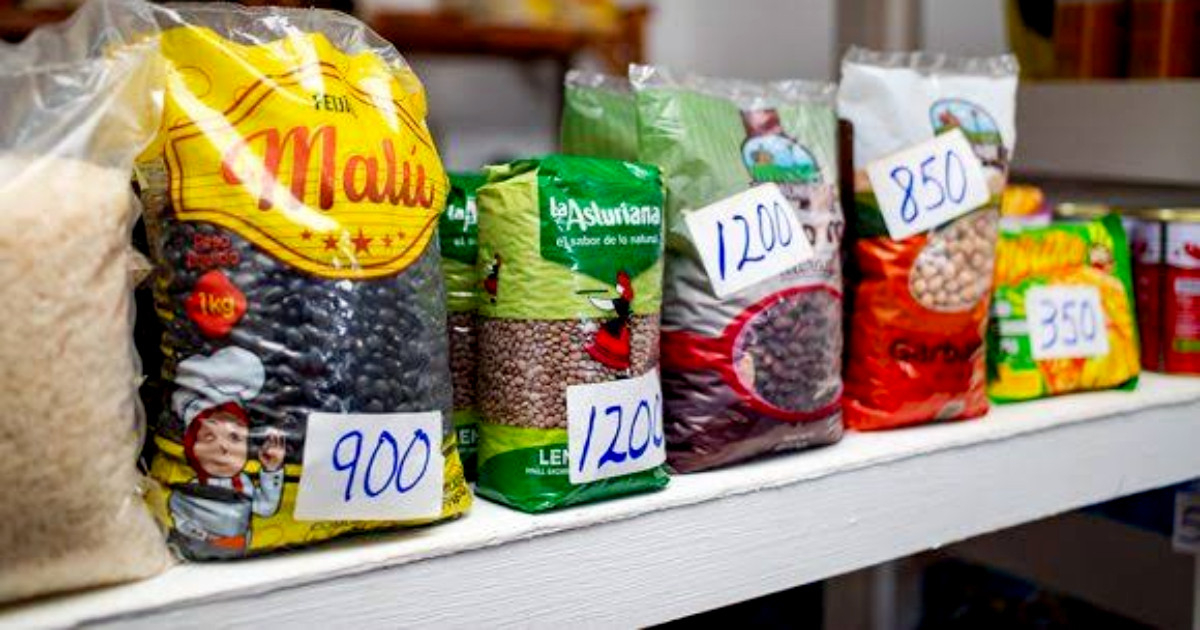
The Ministry of Domestic Trade (Mincin) acknowledged that neighborhood markets have not yet achieved noticeable price reductions for the population, while their managers attribute some of the difficulties to the rising costs of payments to wholesale suppliers and foreign currencies.
The recognition took place during the first national meeting for socialization with owners and managers of neighborhood markets, organized by Mincin and the Impulso Consultancy, and moderated by Arturo Vázquez Hernández, advisor to the Minister of Domestic Commerce, as highlighted on Friday by the official newspaper Granma, although it did not specify the exact date of the meeting.
Participants reported difficulties in paying wholesale suppliers, especially foreign ones, who demand cash or dollars. They also pointed to the increase in the exchange rate in the informal market, a factor that raises the costs of supplying these establishments.
According to the Exchange Rate from CiberCuba this Sunday, the dollar was priced at 834 pesos, while the euro reached 929 pesos.
In that scenario, the managers themselves admitted that they still need to work on incentives to achieve a greater impact on prices and meet the expectations of the population.
As positive aspects of the program, participants highlighted the acceptance of bank transfers, the renovation of local establishments, the differentiated attention given to the elderly and vulnerable individuals, as well as the sale of bulk products. The meeting also aimed to strengthen the ties between economic actors and the state institutions responsible for overseeing the project, according to the source.
Granma presented the initiative as an attempt to create businesses that, although operating under the logic of supply and demand, maintain a "humanistic and community value." However, this purpose coexists with the acknowledgment that the promised discounts still do not meet consumer satisfaction.
The neighborhood market program, supported by the from Mincin, effective since August, allows micro, small, and medium enterprises, cooperatives, and self-employed workers to manage premises of the state network while the State retains ownership of the properties.
The initial proposal included reductions of between 15% and 30%, but in more recent openings, the announced percentages dropped to a range of 10% to 15%. Consumers have reported that even those smaller discounts are not reflected in practice.
The prices reported in some establishments illustrate the difficulties in accessing products. In the market on Ermita Street in Havana, a kilogram of rice was sold for 900 pesos, black beans for 950 pesos, and 250 grams of coffee for 2,600 pesos, noted the independent newspaper 14ymedio.
In Media Luna, Granma, a basket of 22 products amounted to 12,740 pesos, nearly four times the monthly minimum wage of 3,210 pesos.
Criticism has also come from state media. Journalist José Miguel Solís from Radio 26 humorously suggested calling these establishments "Wealthy Neighborhood Markets" and questioned how a business with prices unaffordable for the community can claim to represent it.
The first national meeting promised continuity through new follow-up meetings, but the central challenge remains the same as acknowledged by the organizers themselves: turning the announced reductions into prices that residents can afford.
Related videos:
Filed under: