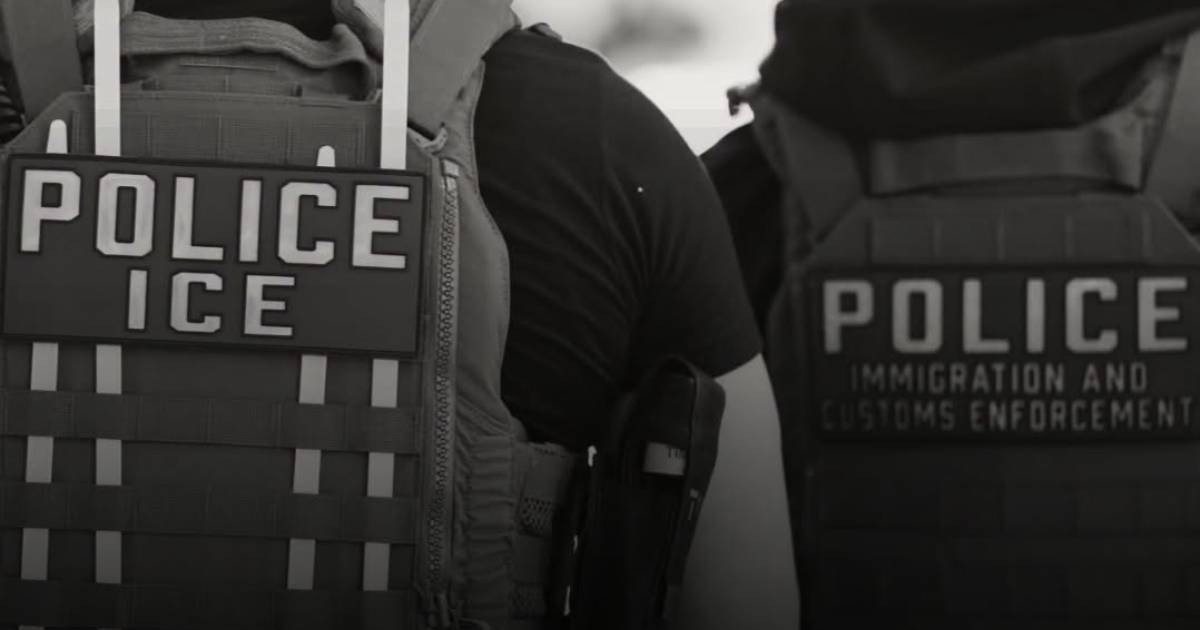
A Cuban who arrived in the United States at the age of 11 during the Mariel exodus was taken at three in the morning from a detention center in Arizona and transported by bus to the border with Mexico, where an officer presented her with a self-deportation document bearing a signature she claims was not hers.
The case of Dolores Freixa, documented by an investigation from The Florida Trib, illustrates a pattern that immigration attorneys describe as systematic: night transfers without warning, documents presented under pressure, and detainees who do not understand what they are signing.
In June, Freixa was woken up in the Eloy Detention Center (Arizona) and placed on a bus with about 40 men, mostly Mexicans who were allegedly told they had "voluntarily" agreed to return to their country.
She was the only Cuban, and nobody explained to her where they were taking her. Upon arriving at the border, she refused to get off the bus, repeatedly telling the officer that the transfer was illegal and pointing out that the signature on the document was not hers. She was sent back to the center in Arizona, an exception among those who have gone through that situation.
Freixa served a sentence in 2015 for robbery, theft, and fraud, and was transferred directly to immigration detention upon leaving prison.
The lawyer Liudmila Marcelo described the pattern: "They put them on a bus without telling them anything, take them to the border with Mexico, and force them to get off. This happened to one of my clients. In his case, he refused to get off. Others did get off, and once they did, they accepted their deportation. My client has also been asked multiple times to sign documents."
Este caso forma parte de una serie de situaciones que afectan a migrantes cubanos y otros inmigrantes en Estados Unidos. Sigue toda la actualidad sobre detenciones, deportaciones y derechos migratorios en nuestra sección de
Attorney Andrea Jacoski emphasized that the U.S. government wants to deport as many people as possible, highlighting the specific vulnerability of Cubans: "Unfortunately, many Cubans have deportation orders, and it’s like shooting fish in a barrel because these people have been reporting to ICE offices for decades, abiding by the law and doing what they are supposed to do."
The mechanism that enables these transfers is deportation to third countries, when the Cuban regime refuses to receive its nationals, which systematically occurs with those who have criminal records or left before 2017.
The U.S. sends them to Mexico under a non-public agreement between both governments. According to Third Country Deportation Watch, more than 25,000 people have been sent to 29 countries since January 2025.
A report from Human Rights Watch from last May documented that Cubans were the largest national group among those deported to Mexico. Once there, they only receive ten days of residence permission, without guaranteed access to shelter or medical care, and are left vulnerable to trafficking and extortion networks.
The Department of Homeland Security denied any pressure: "It is categorically false that we pressure anyone to self-deport," responded a spokesperson, who added that those who agree to return voluntarily receive a free flight and a $3,000 bonus.
Lawyer Jacoski questioned the notion of security upheld by the agency: "The law allows for deportation to a third country, but to one that is safe. Many of the countries to which these individuals are deported are in the midst of civil wars or internal conflicts."
This pattern has affected Cubans, including those with decades of residence in the United States. This week, the story of a Cuban who lived in the country for 55 years and was deported to Mexico came to light, as well as that of another who arrived during the Mariel exodus and now, at 72 years old, has also been expelled to the Aztec country.
On September 29, the Supreme Court suspended three judicial blocks on deportations to third countries; the substance of the case is scheduled for December.
Related videos:
Filed under: