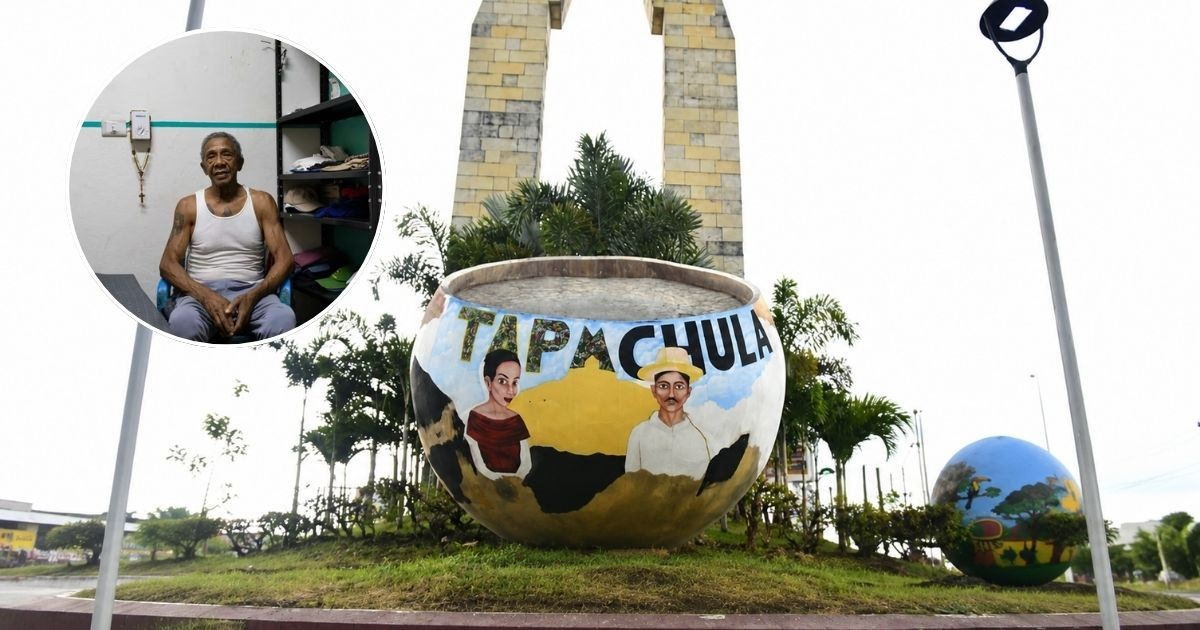
Julio Borrell arrived in the United States at the age of 26, fleeing Cuba during the Mariel exodus. Forty-six years later, at 72, a bus dropped him off in southern Mexico, about 3,200 kilometers from the U.S. border, without him even knowing where he was.
"I'm in a place called Tapachula, Chiapas," he told his daughter over the phone after walking for nearly an hour and managing to borrow a cell phone.
The story of Borrell was reconstructed by The Atlantic in a report published this Monday about migrants sent by the Trump administration to Mexico when they cannot be deported directly to their home countries.
Borrell had gone to a routine immigration appointment in December, as he had done many times before, but this time agents from Immigration and Customs Enforcement (ICE) detained him.
He spent four months confined in the detention center known as Alligator Alcatraz in Florida, and was later transferred to Eloy, Arizona. From there, he was taken to the border and began a 47-hour bus journey through Mexico to the southern tip of the country.
Upon arriving in Tapachula, I felt disoriented and far from the life I had built over more than four decades in the United States.
Borrell has seven American children, 11 grandchildren, and one great-grandchild, according to The Atlantic. For years, he ran a repair shop and periodically attended his immigration appointments.
"Why the hell did they bring us here?" he asked the journalist who reported his story.
Six months after arriving in Tapachula, he was surviving by repairing tires while trying to gather enough money to rent a small studio.
In his first few weeks, something unexpected happened: he recognized an old Cuban friend from Miami on the street, who owned a tile business and had also ended up deported there. The man had arrived in the United States from Cuba at the age of six and had permanent residency, according to the report.
«We have to get out of here. I am not going to die in Tapachula,” Borrell told him.
Your case is part of a reality that affects thousands of migrants. Tapachula, a city of about 350,000 inhabitants, currently hosts around 60,000 foreigners from numerous nationalities, according to The Atlantic. Officials from the International Organization for Migration informally refer to it as "TapaYork."
Cubans hold a prominent position among those left stranded there. A report from Human Rights Watch, titled "They Leave Us Here to Die," counted 4,353 Cubans, making it the largest group. Of the 53 deportees interviewed by the organization, 41 were Cubans and 17 were at least 60 years old; the oldest was 83.
Mexico has denied facilitating these deportations, although The Atlantic gathered testimonies from more than a dozen migrants who described the involvement of immigration agents from both countries during the transfers.
For those who arrive without knowing the city or having resources, the disorientation is evident.
"They are lost. They are just dragging their feet. They don’t even know where they are," explained Mervil Wisdael, a Haitian who has been living in Tapachula for years.
Cubans are also being deported to third countries beyond Mexico. The United States has sent Cubans to African countries, while seeking agreements with other governments to accept migrants who cannot be repatriated directly.
Several Cubans stranded in Tapachula told The Atlantic that they plan to organize a caravan north. They know that reaching the U.S. border will be extremely difficult, but they want to draw attention to those who were expelled after spending years — and in some cases, decades — in the United States.
Borrell is one of them: he arrived through Mariel as a 26-year-old and, 46 years later, he survives as best as he can in southern Mexico, far from his family and determined not to die in Tapachula.
Related videos:
Filed under: