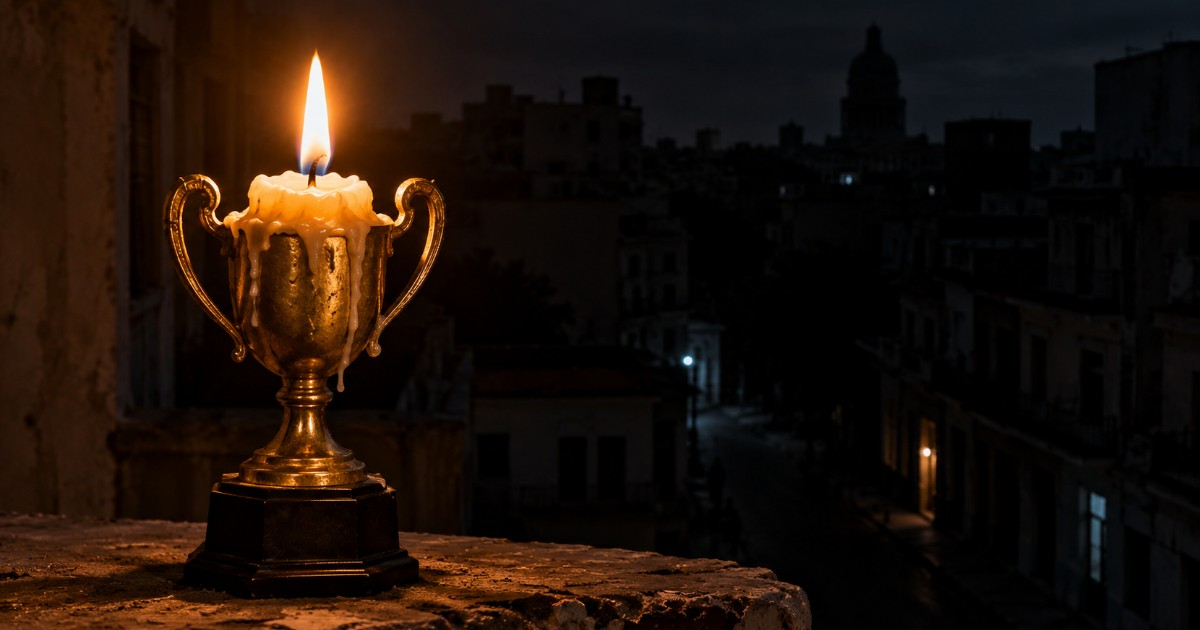
In a country where power outages exceed 20 hours a day in numerous communities and some families have endured interruptions lasting several consecutive days, the Cuban regime decided to establish a National Energy Efficiency Award.
The initiative, approved by the Council of Ministers, aims to recognize the efforts to save electricity and harness renewable energy sources, amid a crisis that leaves millions of Cubans wondering when they will be able to turn on a light bulb.
The decision was established through the , approved on September 16 and published this Tuesday in the .
The new award, officially named National Award for Energy Efficiency and the Use of Renewable Energy Sources, will be granted by the Ministry of Energy and Mines.
According to the regulations, the recognition will be aimed at individuals and legal entities that demonstrate contributions to the economic, social, and energy development of the country, particularly through the rational use of electricity and renewable sources.
The award will be granted annually during the observance of World Energy Efficiency Day and will have a single winner each year, who can be an individual or an entity.
Curiously, although this is a national recognition, it will not include any monetary reward. The winner will receive a trophy, a plaque, a diploma, or some form of certification.
The agreement also stipulates that the expenses associated with the delivery cannot exceed the equivalent of 10 times the average salary in Cuba during the previous fiscal year.
The National Office for the Control of Rational Energy Use (ONURE) will be responsible for calling and nominating the award, while the Minister of Energy and Mines will constitute the jury responsible for selecting the winner.
The delivery will take place through an official event, and its results may be disseminated through media outlets and digital platforms.
Agreement 10452 came into effect on October 27, although the Ministry of Energy and Mines will need to approve the specific regulations later to organize the submission of applications and the selection of the awardee.
The paradox is hard to ignore: while the Government establishes a recognition of energy efficiency, a large part of the population barely has access to electricity for cooking, preserving food, or performing the most basic tasks.
The contrast is even greater when considering that, at the beginning of October, blackouts of more than 20 hours a day were documented and consecutive outages of up to 55 hours in circuits of Holguín were reported.
The ultimate irony is the reality faced by many residents of the municipality of Remedios, in Villa Clara, who have been without electricity for over 45 days, with food going to waste and families forced to confront immense challenges in meeting their basic needs.
Related videos:
Filed under: