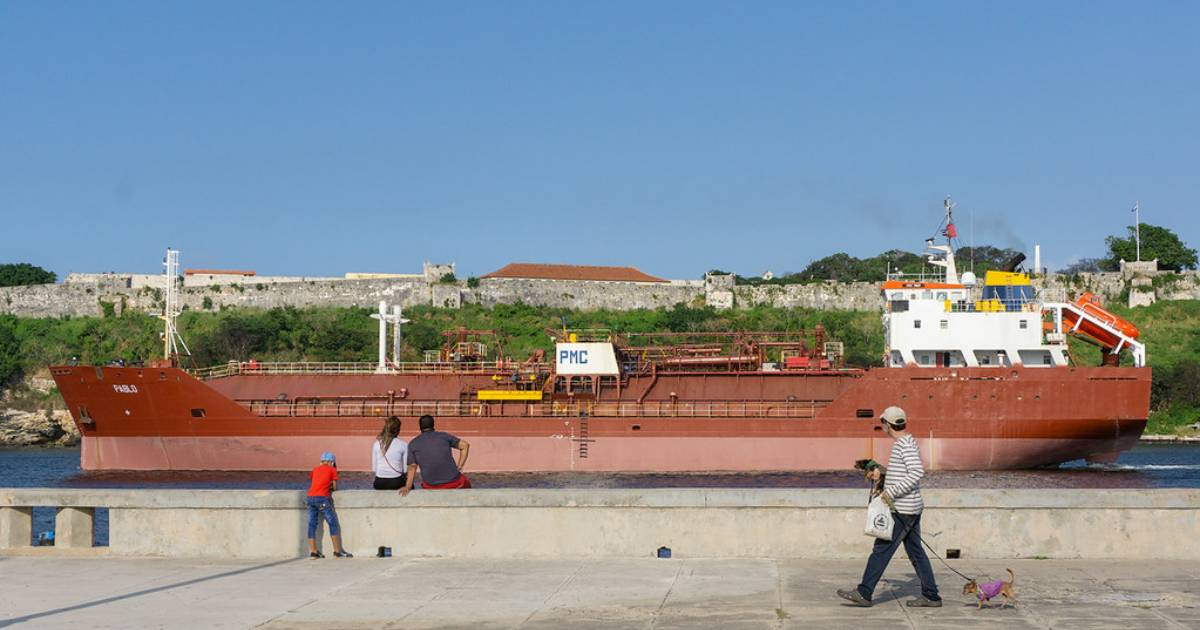
The Cuban ambassador to Mexico, Eugenio Martínez Enríquez, expressed the desire of the Cuban government for the resumption of fuel shipments from Mexico to the island, which were interrupted in 2026 amid U.S. trade pressures.
In an interview granted to the EFE agency on Tuesday, the diplomat acknowledged that Cuba has stopped receiving fuel from Mexico, but did not announce ongoing negotiations, a new agreement, or a date for the resumption of supplies.
"No I do not use the term ally because it is not typical in our political language, but we do refer to a brother country with which we have excellent relations (…) Therefore, of course Cuba would like fuel shipments to be resumed", Martínez stated, according to the corrected version of the interview.
Precision is important because EFE rectified its original dispatch, which attributed to the ambassador the statement that efforts were being made to resume energy shipments.
The independent newspaper 14ymedio reported on Wednesday about the agency's correction and clarified that the diplomat's words expressed Cuba's interest in resuming supply, not the confirmation of bilateral negotiations.
The ambassador explained that the shipments were carried out through a commercial agreement between a Cuban company and Petróleos Mexicanos (Pemex), Mexico's state oil company.
“Indeed, through a commercial agreement between a Cuban company and Pemex, fuels were exported to Cuba. Cuba regularly paid for those fuels and that agreement was halted,” he noted.
The claim regarding the regularity of the payments is attributed to the diplomat, who did not present any documents during that interview to verify them.
Martínez also acknowledged that the island stopped receiving fuel sent by Mexico during this year, although he did not specify when the interruption occurred.
"Therefore, we do not receive fuels in Cuba sent from Mexico. I cannot provide you with the exact date, but they stopped sending it this year," he stated.
The suspension brought an end, at least temporarily, to a trade relationship that had turned Mexico into one of the main suppliers of oil and its derivatives to Cuba during 2025.
The change occurred as Washington increased pressure on countries supplying oil to the Cuban government, following the interruption of Venezuelan shipments in early 2026.
The U.S. president, Donald Trump, announced in January tariff measures against countries that supply oil to Cuba, raising concerns in Mexico about the potential impact on its trade with the United States.
The Mexican president, Claudia Sheinbaum, defended the commercial and humanitarian ties with Cuba, although her government ultimately suspended oil shipments while continuing to send food and other assistance products.
The ambassador's statements do not mean that Mexico has again authorized exports. They also do not clarify when other shipments might arrive or under what quantities, prices, or trade conditions.
Martínez highlighted, on the other hand, that bilateral cooperation continues in sectors such as agriculture and health.
He mentioned the shipment of Mexican fertilizers to support food production in Cuba and the presence of Cuban doctors working in rural municipalities in Mexico.
The diplomat defended the relations between both governments and asserted that collaboration continues despite international pressures.
From oil shipments to suspension: what has happened in 2026?
The energy relationship between Mexico and Cuba underwent a significant change starting in January 2026, when the Mexican government began to review fuel shipments in response to pressures from Washington.
On January 23, it was reported that Mexico was considering suspending oil exports to the island due to fears of economic retaliation from the Trump administration.
Three days later, Pemex removed a shipment of oil destined for Cuba from its schedule, which was to be transported on the vessel Swift Galaxy.
On January 29, Trump signed an executive order establishing a mechanism to impose additional tariffs on products from countries that supplied oil to Cuba, directly or indirectly.
Sheinbaum initially defended that Mexican oil operations were based on sovereign decisions and trade agreements, but the shipments were halted.
On February 9, the leader confirmed that supplies were suspended while her government sought alternatives to assist Cuba without triggering U.S. trade sanctions.
On February 17, Sheinbaum announced that Mexico would not send oil to Cuba "for the time being", although it would continue supplying food and other humanitarian products.
On February 20, Washington removed the additional tariff mechanism established weeks earlier. However, the change did not result in a resumption of Mexican shipments.
During March, Mexico continued to send humanitarian assistance. On the 23rd, Sheinbaum announced another ship with food and basic supplies for the Cuban population, without this implying a reactivation of oil agreements.
On May 11, the president again ruled out shipments of oil and stated that Cuba was receiving fuel from Russia. She explained that Mexico would focus its collaboration on other humanitarian needs.
In June, Sheinbaum confirmed that humanitarian aid would continue without reactivating the oil supply. She also discussed the possibility of turning to authorized private companies to sell fuel to Cuba, an alternative whose effective implementation was not confirmed.
The financial reports from Pemex showed a significant reduction in operations with the island.
During the first quarter of 2026, the oil company reported an average of 900 barrels per day in oil product exports, compared to the 17,200 barrels per day recorded on average during 2025.
On August 17, an analysis of bilateral trade showed that Mexican exports of mineral products to Cuba had collapsed, with a decrease of nearly 99.9% in June compared to the same month of the previous year.
On October 6, it was reported that Pemex had not registered new fuel sales to Cuba between April and June 2026, according to reports submitted to the U.S. Securities and Exchange Commission (SEC).
Martínez's statement from October 27 confirms that Cuba remains interested in restoring that supply, but does not provide evidence of an agreement to resume it or of ongoing bilateral negotiations.
Related videos:
Filed under: