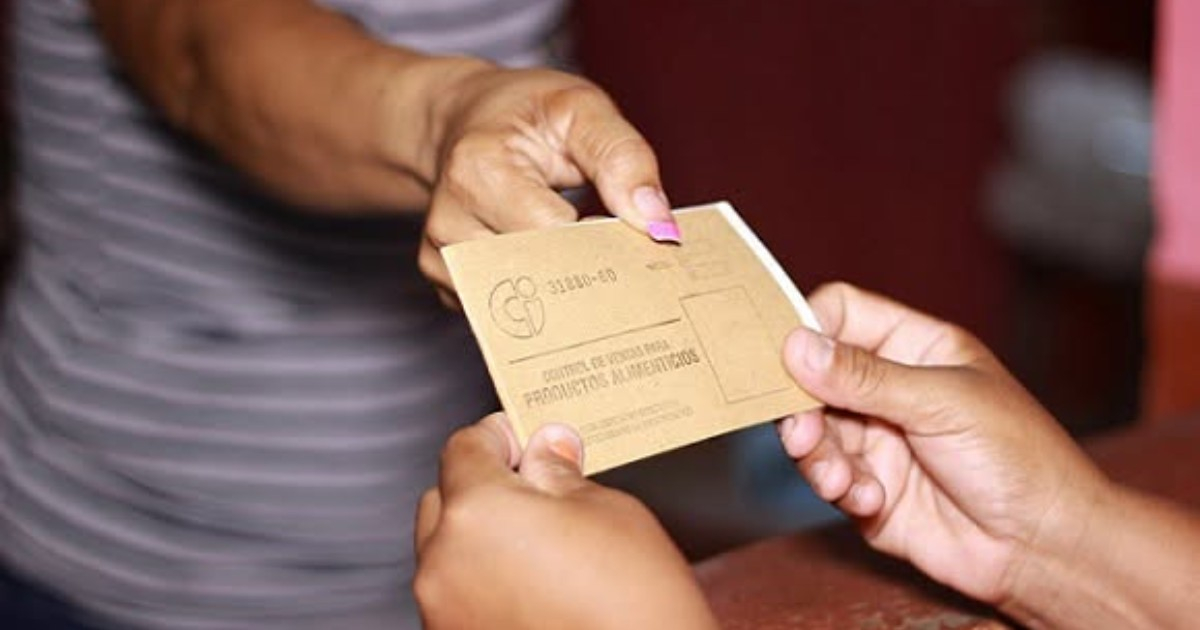
The Provincial Government of Matanzas announced this Monday that 44,760 vulnerable individuals are receiving basic food —rice, peas, and sugar— following a process of home visits by social workers in the 13 municipalities of the province, but the announcement sparked a wave of criticism and questions on social media.
According to official Hidovaldo Díaz Martínez, coordinator of Programs and Objectives of the Provincial Government, a total of 54,683 people were registered in delegations, popular councils, and municipalities, although the official statement does not clarify what happens with the nearly 10,000 registered individuals who were not classified among those in the highest vulnerability.
The distribution of products will continue throughout November and December in the usual locations in each urban and rural area, according to provincial executives from the Wholesale Company of Food and Consumer Products.
Separately, the statement mentions deliveries from the World Food Programme until December: five pounds of rice, one pound of peas, and one pound of oil for individuals in the greatest state of vulnerability, including children under five years old, those with low weight or chronic childhood diseases, and pregnant women, upon identification by the Ministry of Labor and Social Security.
For the September-October semester, the specified children's and maternal groups will also receive an additional liter of oil.
The statement itself acknowledges logistical difficulties due to fuel shortages and suggests the use of electric tricycles for distribution, especially in urban areas.
The post on Facebook from the Provincial Government was filled with comments questioning the criteria for selecting beneficiaries and the effectiveness of the operation. "Can someone explain to me who the vulnerable people are, so I can know?" wrote a citizen.
Another questioned: "Who is considered vulnerable, starting from what age, what financial situation does a person need to be in, who conducts the interviews... I just need to know because no one has visited my block."
According to a resident of Cárdenas, social workers did not carry out the necessary visits and food was not provided to all who are vulnerable: "Check the town well; the people are tired of so many lies."
The phrase that resonated the most was from a citizen who summed up the general sentiment: "It's a lack of respect. The entire country is vulnerable."
According to the Ministry of Labor and Social Security, by the end of September 2026, there were more than 883,000 people registered as being in a situation of greater vulnerability across the country, on an island where the minimum pension is around 4,000 pesos per month, equivalent to between seven and ten dollars. A survey by the Food Monitor Program released in May 2026 indicated that 33.9% of Cuban households had at least one member who went to bed hungry in the previous 30 days.
While the supply notebook sells less and less to Cubans, Cáritas —with the support of Catholic Relief Services— distributed 700 humanitarian kits in Matanzas on October 22, containing rice, beans, oil, brown sugar, pasta, sardines, tuna, and hygiene items, aimed at families in the Vicaría Nuestra Señora de la Caridad, with a projected reach of 18,200 family units in the diocese.
The food crisis affecting the province —and the country— has been accumulating alarm signals for months: in February, the authorities in Matanzas had already announced emergency measures in response to the shortages, and in May, the Party in the province ordered that prepared food be ensured for at least one-third of the population.
Related videos:
Filed under: