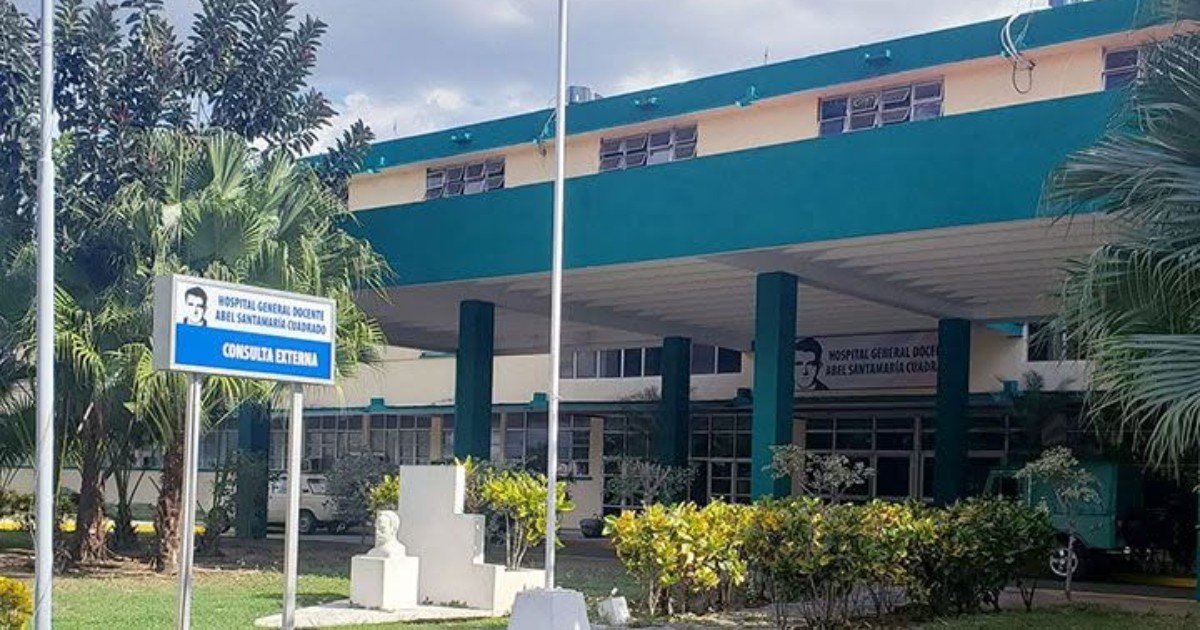
Magalys Roque has been battling cancer for two years and has been waiting for a month for an operating room at the Abel Santamaría Hospital in Pinar del Río to undergo a cystoscopy. Her niece Sulexi Romeu publicly reported the situation this Tuesday, demanding an immediate solution from Cuban health authorities.
According to Romeu's testimony, his aunt has been experiencing blood in her urine accompanied by the expulsion of large clots that constantly obstruct her bladder catheter for about two months. The procedure recommended by the doctors cannot be performed because, as the family reported, the hospital lacks the necessary operating room conditions.
"Since approximately two months ago, he has experienced bleeding in the urine, with the expulsion of large clots that constantly obstruct his urinary catheter," Romeu wrote in his complaint.
A one-month wait for an oncology patient with active bleeding and a catheter obstruction poses a significant clinical risk. Cystoscopy is an endoscopic procedure that allows for the examination of the bladder and urethra, and any delay in such circumstances exacerbates the patient's condition.
Romeu was emphatic in stating that her complaint is not aimed at the medical staff, but at those who have institutional responsibility. "I do not hold the healthcare professionals accountable who work with limited resources. My complaint is directed at those with the administrative and institutional responsibility to ensure a solution," she affirmed.
The complaint directly addresses the management of the hospital, the Provincial Department of Public Health, the Ministry of Public Health, and the authorities of the government and the Communist Party of Cuba. "We are not asking for a favor. We are demanding an urgent medical solution," emphasized the niece.
Due to the lack of conditions at Abel Santamaría, the family is requesting the urgent transfer of Magalys to another hospital that can perform the procedure. "If Abel Santamaría Hospital does not have the necessary conditions, I request that arrangements be made urgently for her transfer to another hospital that can carry it out, according to the medical evaluation," Romeu demanded.
The case is set against the backdrop of a public health crisis of historical proportions in Cuba. In August, President Miguel Díaz-Canel himself acknowledged 98,500 patients on the surgical waiting list, including about 12,000 children. Deputy Prime Minister Eduardo Martínez Díaz had previously reported that the number exceeded 100,000.
The oncology situation is particularly severe. The government admitted that around 117,000 adults and 1,200 children with cancer lacked adequate primary treatments, that 16,000 patients faced difficulties accessing radiotherapy, and 12,400 needed chemotherapy. The survival rate of Cuban children with cancer dropped from 85% to 65%, a reduction of 20 percentage points.
The Cuban regime attributes these shortcomings to sanctions and the policies of the Trump Administration, but the healthcare decline did not begin last year: it is a crisis that has accumulated over decades, marked by a lack of medications, equipment, and supplies, the deterioration of infrastructure, and a loss of personnel. While hospitals are facing growing needs, the authorities have prioritized investments in other sectors, such as tourism, without ensuring sufficient resources to sustain healthcare services.
The Abel Santamaría Hospital, the main healthcare facility in Pinar del Río, has operated under extreme conditions in recent years: blackouts lasting up to several hours, shortages of syringes, gauze, anesthetics, and reagents. Since June, it has also taken on the pediatric surgical load of the Pepe Portilla Hospital, whose operating room was under maintenance. The blackouts and shortages in Pinar del Río had already forced the cancellation of elective surgeries since February.
The Cuban government admitted to 70 daily deaths from cancer in a report this month. Romeu warned that this complaint is just the beginning: "This complaint is the first step in a series of actions that I will undertake until I receive a concrete response," and announced that he will turn to human rights organizations and media both inside and outside Cuba if the authorities do not respond. "Magalys Roque has a name, has a family, has a story, and has the right to receive dignified medical care," he concluded.
Related videos:
Filed under: