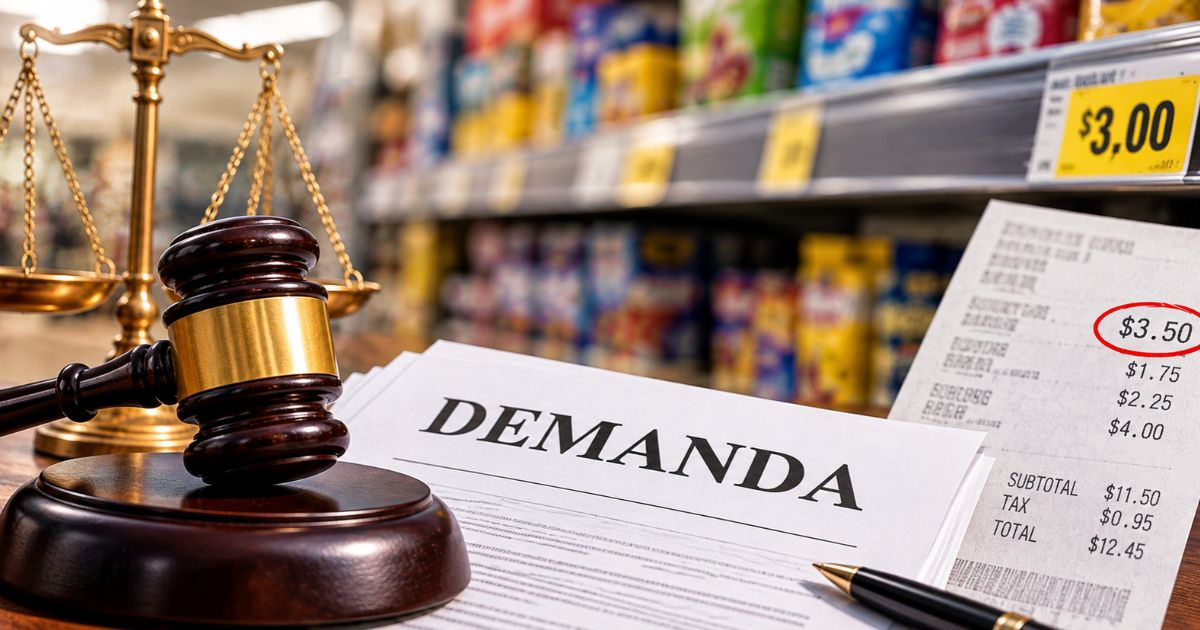
Florida joined a federal lawsuit against the retail chain Dollar General, accused of charging customers prices higher than those advertised on shelves, tags, and promotions.
The legal action seeks to halt these alleged trade practices and obtain financial compensation, although the accusations have not yet been proven in court.
The Federal Trade Commission of the United States (FTC) announced on Monday that it has filed a lawsuit along with 20 states, including Florida, in the U.S. District Court for the Middle District of Tennessee.
According to the agency, the company had allegedly maintained for years discrepancies between the prices advertised and those charged at the cash registers, a situation that presumably resulted in millions of dollars in losses for consumers.
The FTC maintains that, on numerous occasions, customers chose products based on the prices displayed on the shelves, but ended up paying higher amounts at checkout.
The lawsuit states that Dollar General received tens of thousands of consumer complaints across the United States and that, despite being aware of the issue, it has not implemented sufficient measures to rectify it.
Christopher Mufarrige, director of the FTC's Office of Consumer Protection, accused the company of financially harming families who rely on low prices to meet their basic needs.
The chain operates more than 21,000 establishments in the United States and sells food, cleaning products, personal hygiene items, and other everyday consumer goods.
In addition to Florida, the lawsuit involves Alabama, Arizona, Arkansas, California, Connecticut, Illinois, Iowa, Kansas, Louisiana, Michigan, Mississippi, Nebraska, New Jersey, North Carolina, Ohio, Oklahoma, Tennessee, Utah, and Wisconsin.
The plaintiffs believe that the reported practices could constitute violations of federal and state consumer protection laws.
The legal action requests that the alleged irregularities be stopped and includes monetary claims, civil penalties, and other measures that the court will need to examine.
Dollar General denied the allegations and stated that it will defend its position in court
In a statement published on the same Monday, the company stated that its goal is to ensure a complete match between shelf prices and those charged at the register.
The company acknowledged that occasional discrepancies can occur, as is the case in other businesses, but maintained that its employees are instructed to correct them when customers identify them.
He also stated that he has strengthened his price control procedures and questioned the calculations used by the FTC to determine the alleged losses of consumers.
Dollar General stated that it cooperated with the federal investigation, during which it provided over 200,000 documents and a significant amount of information.
He also explained that he held discussions to resolve the conflict before it reached the courts, but that the negotiations did not progress.
The company insists that the price differences do not represent a deliberate policy of improper charges and announced that it will fight the lawsuit.
For consumers in Florida, including the thousands of Cubans who regularly shop at discount stores, this case highlights the importance of ensuring that the prices charged match those advertised.
A practical recommendation is to check the labels before paying, keep the receipts, and especially compare the prices of items on sale or with promotional discounts.
If the amount charged is higher than advertised, the buyer can request clarification at the store and document the discrepancy with photographs of the label, the advertisement, and the payment receipt.
Consumers can also file a complaint with the FTC through their official portal ReportFraud.ftc.gov, designed to gather information about potential fraud and deceptive business practices.
This is not the first time that Florida has participated in a lawsuit against a major retail chain for alleged practices that harm consumers.
In September, the state also took action against Amazon for alleged hidden fees that may have increased the cost of basic products, another conflict related to the information customers receive about the cost of their purchases.
Related videos:
Filed under: