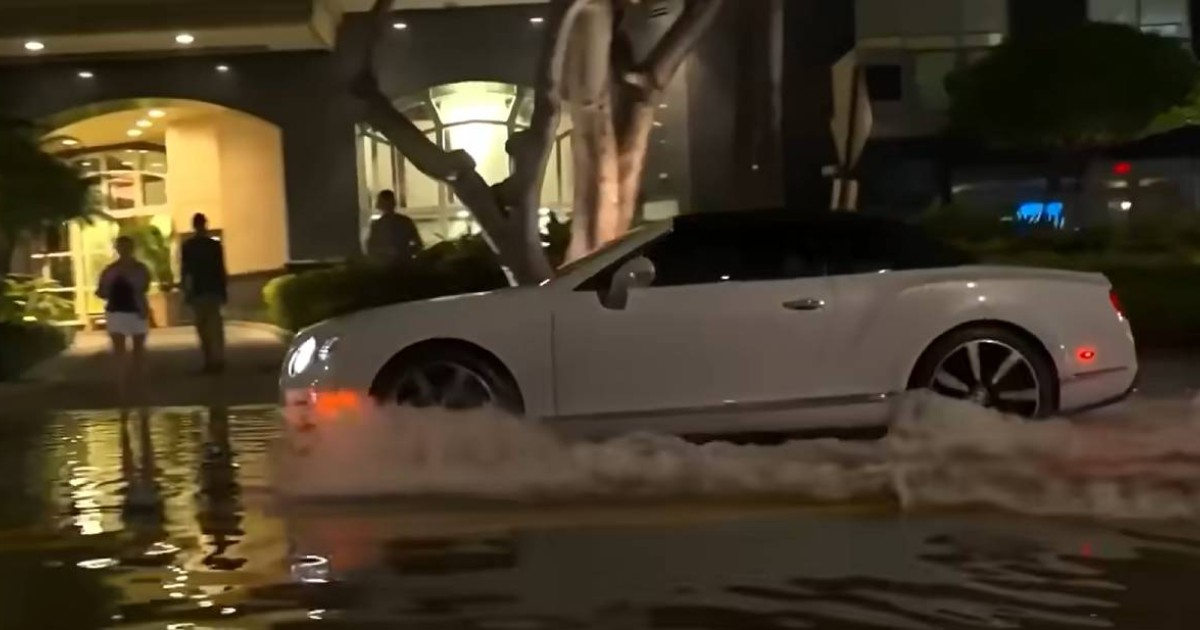
The south of Florida experienced the worst king tide in its recent history on Tuesday: Miami and Fort Lauderdale recorded approximately 2.5 feet (76 cm) of water above the normal high tide, a level that the National Weather Service (NWS) classifies as "major coastal flooding."
According to reports from the Tampa Bay Times and WSVN, the peak coincided with the full moon on October 26 and with sustained winds of 25 to 30 mph and gusts exceeding 40 mph that pushed additional water from the ocean onto land, at a time when the ground was already saturated from previous days' rainfall.
The tide gauge at Virginia Key in Miami reached the highest level recorded outside of a hurricane since its installation in 1994, while the one at Port Everglades in Fort Lauderdale set its historical record since it began operating in 2018. It recorded a level of 2.48 feet (approximately 76 centimeters) above the average of the higher high tides.
In Miami Beach, North Bay Road was closed to traffic and the 5300 block of Collins Avenue remained flooded for hours.
In Fort Lauderdale, the water overflowed the Riverwalk promenade, interrupting morning walks. Las Olas Boulevard forced drivers to change routes, and "No Wake" signs were placed on Las Olas and Isle of Palms Drive. Parts of Victoria Park remained underwater, leaving residents trapped in their homes.
Fort Lauderdale Fire Rescue deployed high-rise vehicles throughout the city and responded to several emergency calls, including rescuing people from flooded homes.
The coastal flood warning from the NWS for Miami-Dade and Broward remains in effect until 8:00 p.m. EDT this Wednesday. A separate coastal advisory is in place for the Florida Keys.
Authorities recommend that those living or driving in low-lying areas avoid crossing flooded streets, even if the water seems shallow, as it may conceal potholes or strong currents. They also advise parking in elevated areas before high tide and not to go around barricades.
Owners of vehicles were warned that if their car comes into contact with saltwater, the recommended action is not to attempt to start the engine, document the damage with photos, and contact the insurance provider.
The climatologist Jason Box from Nova Southeastern University reported that high tides in South Florida have risen by approximately an additional foot since 1993, which means that each "normal" high tide now floods areas that used to remain dry.
The preliminary notice published on Saturday, October 24 already warned of intense rainfall, gusts of 40 mph, and the risk of flooding.
Related videos:
Filed under: