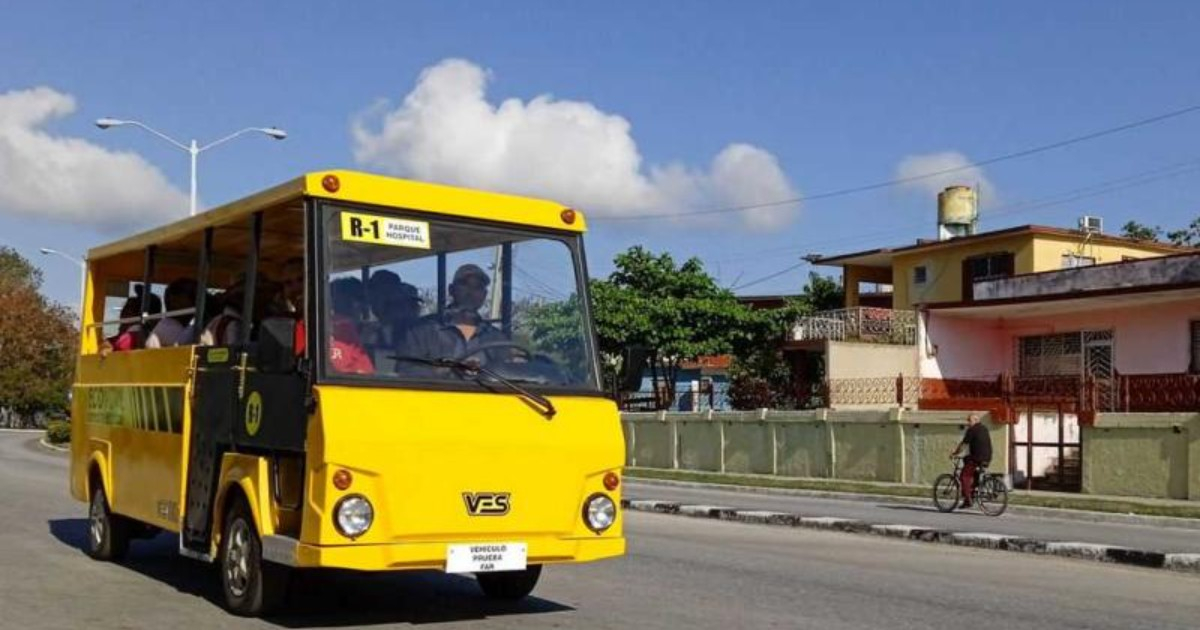
The Subsidiary Company of School Transport in Villa Clara has approved the investment for the acquisition of five 100% electric minibuses, with zero emissions, which it expects to register before the end of 2026.
The Cuban News Agency interviewed Ovis Navarro Tedez, head of the Technical Group of the company, who stated that the vehicles "will fundamentally support the work at the Marta Abreu Special School, one of the three that exist in the country."
The announcement does not confirm whether the minibuses have been received or if they are in operation. Delivery dates, model, seating capacity, cost, or supplier were not specified.
The Marta Abreu Regional School of Special Education, located in Santa Clara, serves children and adolescents with physical and motor disabilities from five provinces: Villa Clara, Cienfuegos, Sancti Spíritus, Ciego de Ávila, and Camagüey.
During the 2024-2025 school year, the center catered to 70 students in a residential and semi-residential arrangement, making school transport a critical service for its operation.
The fuel crisis in Cuba led to a decline of state passenger transport by 93% nationwide, and the Ministry of Transport declared a state of emergency last June.
Despite the restrictions, the authorities assure that they have prioritized the transfer of more than 12,800 students from special schools across the country.
The Villa Clara company has a total of 136 technical and productive units, and just over 90 are operational. However, the shortage of fuel prevents their full utilization.
The eight routes it operates—four internal routes in the provincial capital and four from municipalities such as Manicaragua, Sagua la Grande, Santo Domingo, and Corralillo—function intermittently based on fuel availability.
In parallel to the microbus forecast, the company is already making progress in its energy transition. Since February of this year, it has been operating a photovoltaic system with a capacity of 20 kilowatts for investment and 30 kilowatts for storage, financed with more than 21 million pesos through an eight-year bank loan.
Navarro Tedez explained that "the project began to take shape in 2024, when there were still doubts about the use of renewable sources, but the management decided to move forward with the transition to a new energy matrix in light of the critical situation that was looming."
The solar system provides between 12 and 16 hours of electrical power for four homes in the multifamily building where the entity is located, and the portal serves as a community charging point for residents.
The company plans to replicate the experience in its bases in Manicaragua, Manacas, and Corralillo, as well as in the Mataguá brigade, with projects funded by the Public Transport Development Fund of the Ministry of Transport.
The commitment to electric vehicles in Villa Clara is part of a trend that is progressing at an uneven pace across the country.
In Sancti Spíritus, 61 locally manufactured electric ecomobiles are already in circulation in public transport, with plans to increase to 73 by the end of the year, while in October the government added 44 electric vehicles for the healthcare system in various provinces.
What remains to be seen is whether the five microbuses planned for Villa Clara arrive in time to close out the year and ease the transportation of the most vulnerable students in the Cuban education system.
Related videos:
Filed under: