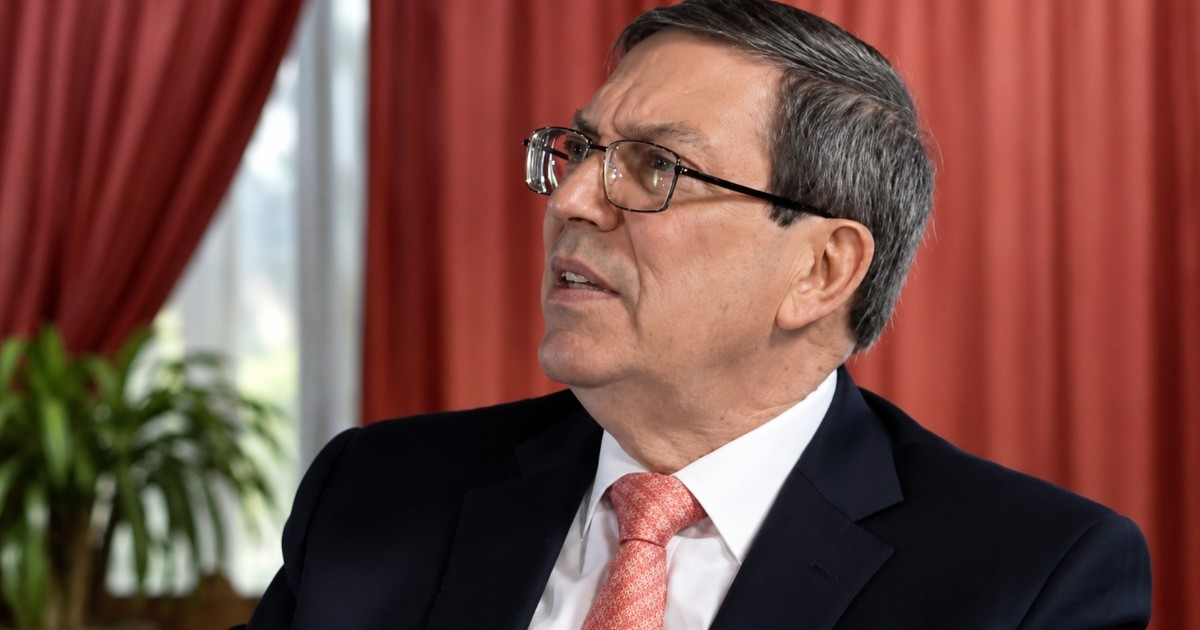
The Cuban chancellor Bruno Rodríguez Parrilla ruled out on Wednesday the existence of inequalities, wealth hoarding, or favored elites in Cuba, describing those claims as "fantastical accusations" and "false imputations" that, according to him, do not withstand "the slightest scrutiny."
The words of the chancellor came through his social media a day after the American ambassador Mike Waltz displayed photographs and satellite images of the alleged luxuries of the Castro leadership to UN delegates.
Rolex watches attributed to Fidel Castro valued at $40,000 —equivalent, according to the U.S. presentation, to 55 years of the average Cuban salary—, Hermès ties and Montblanc pens associated with Díaz-Canel, a mansion belonging to the Castro family in Varadero of about 14,000 square meters with pools, sauna, and jacuzzi, and the private island Cayo Piedra, featuring a helipad, floating restaurant, and lagoon for dolphins... Ambassador Waltz was unveiling images of the luxury enjoyed by the regime's elites in the face of protests from the Cuban delegation.
The Secretary of State Marco Rubio simultaneously released a satellite infographic titled "Castro's Cay," highlighting the facilities of that private island, in what constituted one of the most tense diplomatic confrontations between the two countries at the UN in recent years.
Rodríguez Parrilla responded to those revelations, dismissing them as "boring calumnies" and launched an unusually aggressive attack against Washington: "It is done by the largest and most corrupt plutocracy in history, where money rules instead of voters," claimed the regime's foreign minister.
What the head of MINREX termed a fantasy contrasts with data documented by independent organizations. According to the IX Report from the Cuban Observatory of Human Rights (OCDH), based on 1,318 interviews conducted in 79 municipalities between June and July 2026, 94% of the Cuban population lives in extreme poverty, with incomes below 1.90 dollars per day, compared to 61% recorded four years earlier.
Eight out of every ten Cubans reported having skipped breakfast, lunch, or dinner at least once in the past six months due to lack of money or food.
In parallel, the military conglomerate GAESA would accumulate nearly 18 billion dollars in assets according to financial documents analyzed by independent researchers, controlling between 40% and 70% of the formal Cuban economy in the hands of a core group of fewer than 15 individuals connected to the military and political leadership.
The Gini coefficient of Cuba would have risen from 0.25 in 1989 to a range between 0.40 and 0.50 in 2026, which reflects a growing inequality that contradicts the official egalitarian discourse.
In his statement, Rodríguez Parrilla also attributed the shortages in hospitals, the lack of medications, and the water and power outages affecting the population to the U.S. embargo, without mentioning the role of six decades of dictatorial governance or the control that the Armed Forces exert over the economy.
Despite the chancellor's rhetoric, the annual resolution against the embargo suffered its worst outcome since Cuba first presented it in 1992: 130 votes in favor, 17 against, and 25 abstentions, compared to the 165 favorable votes in 2025 and 187 in 2024.
Colombia, Costa Rica, and Ecuador voted against, while Germany abstained for the first time since 2002, signs of increasing diplomatic isolation that Rodríguez Parrilla's speech failed to reverse.
Related videos:
Filed under: